Iran has announced that it was shutting the Strait of Hormuz as it fired missiles and drones at several Gulf states in response to US strikes.
Air raid sirens and explosions were reported in Qatar, the United Arab Emirates, Bahrain, Jordan, Oman, and all other Gulf states except Saudi Arabia
The Pentagon said US forces struck targets inside Iran after the IRGC fired on a Cyprus-registered container ship. Tehran described the vessel as sailing an unauthorized route through the Strait of Hormuz. State media later reported that the IRGC had also engaged a second vessel, accusing it of violating regulations.
Air raid sirens sounded in Bahrain. The United Arab Emirates and Qatar said they intercepted incoming missiles; three people were injured in Doha. Kuwait reported it was intercepting an attack, while Jordan said three Iranian missiles had landed on its territory.
IRGC stated that they had struck logistical support centers and refueling facilities for US aircraft carriers at Oman’s port of Duqm. The Guards said they had stopped a vessel that ignored repeated instructions to follow an approved shipping corridor, Iran’s state news agency IRNA reported.
“Following this incident… the Strait of Hormuz will be closed until further notice and until the end of American interventions in this region,” IRGC said.
India confirmed that 11 of its nationals were on a vessel that was struck in waters east of Oman.
“Of the 11 Indian nationals on board, 10 have been rescued so far, while one Indian national is reportedly missing,” the Indian foreign ministry said in a statement.
Search-and-rescue operations were underway after the commercial vessel, GFS Galaxy, was attacked off the coast of Oman early on Sunday, the ministry statement said.
The Indian foreign ministry said the attacks on commercial shipping in the region were “deeply worrisome”. “The targeting of commercial shipping and civilian infrastructure in the region must end,” it said. “… free and unimpeded navigation… through the international waterways in the region, in keeping with international law, must be restored at the earliest.”
The latest round of fighting threatens the interim pact aimed at ending the war that began in late February with US-Israeli strikes.
Control of the Strait of Hormuz remains a central point of disagreement. Iran closed the waterway to commercial shipping during the war. The strait carries a large share of global oil and gas exports, and its closure had significant effects on the world economy.
Iran has insisted on regulating ship movements and charging passage fees. Washington has rejected this position. Under customary international law, states are generally not permitted to impose tolls on straits used for international navigation.
Iran’s supreme leader Mojtaba Khamenei vowed to carry out revenge for the killing of his father and predecessor.
“Vengeance is the will of our nation and must inevitably be carried out,” he said in his first public message since his father’s funeral. “This matter depends neither on my personal existence nor on that of other officials. Whether we are present or not, it will come to pass.”
He added that Iran had compiled a list of individuals to be targeted. Mojtaba Khamenei has not appeared in public since before the war and was reportedly wounded in the strikes that killed his father.
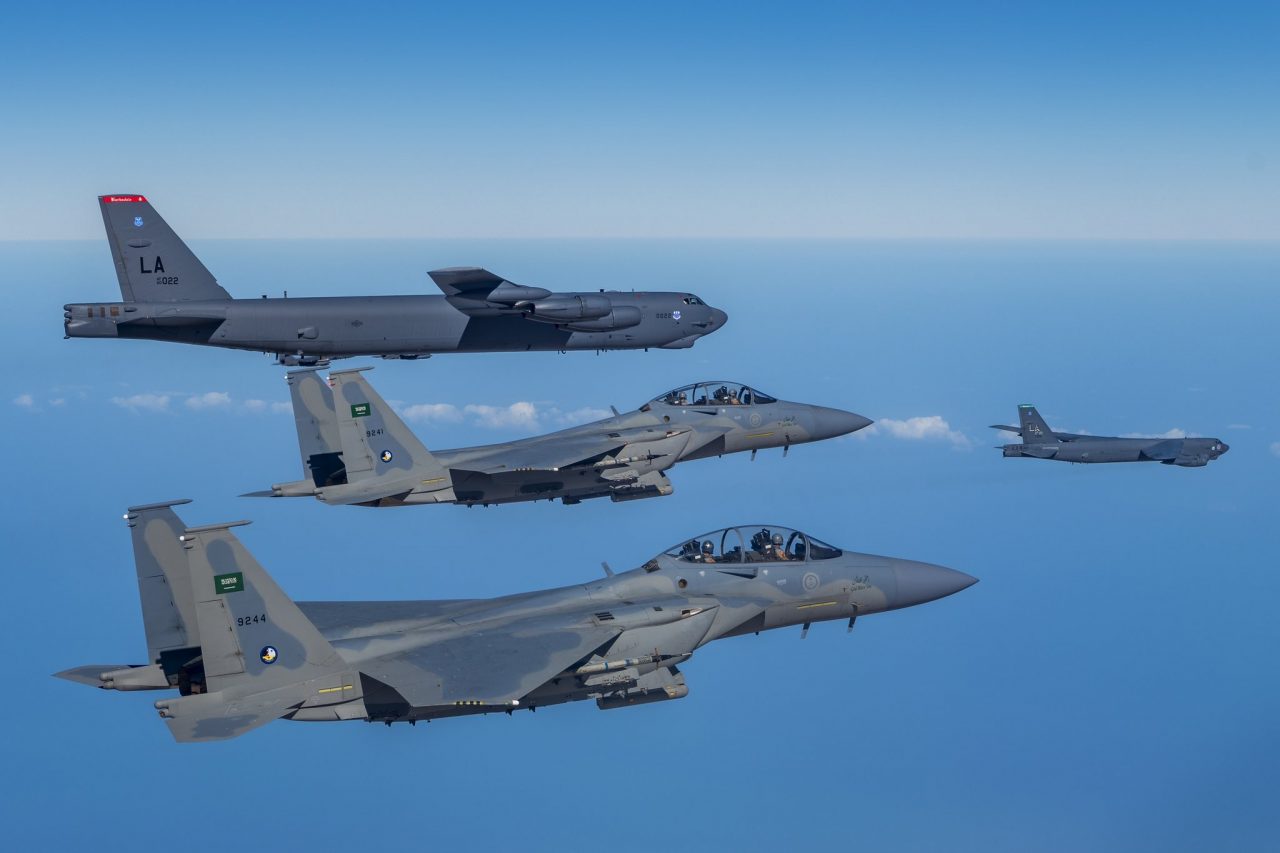
Meanwhile, Saudi Arabia was not targeted in the Iranian missile and drone strikes reported across the Gulf. Saudi Arabia maintains longstanding and close defense cooperation with Pakistan, including the recently signed Strategic Mutual Defense Agreement (SMDA).
Pakistan has been a very active player trying to broker peace between the US and Iran.
Earlier, Pakistan deployed fighter jets and support aircraft to Saudi Arabia to boost the kingdom’s security under the defense pact.
As EurAsian Times reported earlier, Pakistan had reminded Tehran of its mutual defense pact with Saudi Arabia to deter further Iranian attacks on Saudi territory, Deputy Prime Minister and Foreign Minister Ishaq Dar had said at a news conference in Islamabad.
“I informed the Iranian side about our defense agreement,” he said. “The Iranian side said Saudi Arabia should ensure that its territory is not used against Iran.”
While the pact does not explicitly detail nuclear cooperation, Pakistan has publicly committed to extending its nuclear deterrent, effectively placing Saudi Arabia under its nuclear umbrella.
Despite not coming under Iranian attacks, Saudi Arabia condemned the Iranian attacks throughout the region.
The Foreign Ministry denounced Iran’s “violation of the principles of international law, the Charter of the United Nations, the Charter of the Organization of Islamic Cooperation, and the rules of good neighborliness, through repeated Iranian attacks on commercial vessels that threaten the security and freedom of navigation”.
With AFP Inputs