China’s state broadcaster recently aired the first-ever footage of the DF-17 hypersonic glide vehicle missile launch, alongside what military analysts identified as a newly unveiled upgraded version of the DF-26 “Guam Killer” ballistic missile.
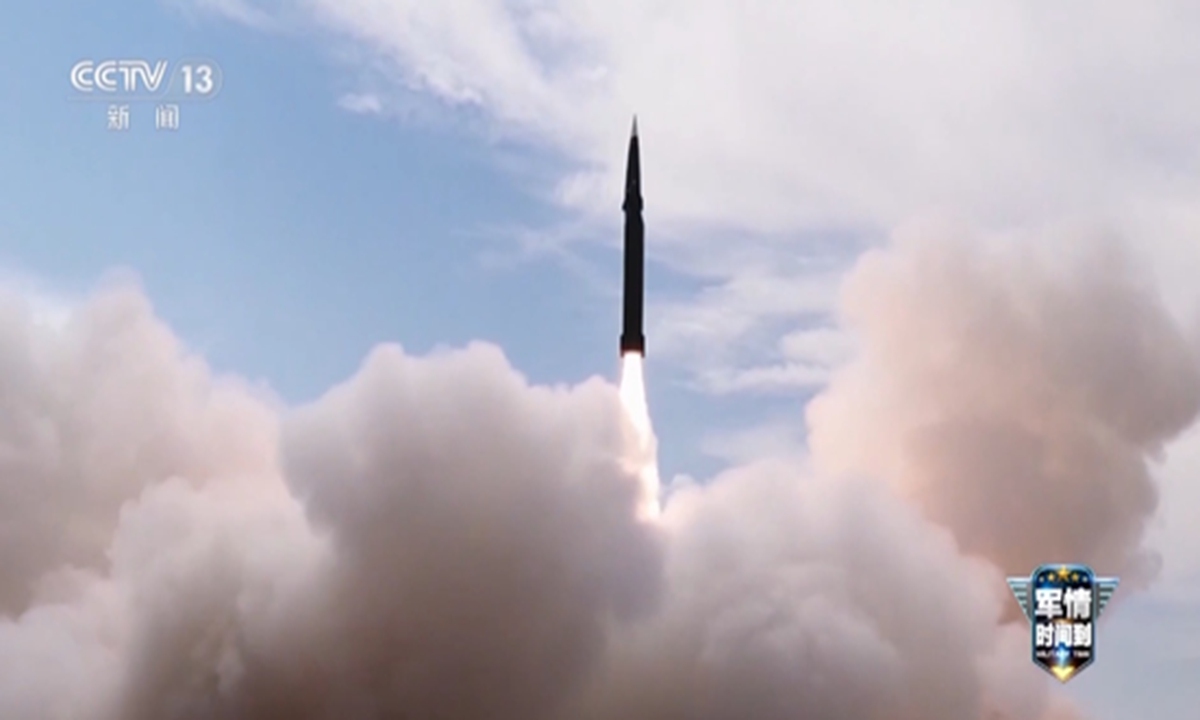
The footage, which aired on CCTV on June 20, showed China’s People’s Liberation Army Rocket Force (PLARF) personnel participating in a joint training exercise with the Army and Air Force in the northwest Gobi Desert.
The drills featured different missile types, demonstrating that the PLARF has a range of weapons to respond to various threats and operational scenarios, as the Global Times recently reported.
The footage of the DF-17 has drawn particular attention, as it reportedly was the first time the launch of this sophisticated missile was shown to the public.
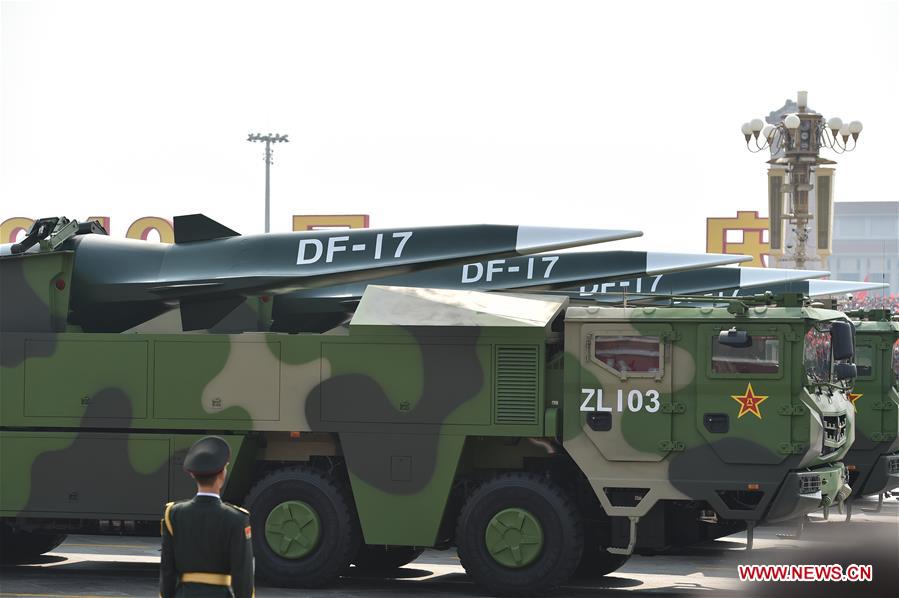
The main CCTV News segment showed a missile featuring the characteristic wedge-shaped waverider hypersonic glide vehicle (HGV), consistent with the DF-17 system displayed by the PLA at the 2019 and 2025 military parades. The DF-17 could be seen launching vertically from a road-mobile transporter erector launcher (TEL) in the video.
Meanwhile, a separate military channel report depicted another TEL erecting a missile with a bicone (conical or double-cone) aerodynamic profile similar to the DF-17, but reports state that this weapon has not been seen before.
DF-17 launch:
Footage shows a unit assigned to the Chinese PLA Rocket Force launching DF-17 hypersonic missiles during a joint training exercise in the Gobi Desert. #PLA #PLARocketForce #DF17 #DF26 #HypersonicWeapons #HGV#PrecisionStrike #AllWeatherStrike… pic.twitter.com/ayFBmKcPUZ
— China Military Bugle (@ChinaMilBugle) June 23, 2026
The footage also showed another missile resembling the DF-26 intermediate-range ballistic missile, which is speculated to be an upgraded variant with control fins near the warhead.
Military commentator Du Wenlong stated that the control fins have been fitted near the warhead to facilitate terminal maneuvers by altering the flight path in both horizontal and vertical planes. This would help decelerate the missile and enable course adjustments, and enhance the capability to engage mobile targets and penetrate missile defense systems.
Further, he noted that the warheads with control fins often have terminal maneuverability, which greatly improves their ability to breach air and missile defense systems.
The CCTV footage did not disclose the exact specifications of the missile, which is also known as a “Guam Killer” for having a range that could strike America’s Western Pacific territory of Guam in the event of a conflict.
Song Zhongping, a former PLA instructor, said that the DF-17 and DF-26 “had been operational for some time, and the PLARF probably needed to conduct drills to ensure their performance and reliability. “The segment shows better capability to launch anywhere, anytime, without relying on a fixed site, which is a key factor in improving deterrence.”
The drills reportedly included several waves of simulated attacks under challenging battlefield conditions, including intense electromagnetic interference and the possibility of precision strikes. According to the CCTV report, the missile units quickly transitioned between operational modes in response to shifting commands while remaining on combat patrol during the exercise.
Notably, the CCTV report stated that the systems are now being configured to enable flexible deployment and reduce reliance on fixed launch sites. Moreover, the latest missile systems are more automated, more mobile, have greater strike accuracy, can operate in all weather, are not dependent on permanent infrastructure, and have stronger defense-penetration capabilities, as emphasized by the troops themselves, it added.
The drill demonstrated the Rocket Force’s increasing emphasis on cross-service integration and realistic, multi-domain combat scenarios, it added. “The launch drill was not conducted under ideal conditions but involved various forms of interference. The ability to carry out different combat missions, launch missiles on schedule, and achieve effective strikes under such conditions is an important benchmark for building combat capability,” Du was quoted as saying by the Global Times report.
CCTV News stressed that China’s missile arsenal has changed significantly over the last 60 years, going from having restricted capabilities to being a comprehensive force with both conventional and nuclear strike options.
The public demonstration of these missiles has been seen by some analysts as signaling to the US and its allies ahead of RIMPAC 2026, which kicks off on June 24.
🇨🇳🚀 China just dropped the first operational launch footage of its DF-17 hypersonic missile — days before the largest-ever RIMPAC kicks off. The timing isn't coincidence; it's the message:
The US-led RIMPAC 2026 exercise begins June 24 in Hawaii (running through July 31) with a… https://t.co/Ky16pxCI3k
— StarBoySAR 🇭🇰 🇨🇳 🥭 (@StarboySAR) June 23, 2026
Analysts have noted that the circumstances of the drills suggest that China is trying to send a deterrence message by emphasizing its strike capability to the United States, particularly amid tensions in the Taiwan Strait, the First Island Chain, and the South China Sea.
Interestingly, though, it comes weeks after US President Donald Trump’s visit to Beijing, a supposed thaw in ties and an active attempt at reconciliation.
When asked why China showed off its DF-17 and DF-26 in a public broadcast, Professor Srikanth Kondapalli, a Professor of China studies at Jawaharlal Nehru University, New Delhi, told EurAsian Times, “China had displayed these before. This time around, such a display also has significance.”
“For one, China isn’t happy with the US and wants more concessions. The US appears to be readjusting its ties with China, as evidenced by the renaming of the Indo-Pacific Command, Defense Secretary Pete Hegseth’s attendance at the Shangri-La Dialogue, and other developments. However, China isn’t convinced.”
“China also wants to stall any US arms supply to Taiwan, with a $14 billion arms package currently pending for approval by US President Donald Trump; three, the DF 26 could send a signal of disrupting military help from Guam to either Taiwan or Japan by the US,” Professor Kondapalli added.
DF-17 and DF-26 Missiles
The DF-17 is China’s first operational road-mobile medium-range ballistic missile (MRBM) equipped with a hypersonic glide vehicle (HGV). It has a range of 1,800 to 2,500 kilometers and is considered Beijing’s most operationally mature hypersonic strike system, capable of penetrating nearly any missile defense system in the world.
Pentagon’s 2022 report on China’s Military Power stated that the DF-17 hypersonic glide vehicle (HGV)-powered medium-range ballistic missile (MRBM) is intended to attack foreign military installations and fleets in the Western Pacific. “The DF-17 passed several tests successfully and is deployed operationally. While the DF-17 is primarily a conventional platform, it may be equipped with nuclear warheads,” the report stated.
Notably, the DF-17 can penetrate regional US missile defenses and potentially threaten the First Island Chain, which stretches from the Japanese archipelago through Taiwan to the Philippines, and some parts of the Second Island Chain, extending from Japan through Guam, Micronesia, and Palau.
A crucial component of the US containment strategy, the chains stand between the PLA Navy and the Pacific’s unrestricted waters.
Therefore, the DF-17 poses a threat to Taiwan, the Philippines, with which Beijing has long-standing territorial disputes in the South China Sea, as well as to Japan, the closest US ally in the Asia Pacific. Moreover, it is a cornerstone of China’s sophisticated A2/AD (Anti-Access/Area Denial) network, which will likely make it difficult for countries like the United States to intervene in a potential conflict over Taiwan.
The DF-26, on the other hand, is a Chinese two-stage, solid-fueled, road-mobile intermediate-range ballistic missile (IRBM). The DF-26 missile is likely to have a range of over 4,000 kilometers, which would allow it to target US military bases in Guam, as well as naval assets in the Second Island Chain (including US facilities in the Pacific) and carrier strike groups in the Philippine Sea, in the event of a US-China conflict.
The long range of the missile and the supposed capability to hit Guam, a frontline US territory that will likely be used as a launchpad for US operations in a conflict, have earned the DF-26 the moniker of “Guam Killer,” as previously explained by the EurAsian Times.
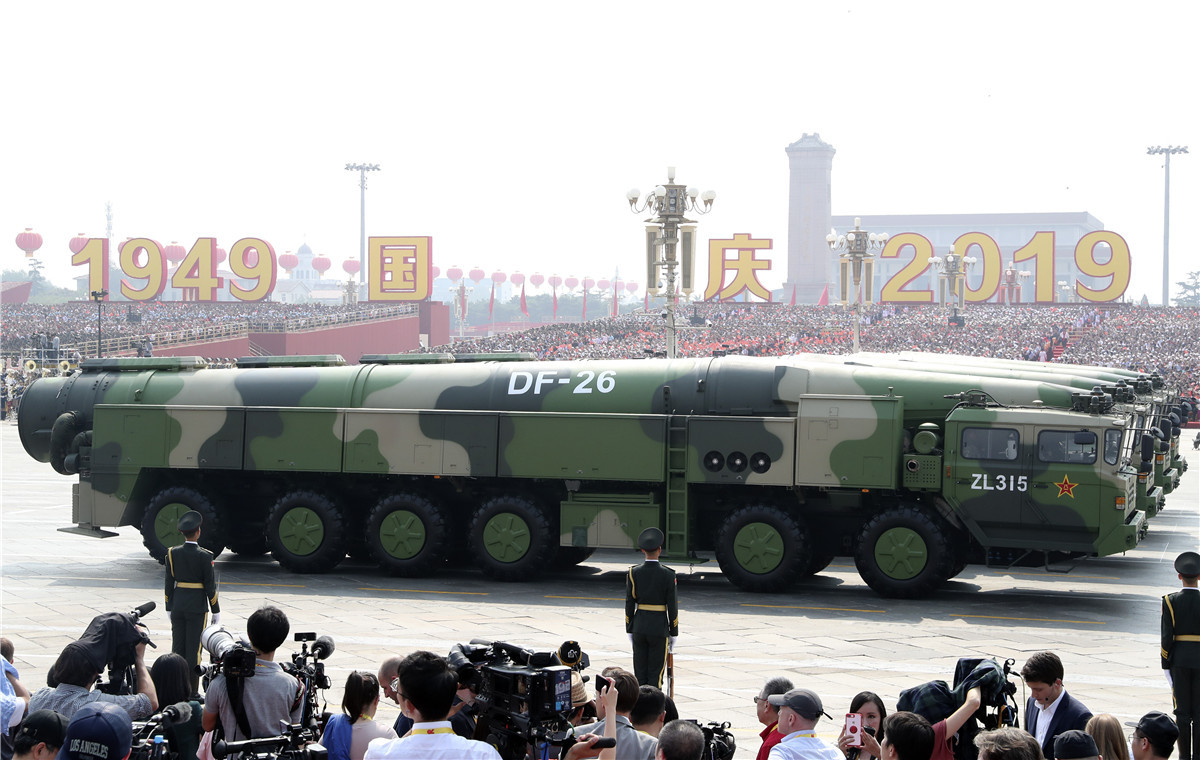
This missile system can rapidly swap between conventional and nuclear warheads and is designed for precision strikes on both land and naval targets. It has a payload capacity of approximately 1,200-1,800 kilograms, according to open sources.
Additionally, the missile is equipped with sophisticated guidance systems, including multispectral sensors, active radar seekers, and electronic warfare (EW) countermeasures such as decoys and jamming devices.
A crucial aspect of China’s anti-access/area-denial (A2/AD) strategy, the DF-26D is designed to prevent the projection of American military might in the Indo-Pacific, especially when Taiwan, the South China Sea, or the Senkaku Islands are caught in the middle of a Sino-American conflict. This missile will put both American naval and aviation strategies to the test by posing a danger to them, a fear reflected in multiple US reports.
An upgraded DF-26, seen in the latest CCTV footage, is likely to enhance further the missile’s capabilities and the threat it poses to adversaries.
- Contact the author at sakshi.tiwari13 (at) outlook.com
- Follow EurAsian Times on Google News