OPED by Wg Cdr J P Joshi (Retd)
Clausewitz defined war as “an act of violence aimed at compelling an opponent to act in accordance with one’s will.” In that deceptively simple formulation lies the enduring truth of war. The application of military force is an instrument of policy; it is not an end in itself.
Military force application has led to lethal wars since time immemorial. Yet, with advances in technology, the character of war has changed dramatically over the years. For centuries, their physical scope was relatively limited and constrained.
Armies fought predominantly along identifiable frontlines, where soldiers confronted soldiers in flesh and blood. Airpower changed that equation. It allowed violence to leap over the battlefield and strike the adversary’s military system across tactical, operational and strategic depths simultaneously.
Nuclear weapons then took destruction to an unprecedented level. Humanity was forced to confront the possibility that war could destroy not merely armies, but civilization itself. Humans never conceived that to be the purpose of war, I believe.
Technology is now carrying warfare towards another frontier. Artificial intelligence, autonomous systems, ubiquitous sensors, space-based systems, precision weapons and increasingly networked battlefields are beginning to challenge the central role of the human element.
India-China Conflict
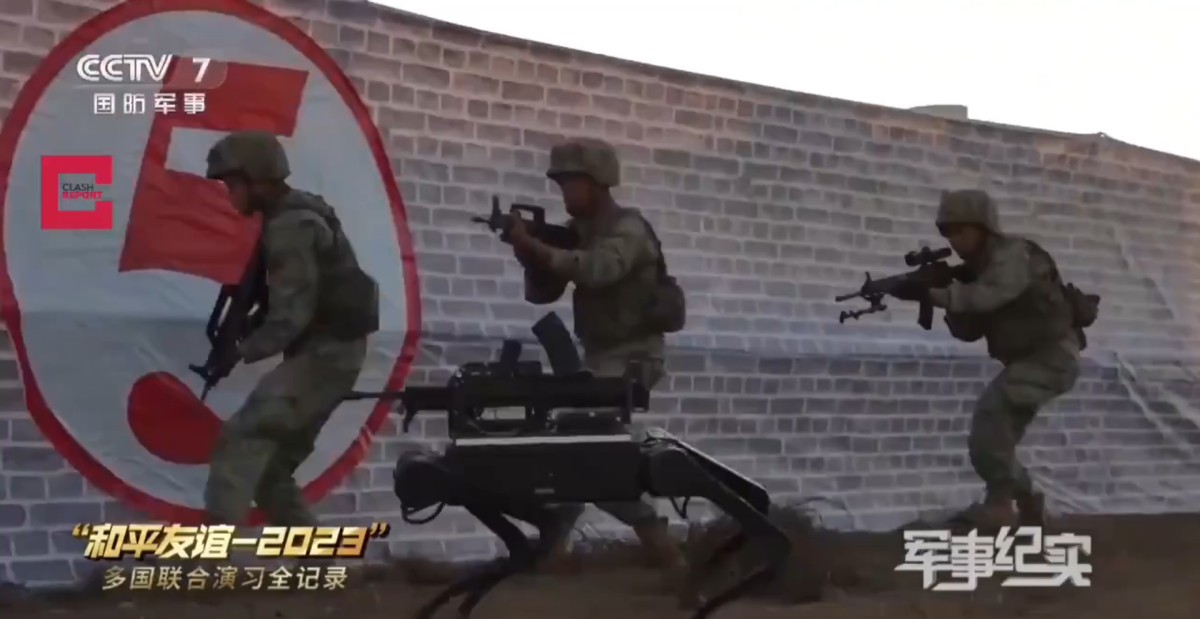
A recent discussion about a possible future India-China conflict in the frozen heights of the Himalayas captured a futuristic scenario wherein Indian soldiers in flesh and blood were found facing robotic Chinese combatants, who were immune to fatigue, weather, hunger and the other physical limitations of human beings.
It sounds like science fiction today. It may not remain so for long.
But the more immediate lesson does not come from science fiction. It comes from three contemporary conflicts: Ukraine, Operation Sindoor and the war in Iran.
Together, they raise a deeper question. Can modern military power still serve limited political objectives, or has its extraordinary destructive capacity made keeping war limited the principal strategic challenge of our time?
The Paradox of Greater Precision
Modern airpower has transformed the ability to find, identify and destroy targets. Precision-guided weapons, real-time intelligence, persistent surveillance, networked command systems, data analytics and increasingly sophisticated artificial intelligence have compressed the time between detection and destruction.
Some traditional sources of friction have consequently diminished. Large formations can be tracked more accurately. Logistics can be monitored digitally. Targets can be engaged from great distances. Commanders have access to information that previous generations could scarcely imagine.
Yet Clausewitz’s observation about friction remains remarkably relevant. “Everything in war is very simple, but the simplest thing is difficult.” Friction, he argued, is what distinguishes real war from war on paper.
Technology has not eliminated friction. It has changed its character.
The friction of the future may increasingly be found not merely in mud, weather, mechanical breakdowns or the physical movement of armies, but at higher levels: political coordination, alliance management, information warfare, economic interdependence, cyber disruption, electromagnetic interference, bureaucratic processes and the sheer cognitive burden of too much information.
The battlefield is becoming more transparent, while the war itself, in terms of its initiation, conduct, termination, and keeping it limited, may be a test of political sagacity.
This is particularly evident when military actions generate consequences far beyond the political objectives envisaged for the war.
Ukraine – When War Refuses to Remain Limited
The war in Ukraine demonstrates that technology does not necessarily make war shorter. It has made both sides more lethal and able to strike deeper.
The battlefield has become saturated with drones, precision weapons, electronic warfare, satellites and increasingly sophisticated intelligence networks. The conflict has progressively expanded beyond the destruction of military targets. Energy infrastructure, industry, transportation networks, economic capacity and civilian morale have become part of the contest.
Ukraine has demonstrated the enduring power of industrial capacity, manpower, resilience and adaptation.
Despite all the above, the result has not been a clean, technology-enabled decision. Neither side seems more capable of compelling the other to accept a political settlement.
This distinction is fundamental; the ability to destroy is not the same as the ability to compel a political settlement.
Operation Sindoor – The Possibility of Bounded Airpower
Operation Sindoor offers a contrasting experience. India employed airpower rapidly, precisely, and in a calibrated manner against clearly identified objectives. The campaign lasted approximately 88 hours. The military instrument was closely aligned with the political objective. Most importantly, the campaign stopped when the political purpose had been achieved.
This is perhaps the most important lesson. The success of a limited war is not measured by how much destruction can be inflicted. It is measured by whether the political objective can be achieved without creating a larger problem than the one that started the war.
Even here, friction was not entirely absent. Initial political restrictions on targeting Pakistani Air Defense and military infrastructure contributed to some losses on the opening night, as per open-source information. Also, external diplomatic involvement, as repeated by President Trump, which was denied by PM Modi in Parliament, played a role in bringing about a pause in the hostilities.
Yet these residual frictions did not prevent the operation from remaining bounded. Operation Sindoor demonstrated that modern airpower can, under favorable circumstances, still serve as a relatively rapid, precise, and controlled instrument of coercion, provided the political objective is clear; the military means remain subordinate to it, escalation is actively managed, and the political leadership has the sagacity and will to terminate.
The last of these conditions may become increasingly difficult as military technology grows more powerful.
Iran – When Success Creates a New Problem
The recent war in Iran presents the more troubling side of the equation. The United States demonstrated the extraordinary destructive potential of modern airpower. Targets could be located and struck with a speed, precision, and reach unimaginable to earlier generations.
The stated military objectives were achieved relatively early. But the war did not end simply because the targets had been destroyed.
The Strait of Hormuz, one of the world’s most critical maritime chokepoints, carrying around a quarter of global seaborne oil trade and significant volumes of liquefied natural gas and fertilizers, became a major problem in itself. Mining and disruption of shipping created an energy and shipping crisis, with global consequences. The nuclear question remained unresolved.
The strategic importance of keeping the Strait open began to compete with, and in some respects overtake, the original military objective of denuclearisation.
Friction generated by the war created many new problems. Three incidents illustrate the impact of Clausewitz’s concept of friction operating at different levels.
The early friendly-fire shooting down of three U.S. F-15Es by Kuwaiti air defenses represents tactical friction—the simplest of military actions becoming complicated by the fog and friction of combat.
The Mecca Agreement (August 2026 tri-lateral collective-defense pact between Saudi Arabia, Türkiye and Pakistan, modeled on NATO’s Article 5) illustrates operational and political friction, where military developments interact with wider regional relationships, security considerations, and political calculations.
And the reprioritization of demining and keeping Hormuz open vis-à-vis the original nuclear objective illustrates strategic friction. A military campaign that began with one principal purpose generated another strategic imperative that could not simply be ignored.
Clausewitz – Independent Logic of War
The above reveals Clausewitz’s “independent logic” of war.
Once violence is unleashed, it interacts with geography, economics, alliances, domestic politics, public opinion, and the adversary’s own will. The original political objective does not disappear, but it is no longer the only variable determining the outcome. Airpower had destroyed most worthwhile military targets within Iran but had not been able to subdue Iran’s capability and will to resist.
This may be the central paradox of modern air warfare. Airpower can destroy an adversary’s military system faster than it can destroy the adversary’s capacity and willingness to resist.
This distinction becomes critical when the opponent possesses strategic depth, resilient institutions, industrial capacity, geographical advantages, or the willingness to absorb punishment. The more powerful the attacking force, the greater the temptation to believe that additional destruction will eventually produce political compliance. But there comes a point when additional military action becomes strategically counterproductive.
The military option begins to outweigh the problem it was intended to solve. This is not a failure of technology. It is a failure to recognize technology’s limits.
New Friction, Artificial Intelligence (AI) and Nuclear Overhang
Artificial intelligence (AI) may reduce still more of the traditional friction of war. Unlike humans, autonomous systems will not tire. Machines do not require food or sleep. Algorithms can process information at speeds impossible for human commanders. Swarms may overwhelm defenses.
Autonomous platforms may operate in environments too dangerous for humans.
But removing human limitations does not remove Clausewitz’s “friction”. It relocates it. The following scenarios are worth contemplating.
Autonomous systems can make tactically correct decisions, which may produce strategically disastrous consequences. Machines may accelerate the tempo of warfare beyond political leaders’ capacity to deliberate. An algorithm may identify and act on an opportunity for escalation that human beings would have rightfully rejected.
Finally, a question: what happens when both sides possess such systems? The objective of no war can be the annihilation of human civilization, which came into sharp focus after the only nuclear weapon drops in the Second World War.
The danger may not be that machines replace human beings on the battlefield. It may be that machines compress decision-making so severely that human political control becomes the weakest link in the chain.
The Himalayan image of robotic soldiers therefore misses the larger point. The most consequential transformation may occur not at the tactical edge, but in the relationship between technology, command and political purpose.
The nuclear overhang that frames both the India – Pakistan, and the US – Iran contexts sharpen the challenge of limitation still further. Conventional operations must be kept deliberately bounded not only by political intent but by the ever-present risk that escalation could cross the nuclear threshold.
At the same time, the accelerating tempo made possible by AI and autonomous systems risks compressing decision cycles beyond political leaders’ capacity to deliberate. The danger is not merely that machines may make tactically correct but strategically disastrous choices; it is that the speed of machine-enabled warfare may leave human political control as the weakest, and most consequential, link in the chain.
Conclusion: The Real Challenge of Future Air Warfare
The future air warfare will undoubtedly be more autonomous, more precise, more connected, and more lethal. But the most important questions regarding war initiation, management, and termination must always remain in the human domain. The three conflicts discussed earlier offer three different lessons.
Ukraine reminds us that technology does not abolish attrition, resilience, or the industrial foundations of war. Operation Sindoor demonstrates that sophisticated airpower can still support a limited political objective when force, purpose and termination remain aligned. Iran demonstrates the danger at the other end of the spectrum: military objectives may be achieved, yet the war can continue to generate strategic problems that were not part of the original plan.
The nuclear overhang sharpens the challenge of limitation still further. Conventional operations must be kept deliberately bounded not only by political intent but by the ever-present risk that escalation could cross the nuclear threshold.
At the same time, the accelerating tempo of war and compressed decision cycles beyond the capacity of political leaders to deliberate, made possible by AI and autonomous systems, may leave human political control, which is the most important, as the weakest link in the chain.
The central problem of future air warfare, therefore, may not be the ability to destroy. It may be the ability to translate destruction into a politically acceptable outcome without allowing the war to acquire objectives of its own.
This brings us back to Clausewitz. War remains an instrument of policy. Technology changes its nature, speed, and its reach. Artificial intelligence may change it further. But none of these technologies change the fundamental purpose of war, which remains compelling an adversary to act in accordance with one’s will.
The paradox of our age is therefore clear. The greater the precision and destructive reach of modern military power, the harder it becomes to keep the war limited – and the more consequential and decisive political judgment becomes.
Ukraine demonstrates how technology can prolong and widen a conflict without producing a political settlement. Operation Sindoor shows that bounded, purposeful force remains possible when political control is firm, and termination is deliberate. The war in Iran shows how quickly military success can generate new strategic problems that eclipse the original aim.
The principal strategic challenge of our times is not the ability to destroy, but the wisdom to decide when violence should begin, what limited end it is meant to serve, and most critically, when it must be terminated – it must be much before the war acquires an independent logic of its own.
- Wg Cdr J P Joshi is a veteran of the IAF, a regular contributor, who has commanded a front-line fighter squadron; is a graduate of Air Command and Staff College, Maxwell AFB, AL, USA; and has been a Directing Staff at the Defense Services Staff College, Wellington.
- THIS IS AN OPINION ARTICLE
- Contact the author at: jpjoshiindia (at) yahoo.co.in