The real loss isn’t losing the race; it’s showing up after the race has already finished.
India’s ambitious fifth-generation fighter jet program, the Advanced Medium Combat Aircraft (AMCA), appears to be heading down the same path.
In 2019, India first announced plans for an indigenous fifth-generation stealth fighter jet.
As per the timelines given at that time, the AMCA Mark-1 was expected to roll out of the hangar by 2024-2025, and the flight tests were expected to commence by 2026.
By 2029, AMCA Mark-1 was expected to enter serial production. By 2035, the AMCA Mark-2 version was expected to enter production.
The DRDO and Aeronautical Development Agency (ADA) announced that while the AMCA Mark-1 will be powered by a General Electric (GE) F-414 afterburning turbofan engine producing 98 kN of thrust, the AMCA Mark-2 will be powered by an indigenously developed engine producing 110 kN of thrust.
Six years down the line, neither has the AMCA Mark-1 rolled out of the hangar, nor have the flight tests commenced. In fact, the project has hardly moved beyond the design stage.
However, after missing these deadlines, there was finally some progress this year.
In May this year, the ADA issued a Request for Proposal (RFP) to three shortlisted bidders, all private firms, to develop India’s fifth-generation stealth fighter jet, AMCA. The three shortlisted bidders were: Larsen and Toubro-Bharat Electronics Limited combine, Tata Advanced Systems, and Bharat Forge-BEML.
The winning bid will be selected based on the technical evaluation and the bid price. The RFP winner will manufacture five prototypes and one Structural Test Specimen (STS).
The RFP, worth Rs 15,000 crore (US$1.6 billion), set in motion one of India’s most ambitious aerospace projects ever. However, ambition alone cannot guarantee on-time delivery or continued relevance at the time of delivery.
The project’s constrained budget and highly aggressive timelines have raised serious doubts among defense experts about whether such a technologically complex program can realistically be delivered in such a compressed timeframe.
Additionally, there are concerns about ADA’s approach to developing a stealth jet with an interim foreign engine, then shifting to an indigenously developed, more powerful engine.
Lastly, there are questions about whether AMCA will remain relevant in the 2035-2040 period, when it is expected to receive final operational clearance (FOC), provided everything goes well.
AMCA’s Aggressive Timelines
The AMCA RFP mandates that the first prototype must be ready within 24 months of contract signing and that its first flight must occur within 30 months.
The first prototype is expected to be rolled out by 2029, powered by the GE F414 engine.
The first flight of the second prototype (P2) must take place within 37 months of contract signing. The timeline for the first flight of P3 (third prototype) is 46 months, for P4 (52 months), and for P5 (64 months).
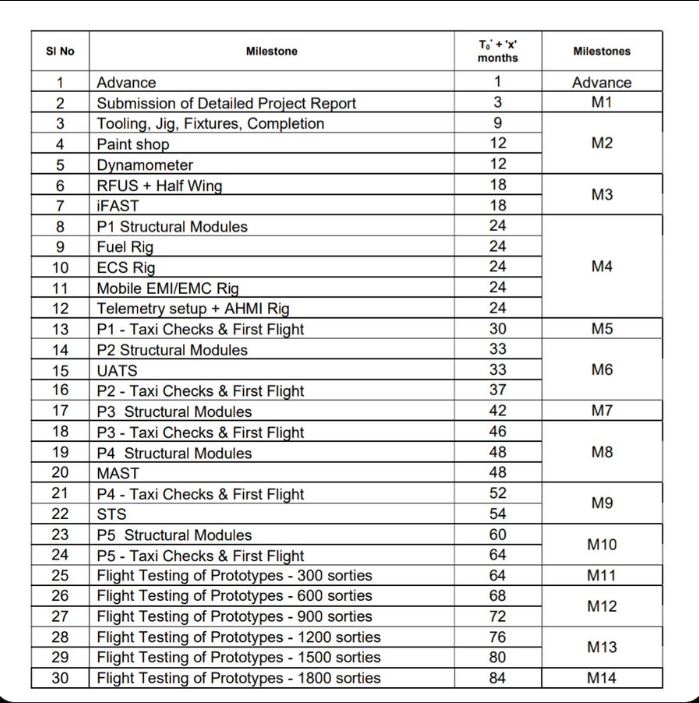
Altogether, 1,800 sorties are planned for the AMCA, to be carried out within 84 months of contract signing. The RFP clearly states that the 84-month (7-year) timeline is mandatory.
Only after these 1,800 sorties will the serial production of the AMCA commence.
So, if all these overtly ambitious timelines are met, the AMCA could go into serial production around 2034-2035.
The strict timelines are not just ambitious; they seem outright impractical for various reasons.
Firstly, except for the Tatas, no other shortlisted company has the experience of setting up a final assembly line for aircraft.
The Tatas have set up the assembly line for the C-295 transport aircraft in partnership with Airbus.
However, even the C-295 is a transport aircraft, and the assembly line was set up in partnership with Airbus. So, basically, none of the companies have experience setting up assembly lines for fighter jets.
And now, they will have to set up an assembly line for one of the most complex pieces of aerospace engineering on earth, building prototypes for a fifth-generation stealth fighter jet from scratch.
The selected bidder will have to establish manufacturing infrastructure, tooling, and associated test facilities, and integrate Line Replaceable Units (LRUs). The winning bidder will also support ground testing, structural testing, flight testing, and certification activities, including troubleshooting and defect rectification during the developmental phase.
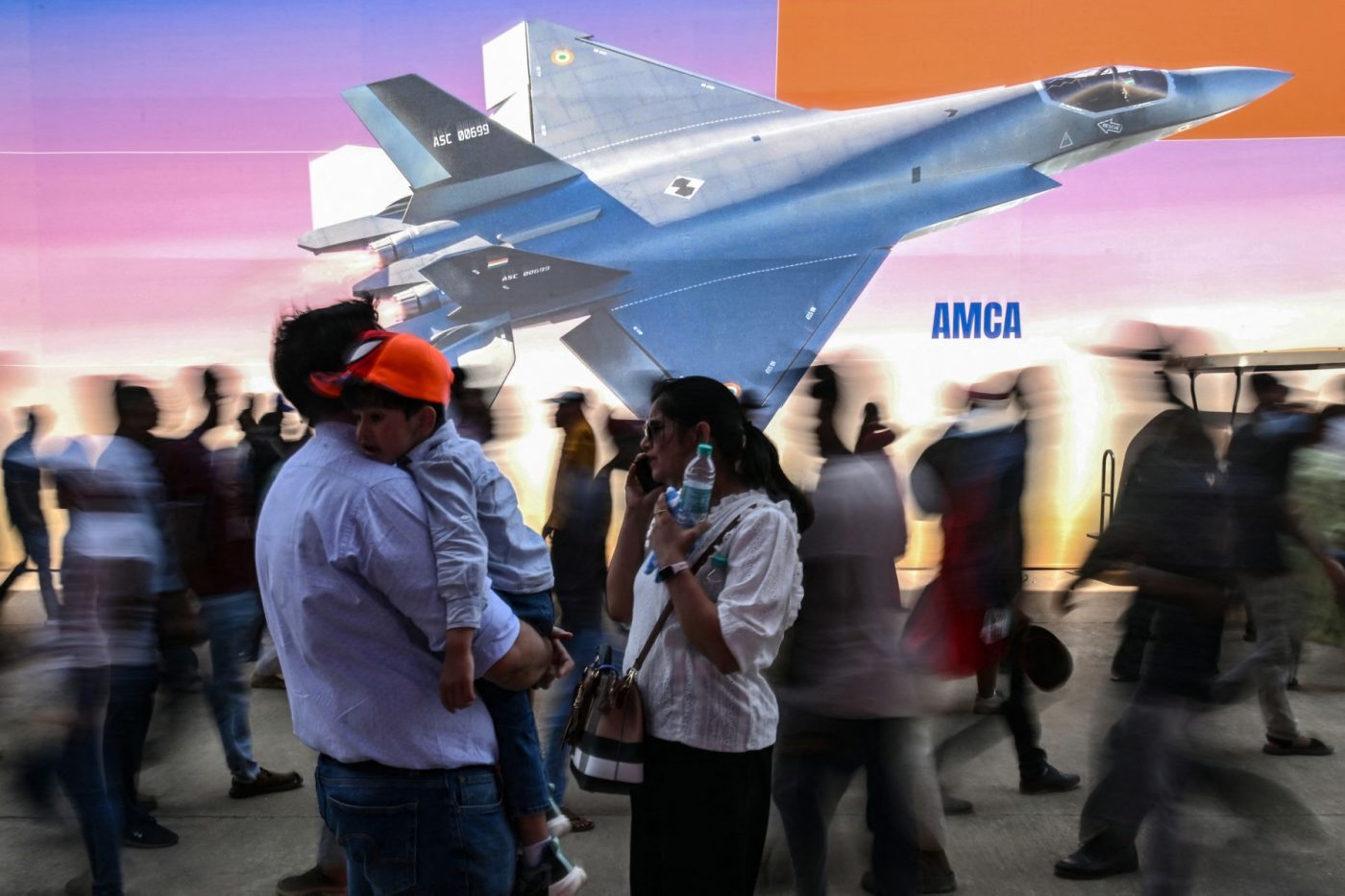
Furthermore, the winning firm will have to do this all alone, without any foreign assistance, as the RFP makes it clear that the winning bidder will have to incorporate a completely new company within three months of selection, and the new company cannot have foreign shareholding beyond passive institutional investments permitted under Indian regulations and must remain under the ownership and control of resident Indian citizens.
The winning bidder must handle detailed design finalization, supply chain for exotic materials/composites, engine integration (GE F414 initially), stealth features, and ground testing, all while building an STS for structural validation.
Facing all these constraints, the winning bidder must still roll out the first prototype within 24 months of signing the contract and ensure its first flight within 30 months of signing.
However, historical precedent shows that even established players with mature supply chains and prior 5th-generation experience take longer from contract signing to first prototype flight.
For instance, in the US, with a long history of aerospace design and development, the contract to manufacture the F-22 Raptor prototypes was awarded in 1991 to the Lockheed Martin/Boeing team. The first prototype rolled out in April 1997, and its first flight took place in September 1997, nearly six years after the contract was signed.
Similarly, the contract to manufacture the F-35 prototypes was awarded in 2001 to Lockheed Martin, which already had experience manufacturing F-22 Raptor prototypes. Still, the first prototype could roll out only in December 2006, more than five years after the contract signing.
Similarly, in Turkey, the KAAN contract was awarded to TAI in August 2016. The first prototype rolled out in 2023, and its first flight took place in 2024, nearly eight years after the contract was signed.
Now compare this to the 30-month mandatory timeline for the first flight of the AMCA prototype from the date of the contract signing.
If the US and Lockheed Martin, despite their rich history of fighter jet design and development, established supply chains and an unparalleled defense-industrial base, it still took Washington five to six years to roll out the first prototypes of stealth fighter jets, could the Indian firms, which will be setting up their very first assembly lines for fighter jets, achieve this in mere 30 months?
The 30-month timeline to roll out the first AMCA prototype and organize its first flight is overtly ambitious, especially given that the shortlisted players have no experience in setting up assembly lines for fighter jets, have no established supply chains, have the challenge of integrating a foreign engine, and have to deal with new technologies such as stealth coatings, sustained supersonic flights, and advanced sensor fusion.
Writing in EurAsian Times, retired IAF pilot and military analyst Vijainder K. Thakur said that “most fighter aviation enthusiasts would find the first flight timeline far-fetched. Indeed, it’s likely that everyone involved in the process of seeking CCS approval for the AMCA knows well that the timeline is hopelessly unrealistic.”
Similarly, Air Marshal Anil Chopra (Retd) warned that the AMCA was only expected to reach the prototype stage within about 11 years, but “realistically, it may take more time.”
There is also the question of how relevant it will be in the 2035-2040 time frame, when countries like China, the US, France, and the UK-Japan-Italy combine are already developing sixth-generation fighter jets.
“By 2035, China could have around 1,500 J-20s when India optimistically plans to induct the AMCA,” Chopra noted.
However, overtly ambitious timelines are not the only issue facing the AMCA project. Another major concern is the ADA’s approach of first integrating an interim foreign engine and then replacing it with a more powerful indigenous engine.
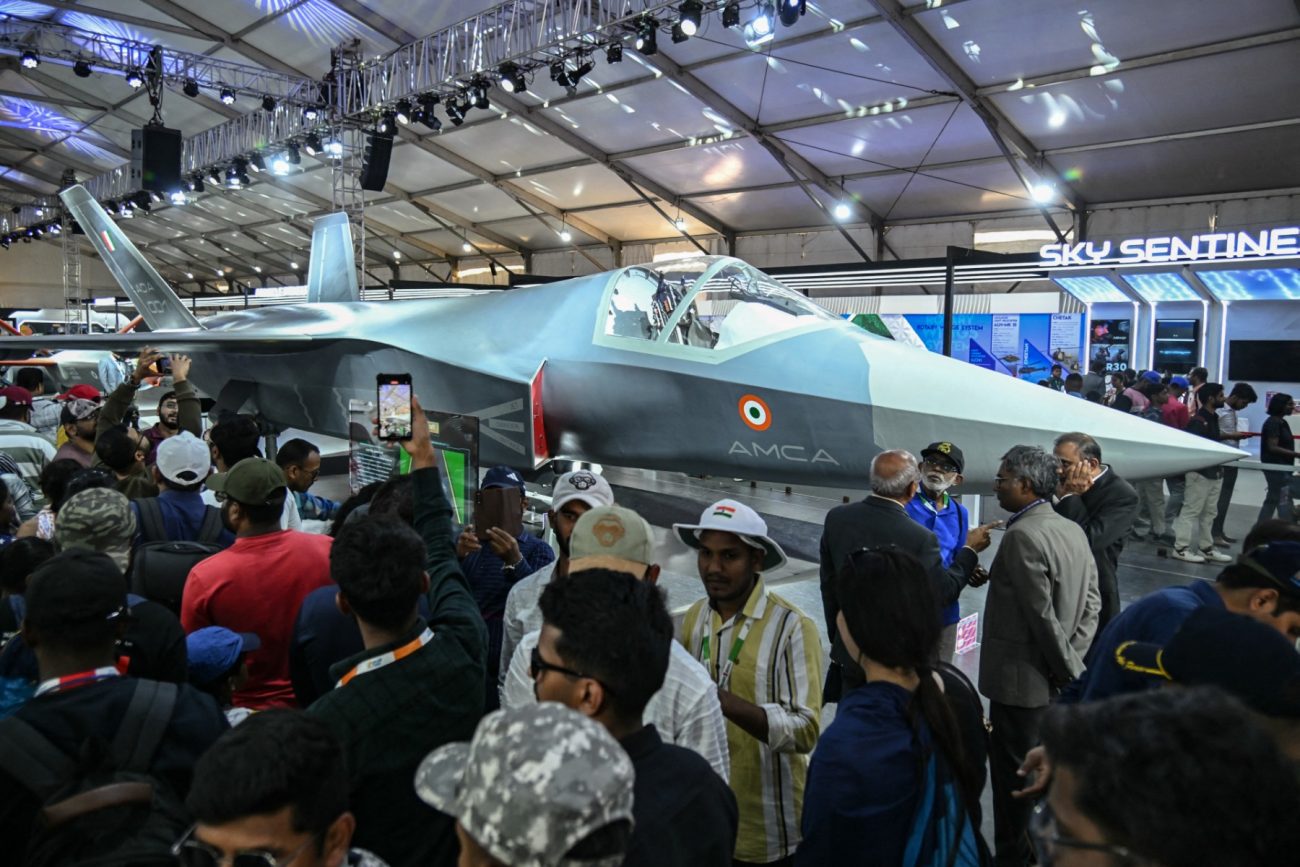
Why the Two-Engine Approach for AMCA Will Create Technological Complexities
As a general rule, airframes are designed around an engine.
Fitting a new engine into an existing airframe is like putting the cart before the horse.
ADA’s approach of designing an aircraft with an interim imported GE F-414 engine and then replacing it with an indigenously developed, more powerful engine will pose a host of technological and integration challenges.
The AMCA has been designed around the General Electric F414 engine. The F414 is a 98 kN-thrust-class engine. The IAF wants the AMCA to be powered by an 110-kN-class engine.
More importantly, India currently lacks the technology to build a 110-kN-class turbofan engine. India is exploring the possibility of developing this engine in partnership with Safran or Rolls-Royce.
According to former Indian Air Force pilot Thakur, “Designing an airframe around an engine that is acknowledged to be below the aircraft’s intended long-term thrust requirement introduces significant technical and program risk.”
“HAL did this in the past with the Marut HF-24, and the outcome was very disappointing for the IAF. HAL could neither develop nor acquire an aeroengine powerful enough to achieve the airframe’s Mach 2 capability that the IAF so desperately coveted.”
The engine is not merely a source of thrust; it is the heart of the aircraft, determining numerous aspects of the overall design. It influences weight distribution, intake and exhaust geometry, cooling requirements, hydraulic capacity, electrical power generation, fuel consumption, center of gravity, and maintenance philosophy, Thakur explains in a recent blog post.
“Replacing an engine is not simply a matter of installing a more powerful unit. Changes in airflow requirements, mounting arrangements, cooling systems, hydraulic pumps, electrical generators, fuel systems, engine controls, software integration, and flight characteristics may all require redesign.”
Even relatively small differences in engine dimensions, mass flow, or power extraction can affect the aircraft’s overall performance and certification, Thakur warns.
Critics are also warning that the AMCA Mark-1 will not be a true fifth-generation fighter jet, but rather a 4.5-generation fighter jet.
The GE F-414 engine that will power AMCA Mark-1 will produce only 98 kN of thrust. So, basically, the aircraft will lack supercruise capability, a defining feature of fifth-generation fighter jets.
Using the 98 kN GE F414 engine instead of the 110 kN engine as planned when designing AMCA rules out supercruise; lacking thrust vectoring rules out supermaneuverability; and large exhaust nozzles without IR suppression rule out rear-aspect stealth.
In the absence of these crucial technological capabilities, AMCA Mark-1 can only be described as a 4.5+-generation fighter jet.
So, even if all the ambitious timelines are met, by 2035 India will be able to produce at best a 4.5+-generation fighter jet, by which time many countries will already have moved to sixth-generation fighter jets.
- Sumit Ahlawat has over a decade of experience in news media. He has worked with Press Trust of India, Times Now, Zee News, Economic Times, and Microsoft News. He holds a Master’s Degree in International Media and Modern History from the University of Sheffield, UK.
- He can be reached at ahlawat.sumit85 (at) gmail.com