Once reliant on Soviet-era MiG-21 and MiG-29 fighter jets, Poland has made a historic leap into the fifth-generation era with the arrival of its first F-35 Lightning II stealth fighters.
The first three of the 32 Lockheed Martin F-35A Lightning II were delivered to the 32nd Tactical Air Base of the Polish Air Force at Łask Airfield on 22 May 2026. The aircraft bearing serial numbers 3509, 3510, and 3511 were reportedly transported from the Fort Worth assembly facility in Texas to their home location in central Poland via the Azores, with assistance from a US Air Force (USAF) KC-46A Pegasus tanker.
With this, Poland has become the first country on NATO’s Eastern Flank to operate the F-35 stealth aircraft amid sustained tensions between Russia and the European security alliance. Although Romania has also signed a deal for 32 F-35 jets, deliveries will only commence in 2031, as per plan.
The arrival of the jets—known as Husarz in Poland—was officially announced by the Polish Ministry of National Defense (MND).
“#F35PL already in Poland! We are joining the group of countries with 5th-generation fighters. F-35s feature “stealth” capabilities, which are a key element enabling effective mission execution in the event of a conflict with an adversary possessing advanced anti-access systems,” it said on X.
Witajcie w Polsce! 🇵🇱
Trzy F-35 wspólnie na niebie z naszymi F-16… pic.twitter.com/5U4l9IaZmI— Władysław Kosiniak-Kamysz (@KosiniakKamysz) May 22, 2026
The Polish Minister of National Defense, Władysław Kosiniak-Kamysz, published a video of three jets in the air, escorted by Polish F-16s. He emphasized the political and symbolic significance of the arrival, saying that Poland is entering “a new era” of air capability, and asserted that the aircraft’s arrival represented years of investment in infrastructure, training, operational readiness, and equipment.
The aircraft’s name, “Husarz”, is rooted in Poland’s proud military history and inspired by the Hussars, a cavalry corps famous for their extraordinary bravery and skill. Poland is targeting Full Operational Capability (FOC) for the F-35s by 2030.

The delivery of the first batch comes two years after the first Polish F-35A was formally unveiled in August 2025, and later deployed to Ebbing Air National Guard Base in Arkansas, where Polish pilots were trained to fly the jets. The delivery marks a breakthrough for the Polish Air Force, which is mostly composed of older-generation Soviet-era jets that it has been flying for decades.
From MiG-29s To F-35
Poland is among the handful of European countries, alongside the embattled Ukraine, Serbia, Belarus, and Russia, to operate Soviet-era fighter jets to this day.
The Polish Air Force previously operated the Sukhoi Su-22 Fitter, which was officially retired in a farewell ceremony held at Mirosławiec Air Base in September 2025 due to difficulties maintaining the aging airframe. These aircraft, which remained in service for about four decades, are currently being replaced by the FA-50 light-attack aircraft that Warsaw purchased from South Korea in a 2022 deal.
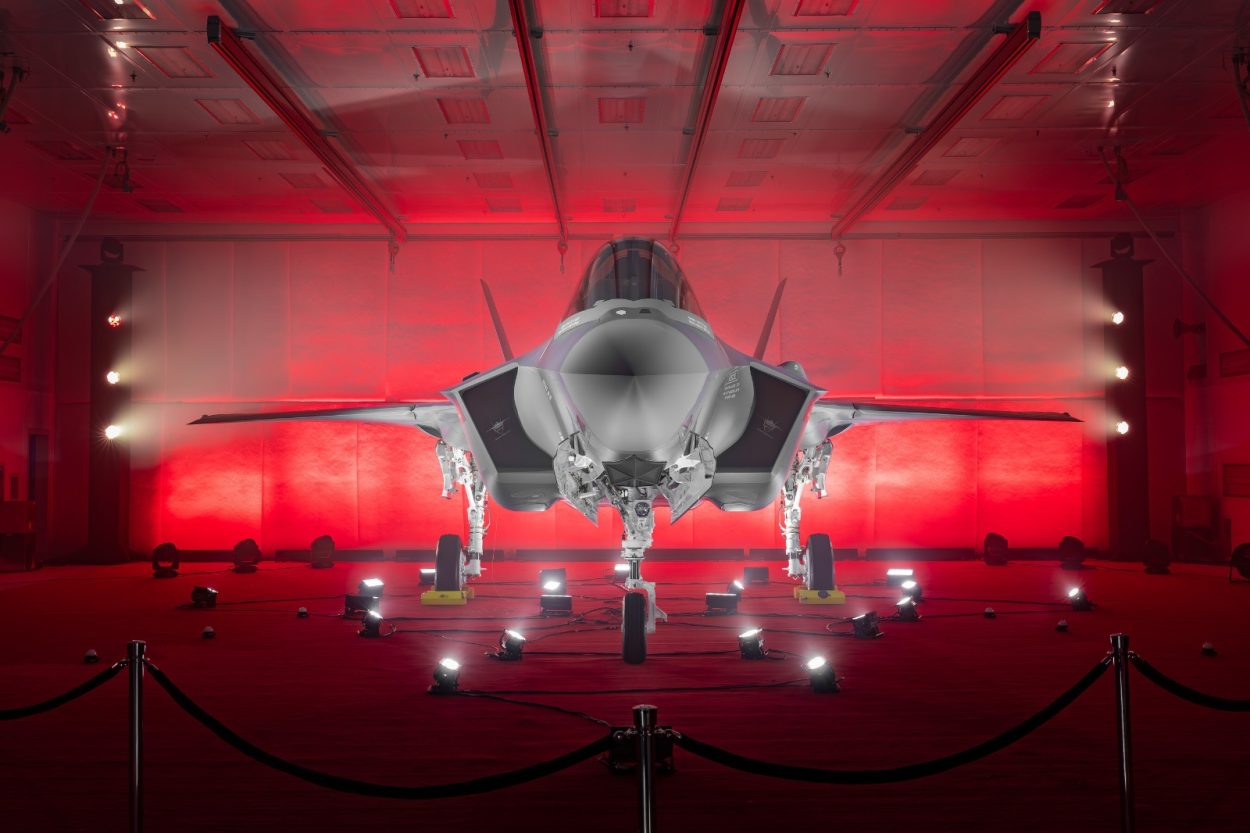
The Su-22 was the last major Soviet-designed strike or attack aircraft in NATO service.
In addition, Poland previously operated the iconic MiG-21, which was retired in the early 2000s. Meanwhile, the MiG-23 and the Su-7 were retired decades ago, in the 1990s.
Poland currently operates the MiG-29 Fulcrum, which was purchased from the Czech Republic and Germany, who did not mind giving away the aging jets, as previously explained by the EurAsian Times in a detailed article. These MiG-29s in the Polish arsenal intriguingly survived the arrival of the F-16C/D variant from the US.
However, Poland has been eager to get rid of these Soviet-era jets for years, as evidenced by the alacrity with which it donated about 14 of them to Ukraine in 2023 even though it refrained from transferring the F-16s that Kyiv had been aggressively campaigning for.
The Polish Air Force currently operates around 10 to 14 MiG-29s, at least on paper. Of these, at least nine have been cleared for transfer to Ukraine, as Deputy Defense Minister Pawel Zalewski disclosed in January 2026.
This generosity, however, is not without a personal interest.

The Polish MiG-29s have reached, or are very close to, the end of their lifespan. These aging jets require expensive spare parts, making the maintenance rather difficult.
Since it is a Soviet-era aircraft, many critical parts, especially engines, were originally sourced from Russia or from suppliers tied to Russian supply chains. However, the international sanctions imposed on Russia since the 2014 annexation of Crimea have made spares scarce and costlier. In fact, Poland has had to cannibalize older aircraft for overhaul.
By late 2018, Poland had stepped up its efforts to replace the MiG-29 Fulcrum and Su-22 Fitter jets with new aircraft. The search for a modern and more capable Western-origin fighter led Warsaw to examine the American F-35A conventional takeoff and landing variant. The US approval came sometime in 2019.
For perspective, the cost of flying MiG-29 often exceeded $20,000–30,000 per flight hour due to scarce Russian-origin spare parts, cannibalization, and limited overhaul capabilities. In contrast, the operating cost of the F-35A, which is radically more advanced than the MiG-29, is projected by some to be around $35,000 to $42,000 per flight hour as the fleet matures and sustainment improves over time.
Poland signed a $4.6 billion deal in 2020 for 32 F-35As to modernize its air force and bolster its defenses against regional threats, particularly from Russia. By February 2022, when Russia launched an unprecedented invasion of Ukraine, Warsaw knew that it had made the right decision.
- Contact the author at sakshi.tiwari9555 (at) gmail.com
- Follow EurAsian Times on Google News