Is China a constraining factor in an otherwise growing India- South Korea Defense Cooperation?
This question has assumed relevance in the context of the just-concluded visit to the Republic of Korea (ROK), better known as South Korea, by Indian Defense Minister Rajnath Singh. But before attempting an answer to the question, certain facts need to be kept in mind.
Following the announcement of a “special strategic partnership” and a “joint strategic vision” during ROK President Lee Jae Myung’s state visit to India in April, Singh met his South Korean counterpart, Ahn Gyu-back, in Seoul on May 20, 2026. The two Ministers reviewed the entire spectrum of defense cooperation and discussed ways to further expand collaboration in areas such as industry, production, maritime security, emerging technologies, military exchanges, logistics & regional security.
They acknowledged the growing convergence between India’s Act East Policy and the RoK’s regional strategic vision, reiterating their commitment to strengthening defense ties in line with the shared objectives of maintaining a free, open, inclusive, and rule-based Indo-Pacific. Accordingly, Memoranda of Understanding (MoUs) were inked in key areas of defense cooperation, reflecting the expanding scope and depth of the bilateral partnership.
Agreements were also exchanged on promoting cooperation in the field of Defense Cyber; training between India’s National Defense College and Korea National Defense University; and UN Peacekeeping Cooperation, thereby strengthening the partnership and making it more multidimensional.
The Indian Defense Minister also met South Korea’s Minister of Defense Acquisition Program Administration, Lee Yong-chul, with both agreeing “to harness the symbiotic efforts to create avenues for joint development, joint production and joint exports”. A roadmap to unlock the potential of the India-Korea Defense Innovation Accelerator Ecosystem (KIND-X) and synergize the two countries’ innovation ecosystems was discussed.
On the sidelines, Singh also chaired “the India-RoK Defense Industry Business Round Table, which brought together senior government officials and leading defense industry representatives from both countries. The interaction was said to have provided an important platform for exploring new opportunities in defense manufacturing, co-development, co-production, and supply chain partnerships.
Reportedly, the Indian Defense Minister invited Korean defense companies to strengthen engagement with the Indian industry and contribute to long-term, mutually beneficial collaboration. “The success of India-Korea industrial cooperation in the commercial sector demonstrates the enormous potential of long-term trusted partnerships between the two countries.
The time has now come to extend this successful model into the defense sector, where technology, innovation, manufacturing capability, and strategic trust are becoming increasingly interconnected. Korea’s technological excellence, combined with India’s scale, talent, manufacturing ecosystem, and innovation capabilities, creates a powerful foundation for cooperation. Together, our two countries can jointly develop and produce advanced technologies and defense systems for the future. Trusted partnerships between technologically capable nations acquire immense strategic importance. India and RoK are uniquely positioned to work together in this changing global landscape,” he said.
Singh highlighted that defense manufacturing is no longer confined to conventional platforms and equipment; modern defense ecosystems are powered by advanced electronics, artificial intelligence, autonomous systems, cyber technologies, sensors, semiconductors, quantum technologies, advanced materials, and space-based capabilities. He added that the future of defense will increasingly depend upon the ability to innovate rapidly and integrate technologies across multiple domains. This, he stated, is precisely where India and RoK possess enormous potential for collaboration.
Incidentally, Singh’s visit facilitated the signing of two agreements between L&T, India, and Hanwa Co Ltd, signaling what was said to be a promising future for India-Korea defense innovation and technology partnership. The agreements are expected to facilitate enhanced collaboration between the defense industries of both countries and promote technology cooperation and capacity building.
Of course, these two companies are not exactly strangers to one another. The two had struck what turned out to be a landmark and successful deal way back in 2017. That was for co-producing the K9 Vajra-T 155mm self-propelled howitzer, a modified version of South Korea’s K9 Thunder.
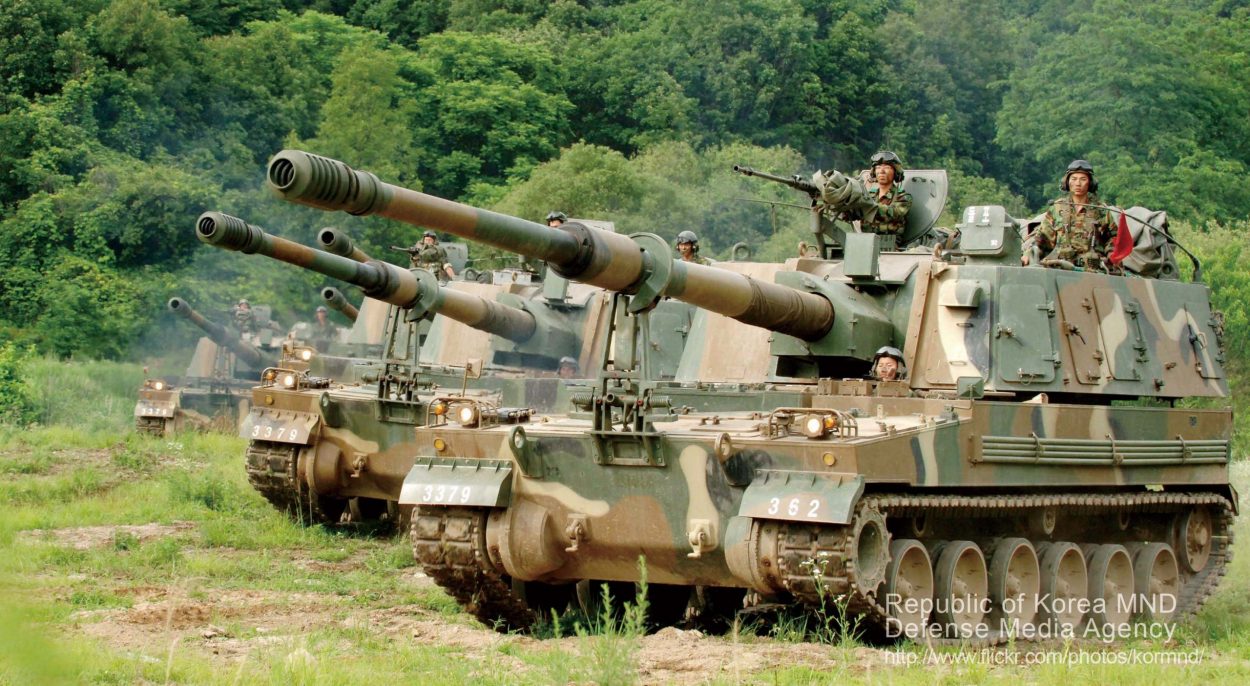
The 2017 deal was the $646 million contract for 100 such Vajras under the “Make in India” program. This was South Korea’s first major defense deal with India. With it proving a success, the two companies signed an additional contract in April 2025 to manufacture 100 K9 Vajra howitzers in India.
It is said that based on the Vajra model, India and South Korea can look forward to joint production of submarines, anti-missile defense systems, fighter jets, tanks, and even aircraft carriers.
India’s Cochin Shipyard Limited (CSL) signed an MOU with Hyundai Heavy Industries in November 2025 to jointly design and construct a Landing Platform Dock (LPD) for the Indian Navy. Similarly, another Indian company, Bharat Earth Movers Limited (BEML), signed a strategic MoU with Hyundai KSOE to jointly design and build a next-generation maritime and port crane system in India in December 2025.
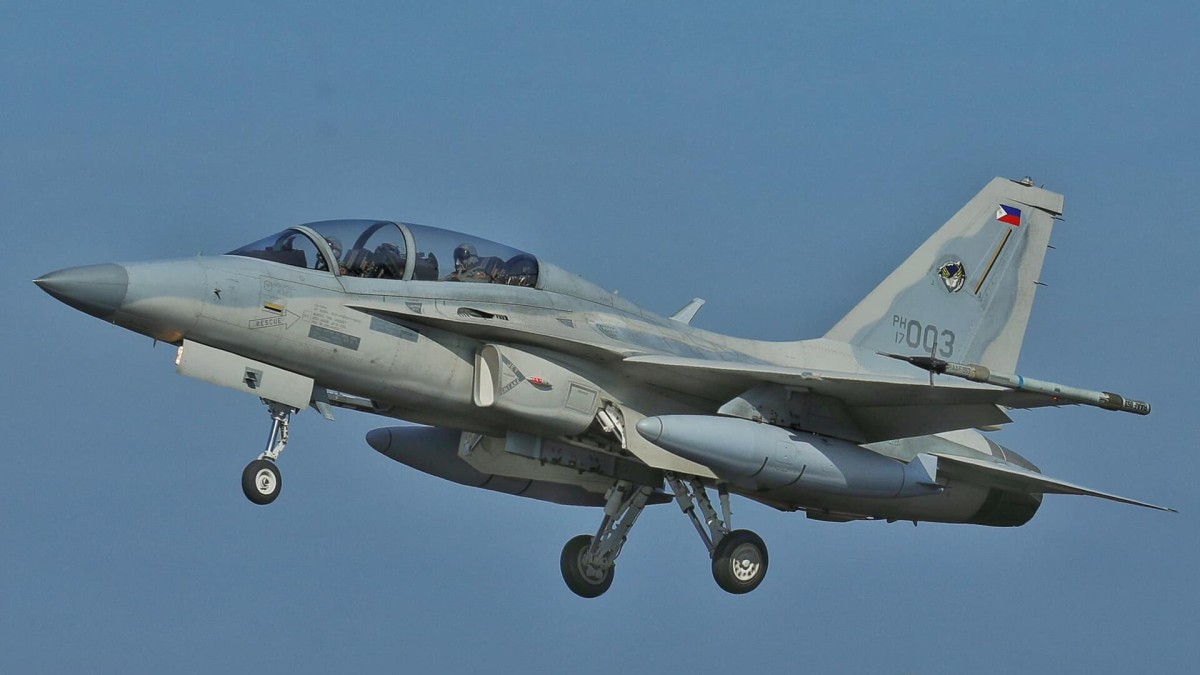
Through cooperative frameworks such as the proposed Korea-India Defense Accelerator (KIND-X), South Korea could collaborate on next-generation technologies, including laser weapons, mobile air defense systems, and AI-driven platforms. Reportedly, India is evaluating Korean aerospace components and MRO support. Korea Aerospace Industries has pitched the FA-50 for India’s trainer and light combat needs. Collaboration on radar, artillery systems, and missile components is also expanding.
Some experts say that several short-range missiles produced in India may be useful for South Korea to counter Pyongyang’s missile threats. Similarly, Seoul can utilize Indian defense production facilities to produce military hardware for the South Korean Army at a reasonable cost.
The joint production of defense equipment by India and South Korea can be exported to emerging defense markets in Southeast Asia, the Middle East, Eastern Europe, Latin America, Australia, and Africa, given the quality and price competitiveness of weapons produced in India using South Korean technology.
It is said that the Indian and South Korean defense industries can complement each other in several respects. While India has been quite successful in developing missile technology, South Korea has done well in building tanks, howitzers, and submarines.
In this context, it is worth noting that India’s Defence Research and Development Organization (DRDO) and Korea’s Agency for Defense Development signed a 2021 MoU to co-develop defense technology. Incidentally, the foundation for Indo-ROK defense cooperation was laid in 2005 with a 2005 defense cooperation MoU. It was further strengthened by the 2010 Agreement on Protection of Classified Military Information.
India–South Korea strategic relations were also upgraded to a Special Strategic Partnership in 2015, following which both countries now engage in the ‘2+2 dialogue’ between the foreign and defense ministries. The 2019 Roadmap for Defense Industries Cooperation had identified specific projects and set a target of $2 billion in defense trade by 2030.
These institutional mechanisms seem to have furthered the India–ROK defense relations. Regular service-level talks across the three arms of the military are held biennially. Maritime cooperation has also grown. A recent development was the inaugural India–ROK bilateral naval exercise conducted in the ROK from 13–16 October 2025, involving INS Sahyadri and ROKS Nojeokbong. Coast Guard cooperation has also continued. Both sides signed an MoU on “Cooperation in Maritime Search and Rescue” on the sidelines of the 13th High-Level Meeting in July 2025.
Besides, the Indian Navy and the ROK Navy conduct PASSEX exercises during port calls and have participated in multilateral drills like Malabar as observers. Both share concerns over sea lane security in the Indian Ocean and the South China Sea. Information-sharing on maritime domain awareness and white shipping is growing through the Information Fusion Centre-Indian Ocean Region in Gurugram, India.
However, none of this suggests that there are no bottlenecks in the path of India-ROK defense collaborations. South Koreans often cite difficulties with the land acquisition process when establishing manufacturing industries in India. Then there are the woes of the periodic labor unrest.
Despite the Indian economy opening up, it is still seen by foreign investors, including South Koreans, as dominated by government institutions and rules, such as offset provisions, lengthy acquisition cycles, and price negotiations. For example, the failure of the Kangnam Corporation project to produce minesweepers in India was due to issues related to technology transfer and pricing.
On the other hand, India would like further loosening of South Korea’s technology-transfer regime. South Koreans are known for closely guarding their trade secrets, particularly in defense-related technologies, which are often more classified.
Besides, many Korean companies that collaborate with the American industry are subject to the US International Traffic in Arms Regulations (ITAR), which restrict the export, import, and sharing of defense-related articles, services, and technical data.
It is in this context of bottlenecks that the question of the China factor, mentioned at the outset, becomes relevant. And here, the case of the K9 Vajra-T is instructive.
Apparently, the K9 Vajra-T is deployed in India’s northern Ladakh region, where India and China have territorial disputes. The K9 Vajra-T boosts India’s long-range firepower. It is considered highly efficient in mountainous terrain because it can be fired at steep, high-angle trajectories, allowing shells to clear mountain ridges and descend into deep valleys. It also serves as an all-weather, high-firepower alternative to air support, which is often hindered by weather and high altitude.
India is reportedly pursuing further expansion of the Vajra model into air-defense guns and missile systems, and in this, it is viewing Seoul as a dependable technology partner, which, in turn, may have angered China.
According to Kang Jun-young, a professor of international relations at Hankuk University of Foreign Studies, it is “highly likely” that Beijing views defense and supply-chain cooperation between South Korea and India “very critically”. This is because Seoul might be viewed as playing a “substantial role in the U.S.’ containment of China,” Kang explains.
“In particular, as India is engaged in a border dispute with China, Beijing is inevitably sensitive to the fact that South Korea’s weapons systems could lead to an increase in India’s military power,” he said, adding, “since pursuing technology transfer and local production beyond simple exports has the potential to dramatically advance India’s defense self-sufficiency capabilities, China is likely to regard this as a strategic move that threatens its geopolitical interests and security.”
That being the case, South Korea needs to be sensitive to China’s displeasure, it is argued. After all, China is South Korea’s largest trading partner. Memories of Beijing’s harsh economic retaliation, particularly in tourism, entertainment, and retail, following Seoul’s 2017 deployment of the US THAAD missile system, make South Korean policymakers highly sensitive to Chinese pressure.
Even South Korea’s defense industrial sector remains deeply integrated with global supply chains that rely on Chinese raw materials and intermediate goods. This exposure introduces vulnerability to potential Chinese export blocks or embargoes.
However, experts suggest that China is unlikely to put direct pressure on South Korea for its defense dealings with India. After all, China has not yet blocked any such deal outright, be it on K9 Vajra howitzers, submarine tech discussions, naval exercises, or growing arms trade. But South Koreans, as Prof. Kang cautions, will keep the China factor in mind while shaping the scale, speed, and political framing of the road of Indo-ROK defense partnership.
It may not close the road, but it could be a speed barrier.
- Author and veteran journalist Prakash Nanda is Chairman of the Editorial Board of the EurAsian Times and has been commenting on politics, foreign policy, and strategic affairs for nearly three decades. He is a former National Fellow of the Indian Council for Historical Research and a recipient of the Seoul Peace Prize Scholarship.
- CONTACT: prakash.nanda (at) hotmail.com