After much-hyped drills between J-16 and Egyptian Rafale fighter jets, now a Chinese YY-20 tanker was spotted refueling an Egyptian Rafale aircraft, marking another first-of-its-kind event.
The Spokesperson of the Egyptian Armed Forces, Ahmed Othman, published a photo showing a Chinese PLAAF (People’s Liberation Army Air Force) YY-20 tanker refueling an Egyptian Rafale during aerial refueling training.
The event demonstrated “deepening interoperability between the two sides,” as China Military Bugle, the official press account of China’s armed forces, noted in a post on X.
This marks the first time a Chinese aerial tanker had refueled a Western-origin fighter jet.
The YY-20 is one of the many aircraft the PLAAF dispatched for the ongoing exercise, alongside six J-16s, Y-20 transports, KJ-500 AEW&C aircraft, and other support assets.
In fact, the tanker was instrumental in refueling the J-16s that traveled about 6,000 kilometers to Egypt for their maiden deployment to the Eagles of Civilization exercise.
Rafale meets YY-20:
China, Egypt continue joint air force exercise ‘Eagles of Civilization 2026’
New photo from @EgyArmySpox shows a Chinese YY-20 tanker refueling an Egyptian Rafale fighter during aerial refuelling training of the "Eagles of Civilization-2026" joint exercise.… pic.twitter.com/Y5RPqLiuh2
— China Military Bugle (@ChinaMilBugle) August 31, 2026
“We now have confirmation that the Chinese drogue refueling system installed on the PLAAF’s YY-20A aerial refuelling/tanker aircraft is compatible with the probes on Egypt’s French-built Rafale fighters. This is not really surprising, but the Rafale is seemingly only the second foreign fighter design to receive fuel from a Chinese aerial refueling aircraft,” Military analyst Shahryar Pasandideh noted.
Before this, the PLAAF YY-20 had provided mid-air refueling to the Egyptian MiG-29Ms during the 2025 iteration of the Eagles of Civilization drills.
Both the YY-20 and the Rafale use the probe-and-drogue method. This refueling technique uses a flexible hose (or pipe) that extends from the tanker aircraft. At the narrow end of the hose is the drogue or basket, which serves as a funnel to facilitate the insertion of the receiver aircraft probe into the hose while in flight.
The probe, a rigid, projecting, and pivotable retractable arm, is inserted into the drogue by the receiver pilot for refueling.
The Chinese YY-20 deploys flexible hoses with drogues, typically from its under-wing pods. On the other hand, the Rafale is equipped with a non-retractable refueling probe.

In principle, this makes physical connection possible. However, differences could exist in the tip design and probe dimensions, or in the size and behavior of the drogue basket. Additionally, the fuel flow rates and pressures, the connection procedures, stabilization speeds, and safety protocols could also differ.
Against that backdrop, the successful contact between the two platforms during the exercise confirms practical interoperability.
Notably, precedents exist for refueling between platforms from rival countries.
For instance, a US KC-135 tanker aircraft refueled three Malaysian Su-30MKM fighter jets mid-flight in November 2024, as the EurAsian Times reported at the time. Moreover, Indian Rafales are regularly refueled by the Russian-origin IL-78 air-to-air refuellers.
YY-20’s refueling of a French-origin fighter jet is significant because France considers China a threat in the Indo-Pacific and Beijing has positioned its fighter jets, particularly the J-10C, as an affordable alternative to the French Rafale in the export market.
Meanwhile, it further bolsters growing interoperability between the PLAAF and the Egyptian Air Force.
J-16 Took on Rafales in Egypt
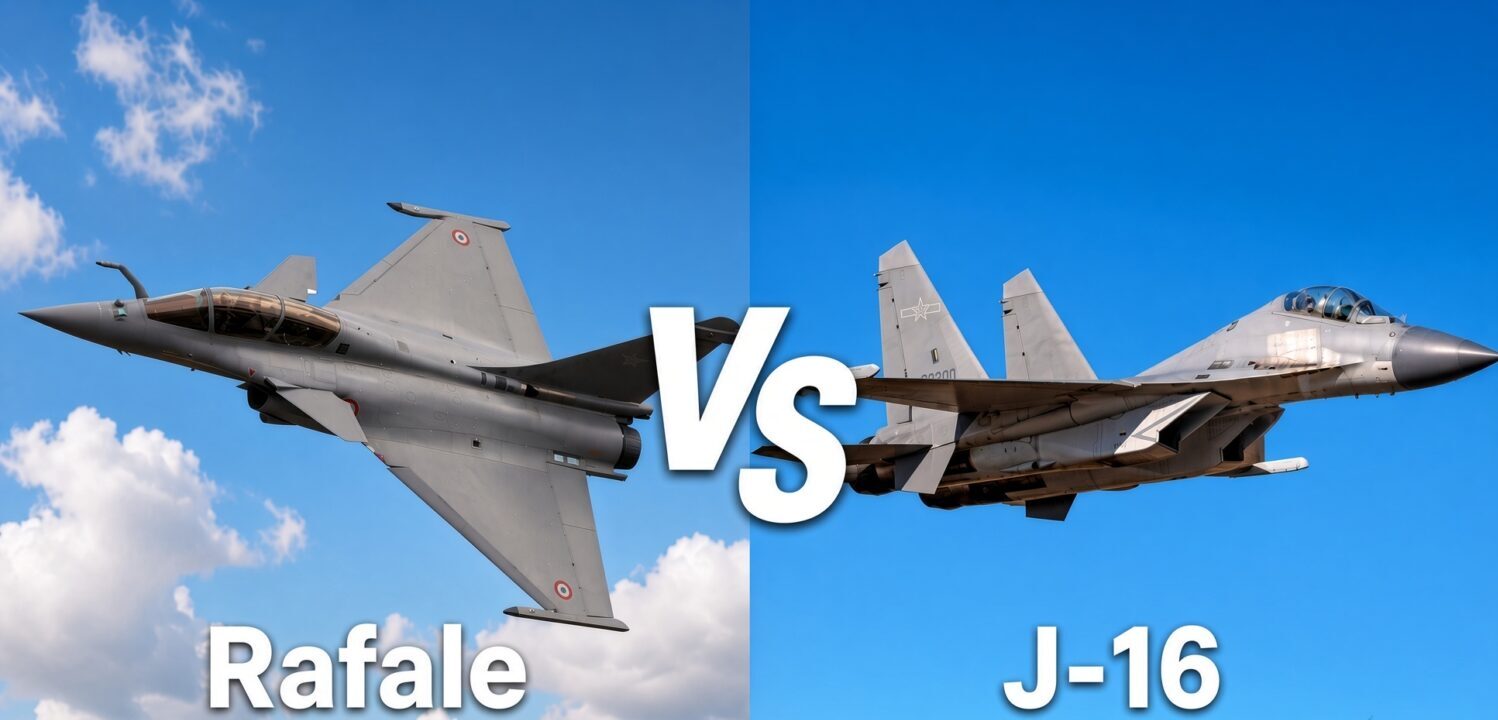
Earlier this month, the Chinese PLAAF simulated a high-stakes air battle, pitting eight J-16 fighters against six French-built Rafale jets during the “Eagles of Civilization 2026” drills.
Chinese state media released footage of the duel, showing the J-16s practicing air warfare against Egyptian MiG-29 and Rafale fighters in real-world scenarios. The two sides reportedly engaged in both beyond-visual-range (BVR) combat and dogfighting.
No official kill ratios, scores, or “win or loss” tallies were released by the Chinese PLA Air Force, the Chinese Ministry of National Defense, the Egyptian Ministry of Defense, or independent observers. However, unverified claims on social media suggested that the J-16s beat Egyptian Rafales 7–1 on the first day of flying, as EurAsian Times reported earlier.
The one Rafale “kill” was gifted to Cairo, as a courtesy, more for face-saving than anything else, one of the Chinese social media posts claimed. However, these stats are purely imaginative, as neither China nor Egypt published an official scoreline.
The drills, nonetheless, grabbed headlines mainly because Chinese pilots rarely get live dissimilar training against modern Western fighters due to the geopolitical rivalry between Beijing and the West. Moreover, several observers noted that the drills may be an attempt by China to develop capabilities and tactics against the Rafale, a warplane its “adversary” India also operates.
These drills may have allowed Chinese pilots to gauge the Rafale’s flight characteristics, basic weapon combinations, medium- and close-range mobility, sensor behavior in engagements, and how its tactics interact with Chinese systems under realistic scenarios. However, analysts surmised that there might be some variations in the EW suites, pilot training, support systems, and the weapons arrangement, as these are not Indian Rafales.
“The Chinese would probe the Egyptian Rafales. It will depend on how much the Egyptians will give away. They can develop tactics against the Rafale. Finally, it is the man behind the machine that matters. We beat the US F15s in air combat in the first-ever exercise between IAF & USAF. They decided to accelerate the F-22 to beat us. It was all over the US press,” IAF veteran and military commentator, Group Captain Johnson Chacko (retd), told the EurAsian Times.
“J-16 is a reverse-engineered Su-30, which is also operated by the IAF. Egyptian MiG-29s also participated. We have all three. We would have developed tactics against the J-16 (Su-30) by now, he added in a later interaction with the EurAsian Times.
Moreover, factors such as the rules of engagement, simulated weapons or sensors, mission objectives, pilot proficiency, and supporting assets all significantly influence exercise outcomes in dissimilar air combat training. The outcomes of bilateral aerial drills do not directly indicate which aircraft would prevail in actual combat.
- Contact the author at sakshi.tiwari13 (at) outlook.com
- Follow EurAsian Times on Google News