A Russian Bear-F patrol aircraft carried out what the UK described as “unsafe” activity near one of the Royal Navy’s aircraft carriers while it was operating in the North Atlantic, the British Ministry of Defense said on Monday.
The incident occurred while the carrier was participating in NATO air defense operations off the coast of Iceland. British officials did not specify the exact nature of the Russian aircraft’s maneuvers but indicated that its actions posed a risk to allied forces in the area.
The UK carrier is currently deployed as part of NATO’s efforts to strengthen air and maritime security in the North Atlantic. The Ministry of Defense said the Russian aircraft’s behavior was “unprofessional” and fell short of international standards for safe military interaction at sea and in the air.
The incident comes amid heightened tensions between NATO and Russia, with both sides frequently accusing each other of provocative military activity in the region.
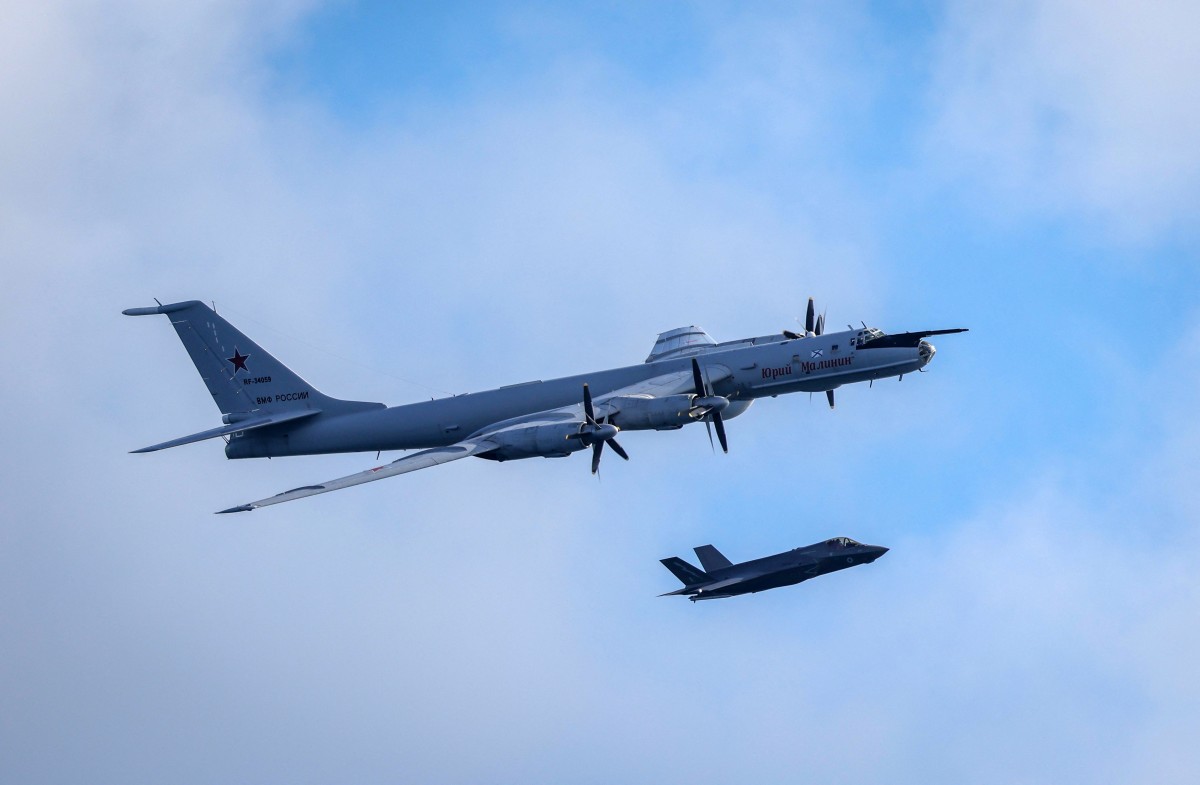
The Bear-F plane “repeatedly approached” the carrier group last week, passing the HMS Prince of Wales aircraft carrier “unnecessarily close” at low altitude and dropping numerous sonar devices in the area, according to the ministry.
Two British F-35 stealth jets were dispatched from the carrier to intercept and escort the patrol plane until it departed, it added.
“This activity was unsafe and unprofessional,” a ministry spokesperson said of Thursday’s incident in the Norwegian Sea in the so-called High North.
The allegations emerged as the ministry said Defense Secretary Dan Jarvis and Icelandic Foreign Minister Thorgerdur Katrin Gunnarsdottir had visited HMS Prince of Wales over the weekend.
The Royal Navy carrier is leading the group on a mission to defend the North Atlantic “against increasing Russian threats”, according to the ministry.
The mission has seen F-35 jets conduct NATO air defense operations from a European aircraft carrier for the first time, and comes amid heightened tensions with Russia.
Military experts and European leaders say Russia has ramped up its “hybrid war” tactics in the strategic region.
“We live in an increasingly dangerous and uncertain time, and it’s deployments like this, supported by allies and partners including Iceland, that improve our deterrence and defense as part of NATO,” Jarvis said in a statement.
In the statement, Gunnarsdottir added the deployment was “a clear demonstration of NATO’s enhanced presence in this strategically important region”.
Jarvis took up his post less than a month ago after his predecessor, John Healey, quit, accusing the government of failing to commit enough money to a modernization plan to protect Britain. The shock resignation prompted further last-minute wrangling for extra money for the 10-year Defense Investment Plan.
Earlier, PM Keir Starmer announced that Britain would spend almost £300 billion ($397 billion) over the next four years to modernize its armed forces amid rising threats.
Starmer, expected to leave office next month after losing the support of Labour MPs, announced that the overall defence budget would increase by £15 billion over the next four years to almost £300 billion, as he launched his long-awaited 10-year Defence Investment Plan.
“Last year I made the decision in the national interest to reprioritise aid spending towards defence and achieved the biggest uplift in defence spending since the end of the Cold War,” Starmer said in a speech.
“That was the right choice because the world has changed. National security is economic security.
“Today we uplift defence spending further. An additional £15 billion worth of funding by … reprioritising spending across government.”
The plan includes more than £5 billion for drones and autonomous systems over the next four years, the Ministry of Defense (MoD) said in a press release earlier.
Bear-F Aircraft
The Tupolev Tu-142, also known as the Bear-F, is one of Russia’s most critical maritime patrol and anti-submarine aircraft. A derivative of the iconic Tu-95 strategic bomber, the Bear-F has been an essential component of the Russian Navy’s aerial capabilities.
The Tu-142 was developed in the 1960s and 1970s as the Soviet Union sought to counter the growing threat posed by Western nuclear-powered submarines.
While the original Tu-95 was designed as a strategic bomber, the Tu-142 variant was specifically modified for maritime patrol and anti-submarine warfare missions.
The aircraft entered service with the Soviet Naval Aviation in the early 1970s and continues to serve with the Russian Navy today. Its primary roles include long-range maritime reconnaissance, tracking enemy submarines, gathering intelligence, and monitoring NATO naval exercises.
By Agence France-Presse