As EurAsian Times reported yesterday, the Houthis claimed to have attacked a Saudi Arabian Eurofighter Typhoon using a surface-to-air missile. They claimed the fighter jet was at “risk of crashing.”
The Saudis, as expected, have not commented on the alleged strikes, but this is not the first time.
To begin with, if the Houthis claims are to be believed, this would be the second Eurofighter loss for the Royal Saudi Air Force (RSAF).
The only previously confirmed RSAF Typhoon loss occurred on 13 September 2017, when the Eurofighter crashed into a mountain in Abyan province’s Al Wade’a district during a combat mission over Yemen.
The pilot, Lt. Col. Muhanna bin Saad Al-Baiz, was killed, and official reports attributed the incident to a technical failure.
This was the RSAF’s first official operational loss of a Eurofighter Typhoon.
Earlier, EurAsian Times was among the first to report on the loss of a Saudi F-15SA fighter jet.
The Houthis downed a Saudi Arabian F-15 on September 16, near Marib, using a locally-made surface-to-air missile.
“The Yemeni Armed Forces, with Allah’s aid and grace, succeeded in shooting down a Saudi F-15 fighter jet while it was carrying out hostile operations in support of its military mobilizations in the airspace of Marib province,” Houthi military spokesman Yahya Saree announced in a post on social media.
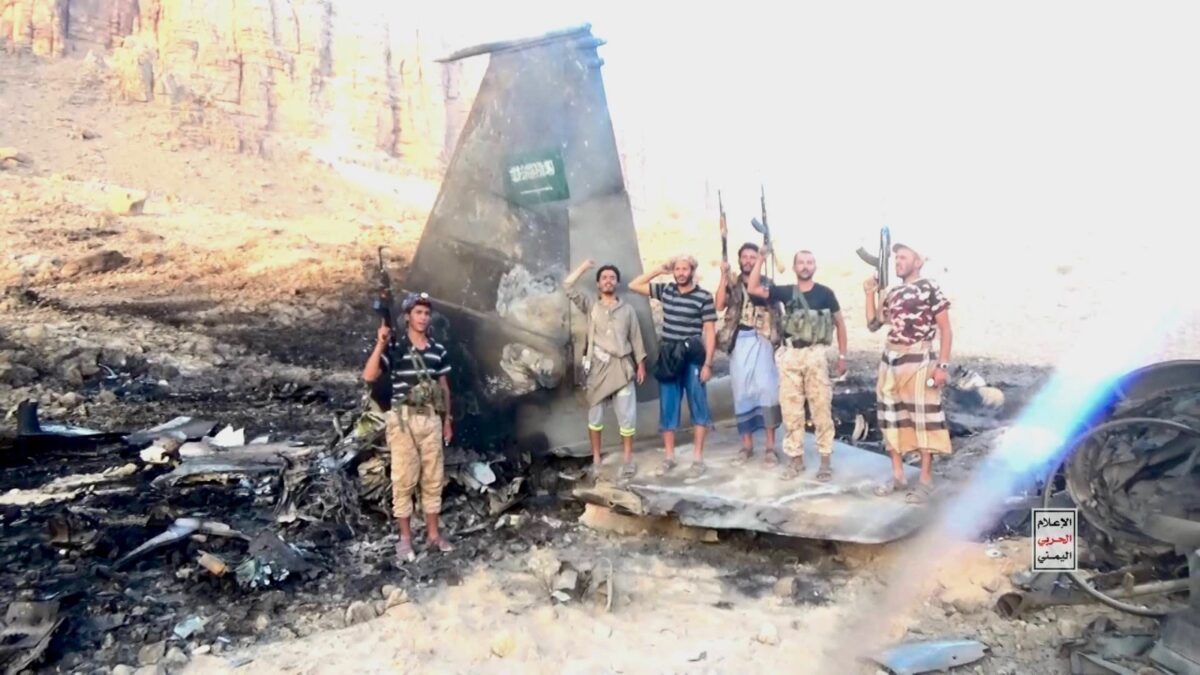
The Houthis released images of their fighters posing with the aircraft wreckage. The downed jet was identified as the F-15SA Tail N.5539, operated by the 55th Squadron of the Royal Saudi Air Force.
There was no official response from the Saudi government — no acknowledgment, no denial.
Saudi Arabia has a long record of declining to confirm or deny Houthi claims.
In May 2015, Houthis claimed they shot down a Saudi fighter near Sanaa and shared images of wreckage. A Saudi official told CNN the government “would not comment on the claim.”
In January 2018, the Houthis claimed to have downed a Saudi Tornado over Saada and later released images of the wreckage. Saudi media reported that a Tornado on a combat mission had crashed for “technical reasons” and that both crew members were rescued.
The Saudi government did not accept the claims of a missile hit.
In March 2018, the Houthis released infrared footage they said showed a surface-to-air missile striking an F-15 over Saada. Spokesman Colonel Turki al-Maliki confirmed that a missile had been launched at an F-15 but said the aircraft “deal[t] with the source of fire and return[ed] safe to base.”
In February 2020, the Houthis claimed they shot down a Tornado jet over al-Jawf and released video of the engagement. RSAF had to confirm the loss as both pilots ejected and were captured by Houthi forces.
Overall, the silence limits the propaganda value of the Houthis and also protects the morale of the country and its security forces.
In the latest incident, it appears the RSAF Eurofighter may have landed, or even crashed, in Saudi territory, but there is no clear information. If there were any ejections, they would also have happened in Saudi territory. So, the Houthis can claim a hit, but they may never be able to prove anything.
Even in the case of the F-15 shootdown, Houthis were seen with the wreckage of the aircraft, but there was very little information on the two crew members on the aircraft: the pilot and the systems officer, who sits in the back seat.
EurAsian Times did a detailed analysis of the fate of the pilot, and it appears that, most likely, they were recovered by Saudi forces, giving no propaganda material to the Houthis.
Eurofighter Typhoons in the Royal Saudi Air Force Inventory
The Eurofighter Typhoon forms a major element of the RSAF combat fleet. Saudi Arabia operates 72 of the twin-engine, multirole fighters, making it one of the largest Typhoon operators outside Europe.
The RSAF received all aircraft under the Project Salam program, and it bases them at King Fahd Air Base near Taif.
The RSAF assigns all Typhoons to the 2nd Aviation Wing at King Fahd Air Base (Taif), in the Hejaz mountains roughly 150 km southeast of Jeddah. The wing operates three squadrons: No. 3 Squadron, No. 10 Squadron, and No. 80 Squadron. Aircraft are generally configured as Typhoon F.2 (single-seat) and T.3 (twin-seat) or equivalent Tranche 2/3 standards.
The base’s location has made it a logical hub for operations near the Yemeni border.
The Typhoons complement the RSAF’s much larger F-15 family and the older Tornado fleet and have flown combat missions over Yemen since the Saudi-led intervention began in 2015, conducting close air support, interdiction, and strikes against Houthi targets. They have also participated in limited operations against ISIS targets in Syria.
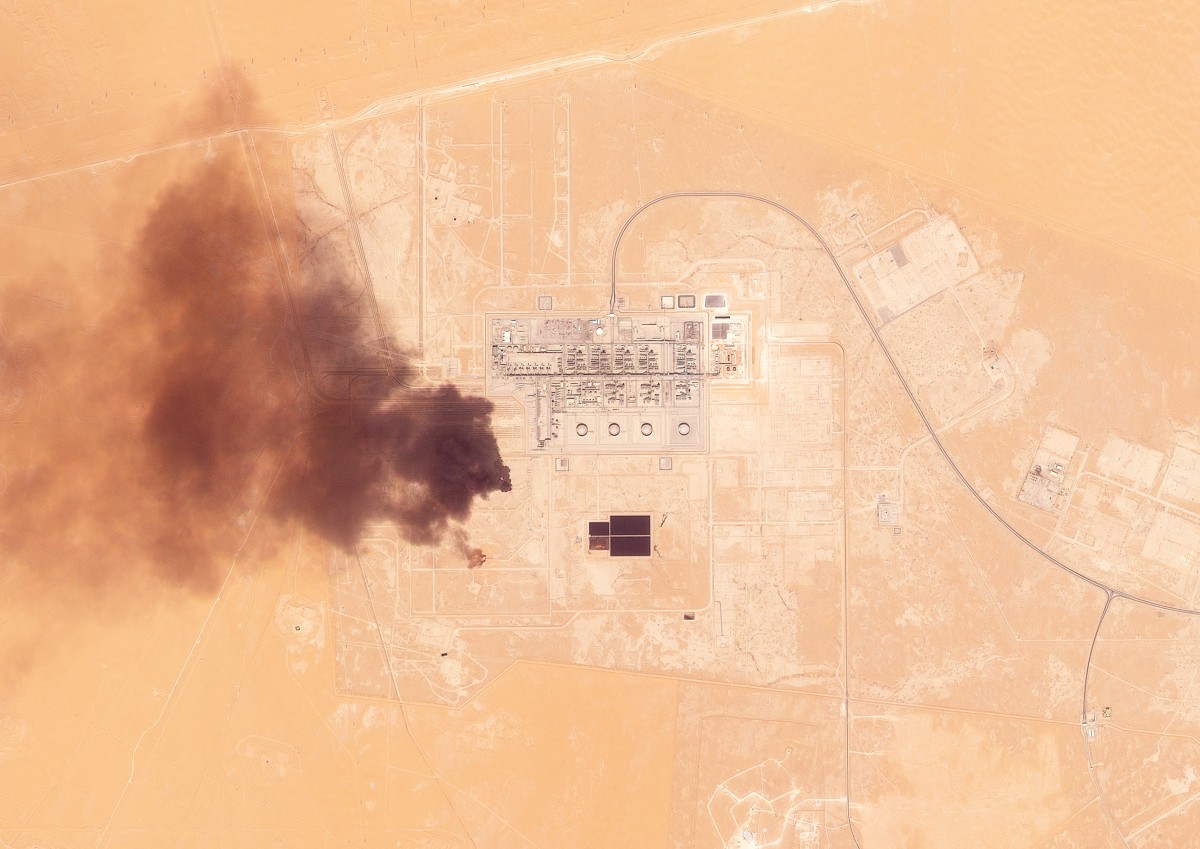
Houthi Attacks on Saudi Arabia. Riyadh is Not Silent
Riyadh has been silent on Houthi shootdown claims, but it is quite vociferous on attacks on its critical infrastructure.
The Houthis have launched a sustained campaign of ballistic missile, cruise missile, and drone attacks against Saudi civilian airports and energy infrastructure.
The primary target of Houthi attacks was King Khalid International Airport in Riyadh.
According to spokesman Maj. Gen. Turki al-Malki, the airport was subjected to around 20 attacks between early October and mid-month, involving drones, ballistic missiles, cruise missiles, and other projectiles. These resulted in 17 deaths and more than 330 injuries at the airport alone.
Additional attacks hit Abha International Airport (near the Yemen border), King Fahd International Airport in Dammam, and facilities near Najran and Jazan.
Houthi spokesman Brig. Gen. Yahya Saree repeatedly claimed responsibility, warning airlines and travelers to avoid Saudi airports and airspace (except over Mecca and Medina) and declaring such sites legitimate targets in retaliation for Saudi operations in Yemen.
Houthis have also targeted Saudi energy assets. On or around 13–14 October, an attack struck an administrative building at Saudi Aramco’s headquarters complex in Dhahran. The Energy Ministry described it as causing a “limited fire” with no casualties.
Sources cited by Reuters and others reported extensive damage, with the fire spreading across multiple floors of an office tower and temporarily disrupting operations.
Earlier, Houthi attacks hit fuel tanks and related facilities at or near Riyadh airport, and reports cited smoke from an Aramco site south of the capital. The East-West pipeline (used to bypass the Strait of Hormuz) had previously been disrupted by drone attacks.
Saudi officials have openly acknowledged the attacks.
The General Authority of Civil Aviation provided casualty figures and the nationalities of those affected. Spokesman al-Malki detailed the scale of the damage against the Saudi civilian infrastructure.
Riyadh strongly condemned the targeting of civilians, airports, economic facilities, and even the holy cities of Mecca and Medina, reaffirming the right to self-defense and calling for international action.
The Cabinet, under Crown Prince Mohammed bin Salman, warned that the Houthis would face consequences for attacks on airports, infrastructure, and visitors, while praising the armed forces.
Energy Minister Prince Abdulaziz bin Salman, speaking at the WPC Energy Congress in Riyadh, described the events as “serious” and said the Kingdom’s response “must be equally serious.”
Saudi state media, including the official news agency SPA and Saudi television, reported the attacks in detail. They released official statements, updated casualty figures, and showed footage of the strike on Riyadh airport and the damage that followed. Civil defense authorities also issued public alerts and announced when incoming missiles or drones had been intercepted.
This level of official transparency is noteworthy as it contrasts with periods when Saudi responses to cross-border strikes were more restrained in public communications.
The idea appears to be obvious: while Saudi Arabia is keen to deprive the Houthis of any PR or propaganda material, the Kingdom wants to highlight attacks on the country to justify its counteroffensive, even if disproportionate.
Even though the Houthis have denied targeting Mecca and Medina, Riyadh could rally support, especially from the Islamic world and Mecca pact allies, Pakistan and Turkey, to crush the Houthis.
- This is an Opinion Article
- Mail the author at: editor (at) eurasiantimes.com