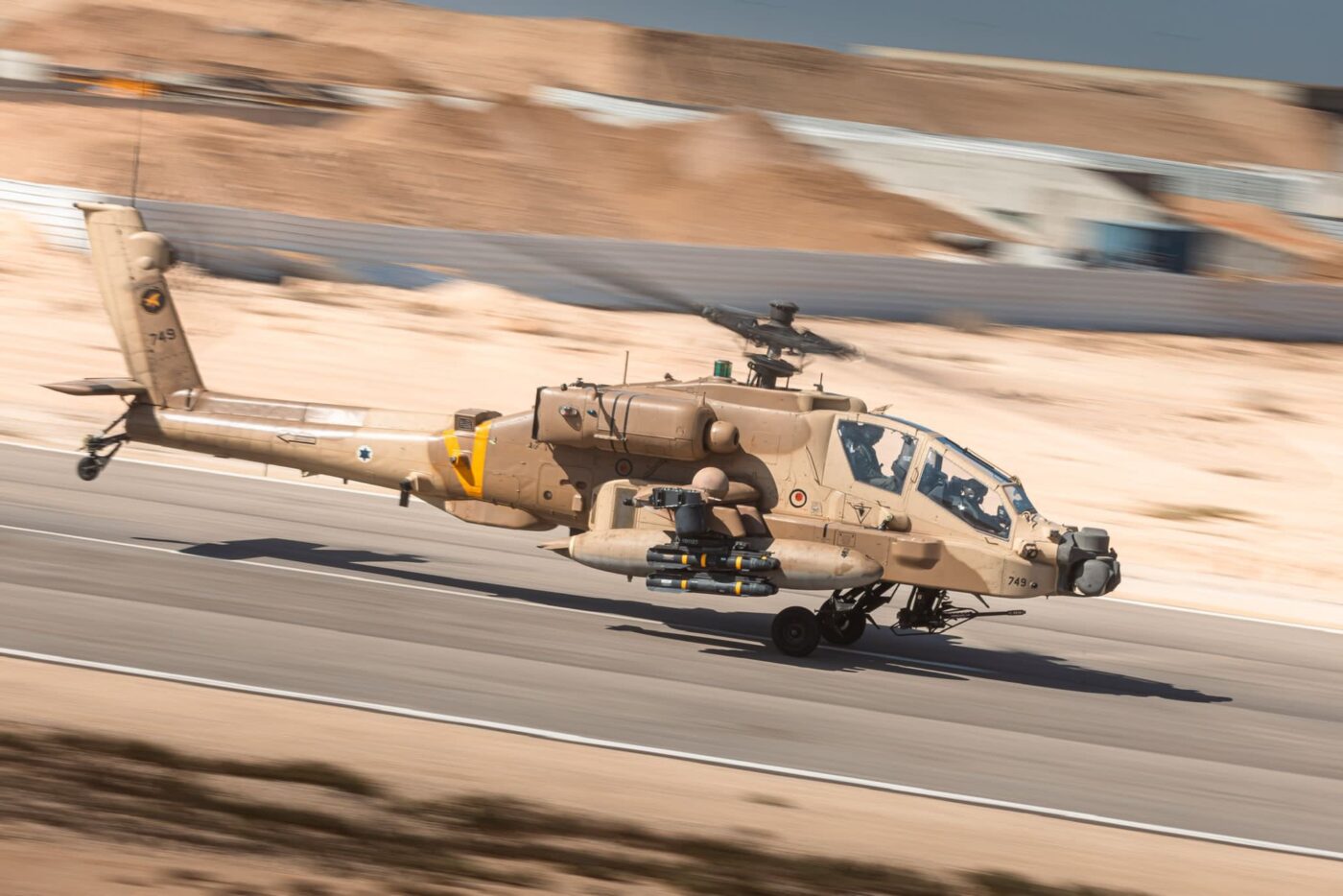
In a major policy reversal of its pre-October 7 Apache drawdown plans, Israel has signed a deal with the United States to procure 12 Boeing AH-64E Apache Guardian helicopters.
The Israeli Ministry of Defense (MoD) announced the deal on October 14, with deliveries expected in the early 2030s. Israel has not officially disclosed the deal’s value, but Israeli media reported it is expected to cost around US$ 1 billion.
Interestingly, the deal was announced nearly nine months after the US government approved the sale of up to 30 Apache helicopters to the Israeli Air Force (IAF) for an estimated USD 3.8 billion.
Israel has not disclosed if and when it will place the follow-on order for 18 more Apache attack helicopters, approved under the US government’s foreign military sale (FMS) program in February this year.
“The helicopters, scheduled for delivery at the beginning of the next decade, are of the Echo variant, the newest and most advanced model of the helicopter,” the Defense Ministry said.
According to the FMS agreement announced in February, the AH-64E will be delivered with mast-mounted Northrop Grumman AN/APG-78 Longbow fire-control radars and manned-unmanned teaming (MUM-T) receivers.
This latest version adds a dedicated maritime strike capability and nearly doubles Apache’s stand-off range by increasing the range of the Northrop Grumman AN/APG-78 mast-mounted fire-control radar from 8 to 16 km.
The Apache AH-64E can fire the Lockheed Martin AGM-114 Hellfire II air-to-surface missile, the Rafael Spike Non-Line-Of-Sight (NLOS) missile, which will extend its stand-off firing range beyond 25 km, Stinger air-to-air missiles, Hydra rockets, and can rake targets two km away with 1200 rounds of 30mm milk-bottle-sized cannon ammunition.
The AH-64E models, equipped with advanced radar, sensors, and fire-control systems, can detect, identify, and engage targets at long range, including in adverse weather and poor visibility.
According to manufacturer Boeing, they also provide aircrews with significantly improved situational awareness compared with older models.
“The procurement of the Apache helicopters is a critical step in the IDF’s force buildup, one that will strengthen its operational capabilities against a wide range of threats and contribute to the security of the State of Israel in the years to come,” Defense Minister Israel Katz said.
Notably, the agreement was announced within a week after Israel missed the deadline to sign, and the US reportedly threatened Jerusalem that it would prioritize other foreign customers if Israel did not sign immediately.
Despite changing battlefield requirements, Apache attack helicopters remain in high demand, and nearly half a dozen countries have signed deals for over 150 new-build Apache AH-64Es in the last five years, including Poland, Saudi Arabia, India, and Morocco, with Boeing in advanced talks with countries like Kuwait, Egypt, and South Korea for the sale of these helicopters.
However, many experts question the rationale behind investing billions of dollars in expensive attack helicopters in the era of drone warfare, where they’re vulnerable to cheap, mass-produced FPV drones, shoulder-fired MANPADS, or even SHORAD (Short-Range Air Defense) missiles.
Interestingly, in the years leading up to the October 7, 2023 Hamas attacks, the Israeli Air Force was itself planning to reduce its attack helicopter force, primarily AH-64 Apaches, including potentially closing one or more squadrons over rising maintenance costs.
Before the 2023 Hamas attacks, the IAF operated two Apache squadrons, the 13th “Hornet” and 190th “Magic Touch”. The 13th Hornet Squadron flies the AH-64D, and the 190th Magic Touch Squadron flies the AH-64A; both are based at Ramon Air Base in the Negev Desert.
A General Staff decision in the early 2020s called for shutting down one of the two Apache squadrons, which would have cut the attack-helicopter fleet by more than half.
The force cited aging platforms, with some IAF Apaches flying for over 35 years, high maintenance costs, and a broader doctrinal shift toward unmanned aerial platforms and drones.
However, following the Hamas attacks, the IAF not only reversed its decision to shut down one of the two Apache Squadrons, but also decided to expand its attack-helicopter fleet.
So, why did Israel reverse its policy on attack helicopters following the 2023 Hamas attacks?
October 2023 Hamas Attacks & Apaches
The October 2023 Hamas terror attacks were one of the biggest security failures in Israeli history.
These security lapses and the failure to respond promptly prompted deep introspection and major defense policy reviews in Israel.
One of the major lessons for Israel was that Apache attack helicopters remain highly relevant and are often the most viable platform for responding to certain security contingencies.
In January 2024, Israeli media JNS reported that in light of the current and future threats to Israel and the lessons learned from the current war in Gaza, the Israeli Air Force is expected to grow dramatically and devise a new plan to procure four squadrons of advanced fighter jets, two squadrons of combat helicopters, and a refueling aircraft.
It also plans to procure two squadrons of advanced Apache helicopter gunships, it said.
“The delay in responding to Hamas’s attack in the initial hours of the war and the frequent use of close ground support during the fighting made it clear that a larger fleet of combat helicopters was needed. Therefore, it was decided to immediately initiate proceedings for the purchase of one Apache squadron, and subsequently also a second squadron,” it said.
Notably, since then, Israel has already ordered six Boeing KC-46A Pegasus tankers for US$ 2.4 billion and 25 F-15IAs for US$ 5.2 billion. Now, Israel has ordered 12 Apache AH-64E attack helicopters.
In 2025, Israeli news media platform YnetNews reported that the IAF has issued a new order, called “Thunder,” which details steps to be taken to deal with another large-scale infiltration attempt from Gaza.
“As part of the changes, minimum readiness levels for surprise infiltration scenarios have increased 2.5-fold, including attack helicopters, transport helicopters for moving forces, drones, and fighter jets,” it said.
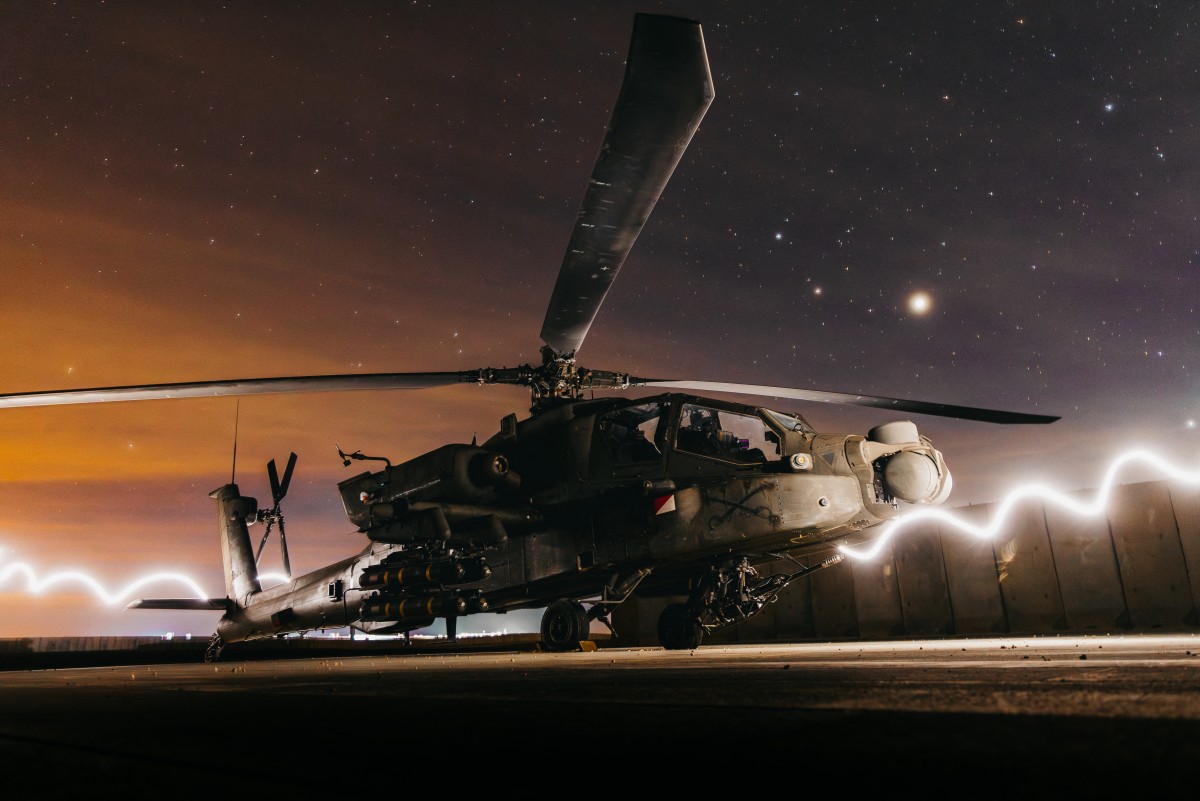
The report noted the usefulness of attack helicopters in providing close air support to ground forces and in countering surprise, large-scale infiltration attempts.
Israeli business daily Calcalist reported that Apache AH-64E combat helicopters are intended to increase firepower and improve the Air Force’s response time to surprise attacks.
“October 7 sharpened our understanding that in many combat scenarios, attack helicopters still hold a distinct advantage over Remotely Piloted Aircraft (RPAs),” a former senior Air Force official told Calcalist.
“There is a huge advantage in having a battalion commander on the ground able to speak directly with a pilot hovering over the combat zone to coordinate precise, high-intensity strikes, capabilities an RPA simply cannot match.”
Apache attack helicopters also proved their worth in the war in Gaza following the Hamas attack.
Israeli defense officials commended Apache’s performance in the October 7 Hamas attack and the war in Gaza, saying the line-of-sight advantage offered by the helicopters was essential for identifying attackers, striking swiftly, assisting ground forces, and thwarting early-morning abduction attempts.
Eitan Ben Eliyahu, a retired Maj. Gen. and former Commander of the Israeli Air Force said: “This is a lesson from the war in Gaza. After it appeared that unmanned aerial vehicles (UAVs) were pushing attack helicopters out, making them seem obsolete on the battlefield, the lesson learned during [the war] was different.” The last two years of war have shown that the Apaches “remain a vital necessity on the battlefield, particularly in urban warfare and commando operations.”
A report in The Jerusalem Post noted that senior Israeli defense officials said limited helicopter numbers, combined with the need to cycle aircraft through refueling and rearming, strained operations during prolonged, high-tempo fighting.
They said the experience reinforced the need for longer range, heavier payload, improved survivability, and better networking with forces on the ground.
Notably, newer AH-64E models support heavier fuel and weapons loads, improved durability, and a reduced acoustic signature, which can make the aircraft harder to detect by sound.
Additionally, the ability to control multiple drones from the helicopter offers pilots more options for reconnaissance and targeting while staying in the fight.
Commenting on the continued relevance of Apache combat helicopters in the era of drone warfare, Indian Air Force veteran Air Marshal Anil Chopra (retd) in a previous EurAsian Times article explained, “The main reason attack helicopters will not disappear is that they fill a niche that very few platforms can fill. They are the only 350 KMPH missile carriers that can hide behind trees, pop up, and literally shoot and scoot.”
“Apache helicopters are still the most survivable, efficient, and formidable flying anti-tank platforms available to militaries. They also have significant roles as anti-UAV and anti-attack helicopters,” Air Marshal Chopra added.
The October 2023 Hamas attacks, ironically, gave a new lease of life to Apache attack helicopters in the Israeli Air Force.
- Sumit Ahlawat has over a decade of experience in news media. He has worked with Press Trust of India, Times Now, Zee News, Economic Times, and Microsoft News. He holds a Master’s Degree in International Media and Modern History from the University of Sheffield, UK.
- He can be reached at ahlawat.sumit85 (at) gmail.com