OPED By Ambassador (R) Raghu Gururaj
The reported decision by the Trump administration to revert the US Indo-Pacific Command to its earlier Pacific Command nomenclature has sparked debate about the future of the Indo-Pacific concept itself. For two decades, India’s strategic importance has grown alongside China’s rise and the emergence of the Indo-Pacific. But if Washington is moving towards a more transactional approach to Beijing, what does that mean for India? If that happens, India faces an uncomfortable question. How much of its importance to the United States comes from India’s own strengths and how much comes from China’s rise? This article examines whether India has converted geopolitical relevance into enduring power—or whether it still derives much of its value from others’ strategies.
For nearly two decades, India has operated on a comfortable assumption that its strategic importance to the United States would continue to rise as China’s power grew.
That assumption may now be facing its first serious test. Recent signals from Washington suggest an administration less interested in building long-term coalitions and more interested in transactional deals that serve immediate American interests.
The reported decision by the Trump administration to revert the US Indo-Pacific Command to its earlier Pacific Command nomenclature has sparked debate about the future of the Indo-Pacific concept itself. The concept was more than just a geographical label. It was the strategic framework that brought India into the center of American thinking about Asia.
At the same time, US officials have increasingly spoken about stabilizing relations with China. Donald Trump himself spoke about possible discussions of a potential G2-style understanding between Washington and Beijing.
If that happens, India faces an uncomfortable question. How much of its importance to the United States comes from India’s own strengths and how much comes from China’s rise?
The answer matters because the transformation in India-US relations did not occur in a vacuum. If we strip away diplomatic jargon and look at the history of the India-US relationship since 2000, a difficult question emerges. Would the United States have invested so heavily in India if China were not rising? The honest answer is probably no.
The transformation of India-US relations, from the civil nuclear agreement to defense cooperation, technology initiatives, the Quad, intelligence sharing, logistics agreements, and supply-chain cooperation, all occurred largely because Washington concluded that China would become its principal strategic competitor.
In that sense, China has been the single biggest driver of India’s strategic value to the United States. For years, this gave India significant room for maneuver.
But now what happens if Washington decides that managing China is more important than containing it? The answer is simple. India’s geopolitical premium will begin to shrink, but not decline. Not because India becomes weaker. But the rationale for American accommodation weakens.
Then Washington’s willingness to overlook India’s Russian oil purchases, ties with Iran, and reluctance to align on sanctions and strategic autonomy may diminish. The relationship becomes more transactional because the strategic rationale weakens.
So has India mistaken a convergence of interests for a permanent elevation in status? That is not an anti-India argument, but strategic caution. If American strategy changes, India cannot afford to have an identity tied to a framework largely created by others. Instead, its identity must rest on its own capabilities and interests. Therefore, India should not define its foreign-policy identity around the Indo-Pacific or the Quad alone. India is unlikely to abandon its relationships with Russia, France, the Gulf states, China, ASEAN, BRICS, and the Shanghai Cooperation Organization (SCO).
The debate over the future of the Indo-Pacific also highlights a deeper reality. While many countries view India primarily as a component of a broader balancing coalition against China, India, to its credit, has never viewed itself that way.
New Delhi joined the Quad not because it wished to become part of an American-led bloc, but because the arrangement served specific Indian interests in maritime security, technology, and regional stability. Similarly, it joined BRICS and SCO not as part of an anti-US grouping but because it served its national interests.
But this is where India’s foreign-policy debate becomes interesting. Many Indian strategists increasingly describe India as a future pole in a multi-polar world. Others see India as the leading voice of the Global South. Still others view India as a crucial pillar of the Indo-Pacific. Yet these descriptions may obscure a more basic reality.
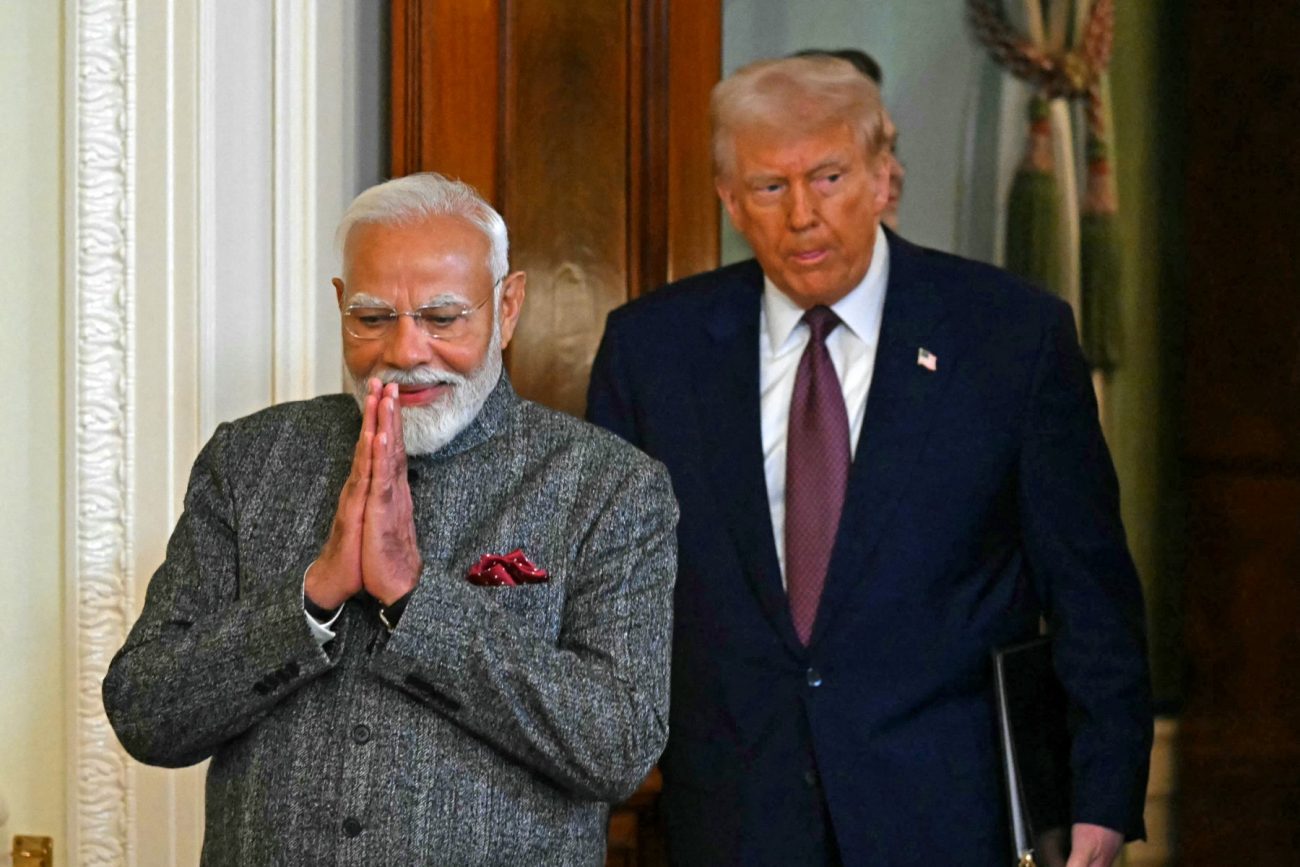
India is not yet an independent pole
India is not yet a pole. A genuine pole does not derive significance from another country’s strategy. The United States does not matter because it balances China. China does not matter because it balances the United States. But both matter because of their economic, technological, military, and institutional power. India is not there yet.
This does not diminish India’s achievements. India is a major middle power that sits in the Quad, BRICS, and the SCO simultaneously. It maintains relations with Russia while deepening ties with the West. It engages Iran, the Gulf states, ASEAN, Europe, and Africa. Few countries operate across so many geopolitical circles.
But participation is not the same as leadership. In the Quad, Washington remains dominant. In BRICS, China carries the greatest weight. In the SCO, China and Russia largely set the agenda. At the United Nations, India’s influence remains constrained by post-1945 structures. India is present at many tables. It does not yet set many menus. That does not mean India has no intrinsic value. But there is a difference between being important and being strategically indispensable.
Yet recent events suggest a broader reality. Prime Minister Modi attended the G7 Summit in France in mid-June by invitation. In the same month, at the Kultaranta Talks in Finland, External Affairs Minister S. Jaishankar firmly defended India’s continued purchase of Russian oil while questioning the West’s moral authority to lecture India.
He strongly reiterated that New Delhi’s decisions would be guided by national interests rather than external pressure. Almost around the same time, France and the UK invited India to participate in discussions on maritime security in and around the Strait of Hormuz. These developments point to a country whose strategic interests extend far beyond any single geopolitical theatre.
But they do not answer the central question. What does India ultimately want? Does it want to become a stand-alone pole in the international system? Or does it simply want enough economic, technological, and military strength to ensure that it never has to belong to anyone else’s pole?
The distinction is important. The first objective requires India to shape global outcomes, build institutions, create economic networks, and exercise influence far beyond its immediate region. The second objective is more modest and arguably more realistic. It requires India to become sufficiently powerful that no major country can ignore it, pressure it, or force it into a bloc.
Judging by its actions, New Delhi appears closer to the second vision than the first. That is why India’s present growth model can generate the broad industrial transformation required to become a genuinely advanced economy by 2047.
That is why initiatives such as manufacturing expansion, semiconductor development, defense indigenization, industrial depth, and connectivity corridors, as envisioned in its official blueprint for becoming an advanced nation by 2047 titled Viksit Bharat 2047, may ultimately matter more than diplomatic forums and strategic slogans. Power creates options. Without power, strategic autonomy becomes a slogan. With power, strategic autonomy becomes a reality.
Strategic concepts come and go, administrations and governments change, and coalitions evolve. It is not so important whether the Quad survives, the BRICS expands, or whether the Indo-Pacific remains fashionable in Washington.
The real test is whether India can become important enough that other powers engage it because of what India is, not because of whom India helps balance. Only then will India move from being a valuable swing state in other people’s strategies to becoming a major power in its own right.
- Raghu Gururaj is a former Indian foreign service officer. His diplomatic assignments include serving as Consul General to Indonesia, Singapore, Argentina, Switzerland, Saudi Arabia, and Vietnam, and as Ambassador to the Republic of São Tomé and Príncipe. Over a 35-year career, he has specialized in multilateral economic and political work, particularly during his stints in Vietnam, Singapore, Kazakhstan, and Indonesia.
- Mail the author at [email protected]
- Follow on X: @Rgururaj7