The US Defense Department recently confirmed its decision to proceed with full-rate production of the F-35 Joint Strike Fighter. Lockheed Martin’s other stealth fighter, the F-22 Raptor, is nearing retirement, and production stopped long ago.
Many aviation enthusiasts wonder which aircraft would win an aerial encounter: the F-22 or the F-35.
In an old interview, David Berke, a retired Marine Corps Officer and combat veteran, shared his expertise with National Interest. EurAsian Times republishes the comparison between F-22 and F-35 and addresses one of the most sought-after questions.
When posted on USS John C Stennis, Berke was deployed twice, commandeering his F/A-18 to support combat operations in Iraq and Afghanistan. Later, he became well-versed in flying the F-22 while serving as the division commander in the Test and Evaluation Squadron.
Berke also had the honor of being the first operational pilot to fly and be qualified in the F-35B, serving as the Commanding Officer of the Marine Corps’ first F-35 squadron from 2012 to 2014.
F-22 Raptor Vs F-35 Lightning II
While the F-35 is a single-seat, single-engine, stealth, multirole fighter jet capable of ground attack and air defense missions, the F-22 Raptor is a single-seat, twin-engine, fifth-generation tactical fighter aircraft specializing in air dominance.
The Joint Striker Program was initiated in the mid-1990s. While the first prototype, the X-35, flew in 2000, the F-35 flew for the first time in 2006. Since then, the fighter has led the pack among fifth-generation aircraft and is being used by 14 militaries worldwide.
According to Lockheed Martin, more than 1000 F-35s have been developed and operated from over 26 bases worldwide. Over 1,255 pilots and 10,030 maintenance staff had been trained on the aircraft.
On the other hand, the F-22 Raptor is meant only for the US Air Force. The US has federal laws over the export of fighters, and the US government apprehends that such ‘classified’ designs and technology could fall into the wrong hands.
Additionally, the F-22 Raptor has many distinctive features that the Pentagon has classified to such an extent that even its pilots are barred from using its full capabilities in international drills, even with close allies.
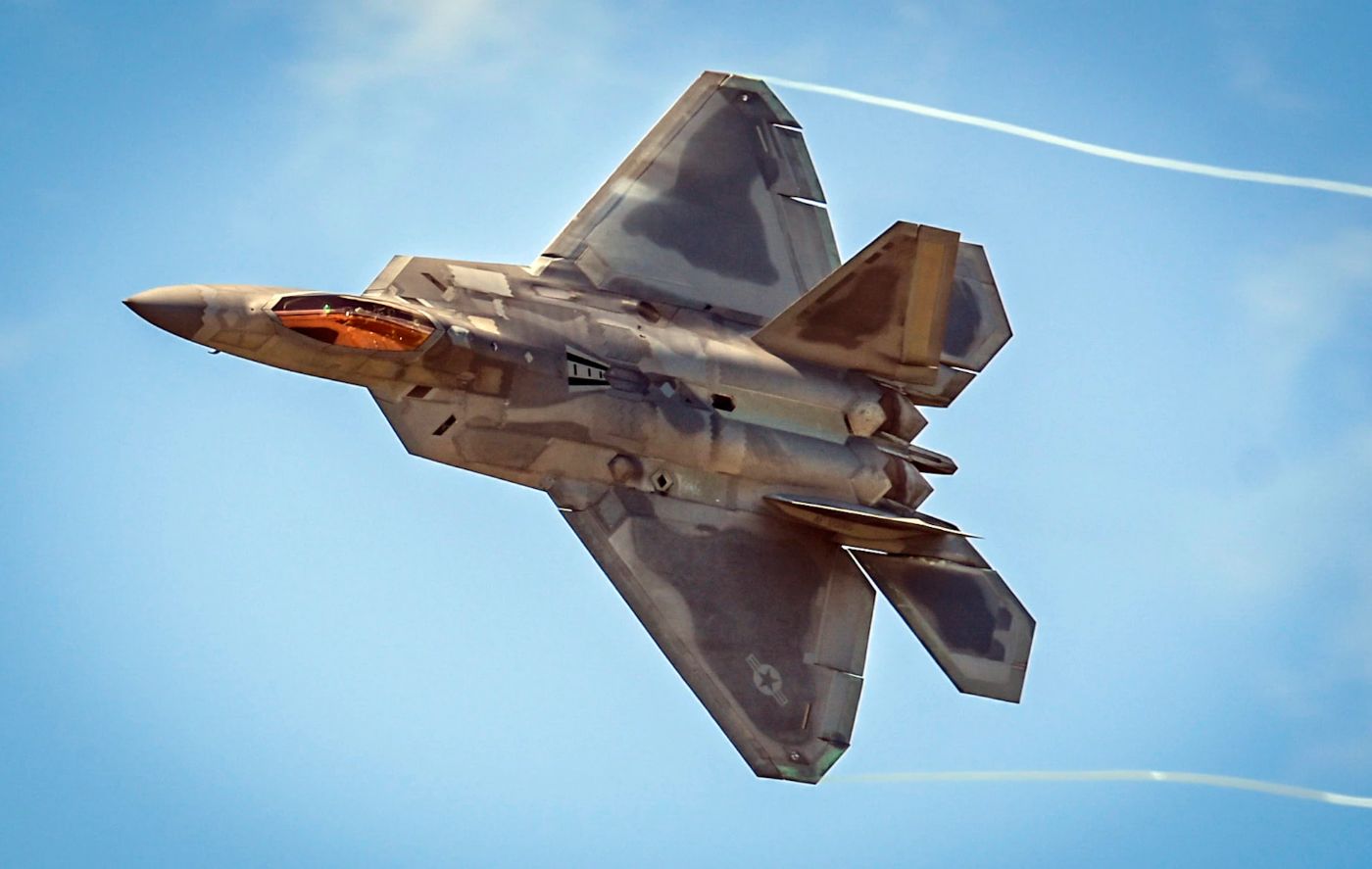
Regarding stealth technology, the F-22 Raptor is considered the stealthiest fighter jet on the planet. The aircraft boasts a cross-section even smaller than that of the F-35s.
Despite being loaded with state-of-the-art features, the F-35s were built for air-to-ground missions. Therefore, they do not stand a chance against the Raptors in a dogfight, given that the F-22 is an air-superiority fighter jet.
“The F-35 cannot match the F-22 as an air superiority fighter—it was never designed as such. The US Air Force’s initial plan was for the F-22 to be its high-end air superiority fighter. At the same time, the F-35 was developed primarily as an air-to-ground strike aircraft capable of self-defense.
While the Raptor was designed with advanced stealth and super maneuverability, the F-35s were designed to be stealthy with exceptional sensors, but with aerodynamic performance comparable only to an F-16 and nowhere near the F-22 Raptor.
While some variants can perform vertical takeoff and landing/takeoff along with other features, the Raptors still trump them when it comes to speed. According to Defense analyst Colin Ritsick, writing for the Military Machine, “When it comes to sheer speed, the F-35 just can’t keep up. But it wasn’t built to. The F-35, with its air-to-ground combat design, is not designed for breakaway speed. It has a top speed of 1.60 Mach and less maneuverability than the F-22 in dogfight scenarios.
“The F-22 can ramp it up all the way to 2.25 Mach. It climbs at a rate of 62,000 feet per minute, whereas the F-35 climbs at 45,000 feet per minute.”
However, despite the mismatch in speed, the F-35s can still hold their own against non-stealthy fighters.
“The Air Force expects that the F-35, with its stealth and sensors, will be able to fill the gaps between flights of F-22s during a large-scale engagement. The F-35 does not have the sheer speed and altitude of the Raptor, but it does have excellent sensors and stealth, which does afford it decent capability against non-stealthy aircraft.”
What Did The US Veteran Pilot Have To Say
David Berke considers the F-35 the most prolific 5th-gen aircraft in the world. He also quashed concerns about similar aircraft being developed by China and Russia, though he recognized that these jets shared technology and designs.
According to Berke, the F-35 has emerged as a quintessential jet not only due to its stealth capabilities but also numerous other notable modernizations, such as increased information capacity, which deserves adequate recognition.
The development in the field of information capacity has two layers. Firstly, its ability to gather the breadth of information available, coupled with a broad range of RF spectrum information, Electro-optical, infrared, and laser. It increases its ability to operate more broadly and widely than its contemporaries.
However, in the era of supplementary navigation, these features do not really help to ensure the F-35’s unique selling points. According to him, what makes the F-35 truly unique is its ability to fuse and share information.
The F-35 integrates these add-ons, substantially increasing its sensing capabilities. It also offers a data network linked to numerous other F-35s, making a vast array of information available to combatants.
It can also combine that information to enhance its fidelity and then share it with other aircraft in the link, such as offboard sensors that are airborne or on the ground.
He regards the F-35 as a milestone in aerial combat capable of operating not just as a sensor in the battlespace but also as a quarterback of other systems. It also boasts a qualified decision-making process, both airborne and on the ground, that remains unparalleled in the sky.
Its ability to operate in hostile environments, coupled with its anti-access aerial denial, makes it a deadly stealthy machine. It can operate in places where the enemy or multiple enemies don’t want us to operate.
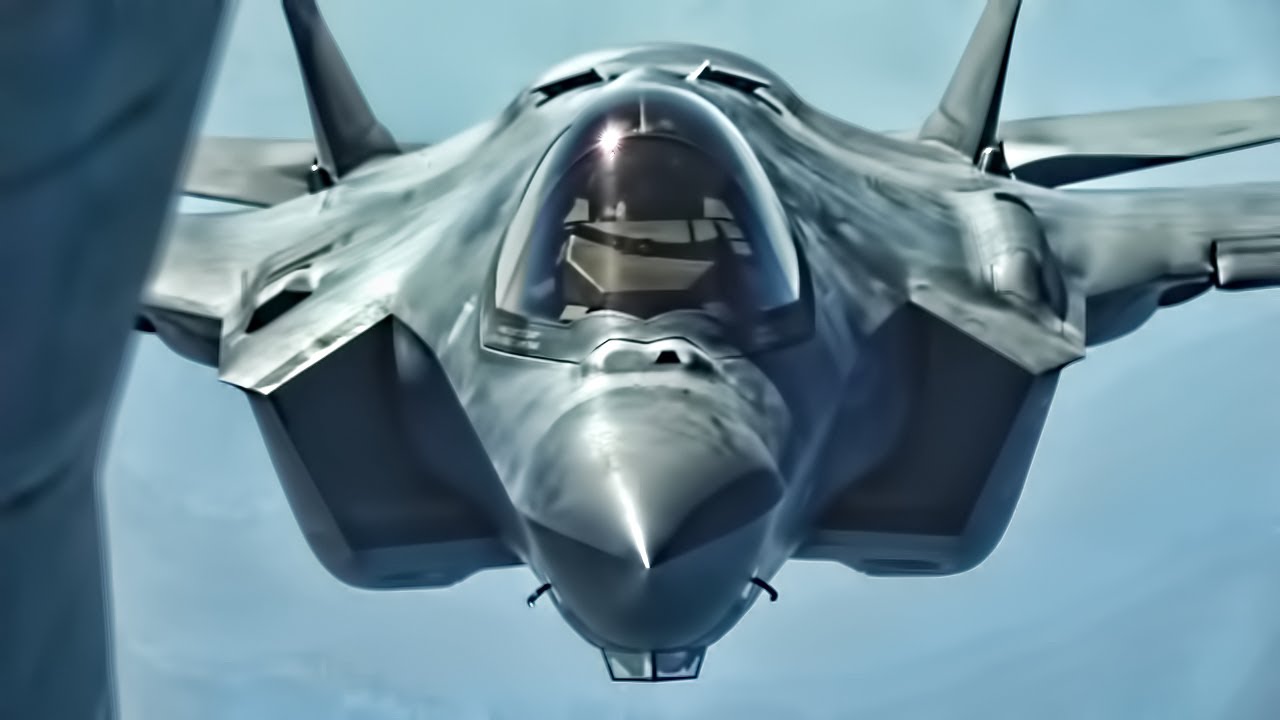
Moreover, due to its unique sensing abilities, the F-35 is capable of independent action and sharing data with all aircraft on the network. Its sensor suite advances its capability to disseminate the acquired information beyond areas beyond the reach of generic aircraft.
The question of acquiring any defense machinery is not just about its tactical and strategic abilities but also about its cost-effectiveness.
Berke recalled his experience working as the only Marine to ever fly the F-22 Raptor and then the F-35. Over the years, he gained extensive experience flying fifth-generation jets, which led him to realize that high operational capability came at a very high cost.
He certainly believes that it isn’t a cheap program. However, he doesn’t find it surprising that production costs have plummeted over the years, attributing this to technological developments and increased efficiency.
However, Berke doesn’t consider the aircraft’s cost to be a factor of paramount importance. He believes the real question is how the price compares with the jet’s capabilities, emphasizing its distinctive attributes.