Ever since the beginning of the Ukraine war, drones have become an absolute necessity for military planners and strategists worldwide. According to former top Ukrainian general Valerii Zaluzhnyi, First-Person-View (FPV) drones were responsible for 80% of Russian battlefield casualties.
Ukrainian drones now have a range of over 2,500 km, allowing Kyiv to strike Russian targets thousands of km away from the frontline.
There are even reports that Ukraine is offering Germany its long-range drones as a replacement for expensive US-made Tomahawk missiles, as they both have a range of 2,500 kms.
Ukrainian President Volodymyr Zelenskyy is already talking of building a drone wall and replacing frontline soldiers with unmanned ground vehicles. Meanwhile, many defense experts have already written obituaries on the death of tanks, armored vehicles, and even manned fighter jets with the advent of drone technology.
Many experts are touting drones as a universal solution for all tasks, which will herald the end of traditional warfare.
This drone obsession has now started to appear a lot like a mania.
However, history shows we have been here before. This is not the first time a new “wonder weapon” (Wunderwaffe) has appeared, destined to change warfare forever.
In fact, every generation of military strategists produces its share of prophets, men and women convinced they have finally witnessed the weapon that will end the age-old calculus of land warfare.
However, retired US Lieutenant General Eric Wesley, former Commanding General of the Army Capabilities Integration Center, has presented a contrary view.
In a new publication for the Modern War Institute (MWI), Wesley argued that drones are not war’s future; they are only a problem requiring a solution.
He believes that humans are still irreplaceable on the battlefield. To seize and hold territory, you need soldiers. Similarly, to clear the basement and to clear the adversary from the streets of an urban sprawl, you need infantry.
“Today, a chorus of defense commentators, Silicon Valley evangelists, and think tank scholars are converging on a consensus: Aerial drones will define the next century of conflict. They are wrong – or rather, they are asking the wrong question entirely,” Wesley writes in his paper.
“The right question is not What can drones do? It is What can drones not do? And the answer to that question is both ancient and decisive: Drones cannot seize ground. They cannot hold it. They cannot compel a population to submit. They cannot plant a flag on a hilltop and mean it.”
To make his point, he compares the advent of drone warfare with the arrival of machine guns in the First World War.
“After the trenches of the Somme,” writes Wesley, “it was the machine gun. After the Russia-Ukraine War, it is the drone.”
Machine Guns Were The Drones of The First World War
In August 1914, when the First World War began, the armies of Europe marched into a world that had been quietly transformed by the machine gun and industrial artillery.
Machine guns transformed frontal infantry and cavalry attacks into open fields, which defined Napoleonic era wars, into suicide.
“Tacticians who had spent careers studying Napoleonic maneuver discovered that open-field infantry assaults against interlocking fields of fire were simply suicidal.”
The Western Front ground to a halt. Despite years of war and millions of casualties, the frontline on the Western Front between France and Germany hardly moved.
“Some observers, understandably, watching the carnage, concluded that offensive ground warfare was finished. Trench warfare, they argued, was the future.”
But, “they were wrong.”
Machine guns were not the future; it was simply a new weapon, a new problem for which the solution had not yet been found.
And, the solution was found within the next four years.
“Within four years, British engineers had built a lumbering, underpowered, mechanically unreliable iron box on tracks that could cross no-man’s-land and suppress a machine gun nest from close range.”
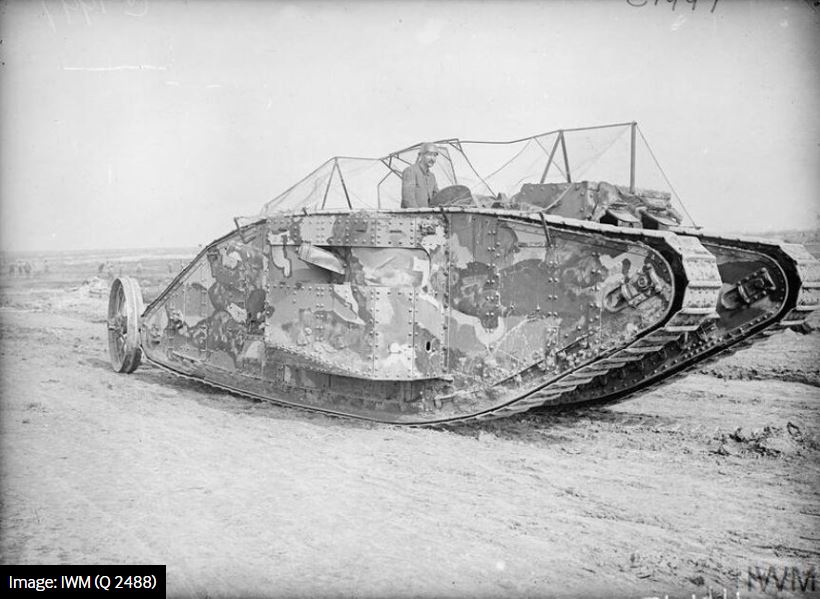
The tank, Wesley argues, solved the machine gun problem just well enough to restore what the machine gun had stolen: the ability to move, to exploit, to break through and pour into the enemy’s rear.
“Maneuver returned. Decisive outcomes became possible again.”
The Russia-Ukraine War That Resembles the First World War
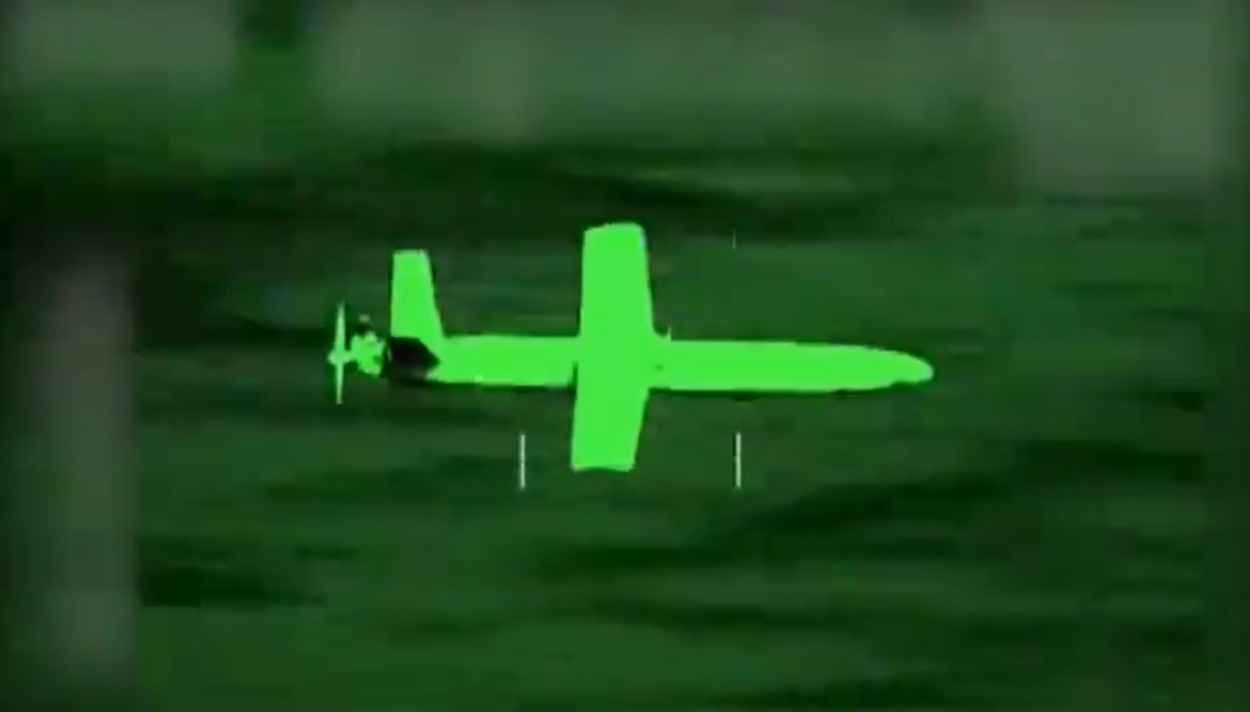
Notwithstanding the high-tech weapon systems, the FPV drones, the satellite-guided long-distance drones, and the fiber-optic drones, it is remarkable how closely the frontline in the Ukraine War resembles the First World War.
Just like in 1914, trench warfare is back.
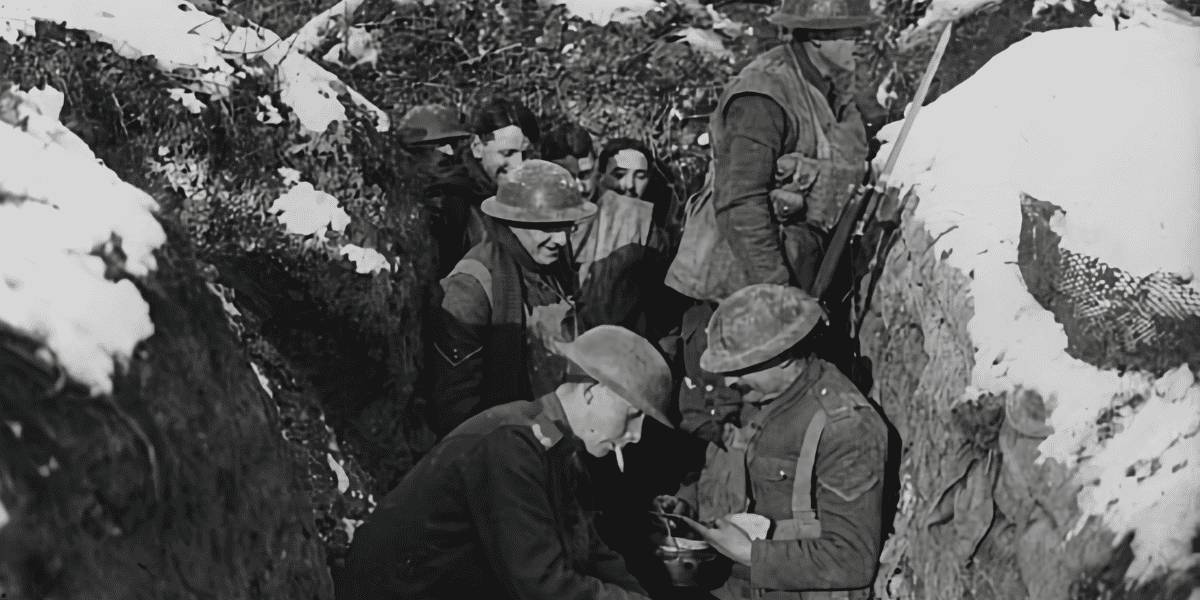
Furthermore, just like the Western Front in 1914, the frontline in the Ukraine War is moving only incrementally, sometimes just a few kilometers after months of intense warfare and thousands of casualties.
In the Ukraine War, drones are what machine guns were in the First World War.
“Drones hunt tanks in the open. Loitering munitions strike artillery kilometers behind the line. Commercial quadcopters drop grenades into trenches with terrifying accuracy.”
Just like machine guns in 1914, drones have stolen maneuver. It has frozen the frontline.
However, herein lies the crucial distinction.
Drones have only stolen the maneuver, made infantry movement costly, but they have not made it unnecessary.
Why? “Because after every drone strike, after every armored column destroyed from above, someone still has to walk across that field. Someone still has to occupy the tree line, clear the basement, and stand in the rubble and say: This is ours now. The drone cannot do that. It likely never will.”
The war in Ukraine, Wesley argues, has not produced a decisive outcome precisely because airpower, drone or otherwise, is a tool of attrition, not decision.
“It degrades. It disrupts. It delays. Indeed, it kills. But the Clausewitzian logic of war remains stubbornly intact: To compel the will of an intransigent opponent, you must ultimately confront him on the ground, in the physical space he values, and take it from him.”
Occupation, and conversely liberation, is not possible unless a soldier walks in and claims it for his unit or country.
Therefore, the drone is analogous to the World War I machine gun.
“It has dramatically raised the cost of movement in the open. It has forced infantry to dig deeper, disperse further, and move only at night or under electronic concealment.”
It has made tanks, armored vehicles, trucks, indeed every surface platform, vulnerable in ways that were unimaginable just a decade ago.
However, it has not “repealed the principles of war validated over centuries”. It has not invented a new theory of victory.
It has only created a new problem for maneuver forces to solve.
What Comes Next?
According to Wesley, the solution to the drone problem can not be more drones. Instead, it will be something that restores the capability to maneuver under drone threat, just like tanks did under machine fire.
“That may be electronic warfare systems—and the agile management of them—that can blind and jam swarms. It may be directed-energy weapons that can cheaply defeat mass drone attacks. It may be more innovative, affordable counterdrone technologies that exploit the vulnerabilities of light aircraft.”
In fact, many countries have already developed various kinds of interceptor drones that can take down incoming drones without expending expensive missiles.
The interceptor drones are still not perfect. They’re a work in progress.
However, they have shown that drones are not invincible or the final stage in the evolution of modern warfare.
“The drone is a remarkable and lethal tool. But remarkable and lethal tools have always been the prelude to the next problem, not the solution to the last one. The visionaries who understand that will win the next war.”
- Sumit Ahlawat has over a decade of experience in news media. He has worked with Press Trust of India, Times Now, Zee News, Economic Times, and Microsoft News. He holds a Master’s Degree in International Media and Modern History from the University of Sheffield, UK.
- He can be reached at ahlawat.sumit85 (at) gmail.com