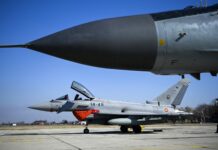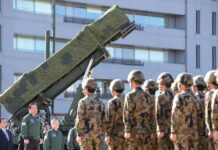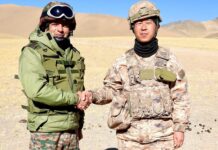
Thousands of US and Philippine troops, joined for the first time by a strong contingent of Japanese soldiers, have commenced Balikatan 2026 military drills.
Beijing warned the United States, Japan, and the Philippines against “playing with fire”. “We wish to remind the countries concerned that blindly binding themselves together in the name of security will only be akin to playing with fire — ultimately backfiring upon themselves,” Chinese foreign ministry spokesman Guo Jiakun told a news conference.
The war games will feature live-fire exercises in the northern part of the country facing the Taiwan Strait, as well as in a province off the disputed South China Sea.
More than 17,000 soldiers, airmen, and sailors are taking part in the 19-day Balikatan, or Shoulder to Shoulder, exercises — about the same number as last year’s edition — including contingents from Australia, New Zealand, France, and Canada.
“Balikatan… represents an opportunity to showcase our ironclad alliance with the Philippines and demonstrate our commitment to a free and open Indo-Pacific,” US exercise spokesman Colonel Robert Bunn said ahead of Monday’s opening ceremony.
Bunn added that US troop levels, which he described as “one of the largest deployments” in years, would be unaffected by the ongoing Middle East war his country is waging, while declining to provide specific numbers.
Interestingly, the 41st iteration of Exercise Balikatan across the Philippine archipelago coincides with the 75th anniversary of the US-Philippine Mutual Defense Treaty.
In the 2025 edition of Balikatan drills, the US deployed one of its most advanced anti-ship missile systems, the Navy-Marine Expeditionary Ship Interdiction System (NMESIS), and the HIMARS (High Mobility Artillery Rocket System), sparking widespread concern in China. Additionally, the US Army tested a high-power microwave weapon during the drills, as EurAsian Times reported at the time.
During Balikatan 2024, the US deployed the Typhon Mid-Range Capability (MRC) missile system, prompting unease in China. Although no live-fire test was conducted, Philippine soldiers trained on the Typhon under US guidance, bolstering capabilities and cooperation. Additionally, they sank a decommissioned warship.
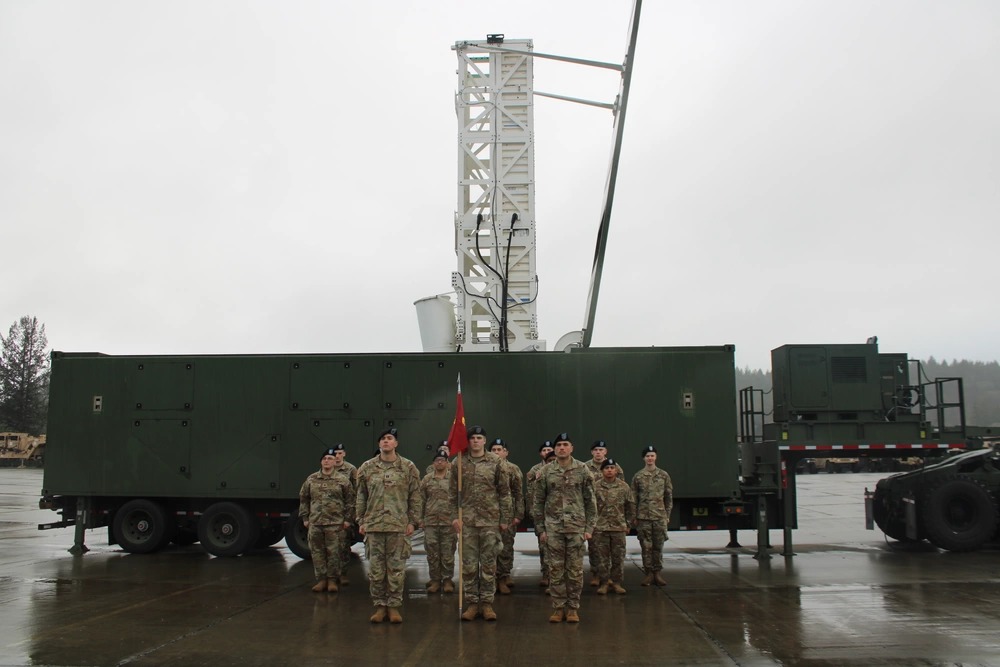
Philippine and US officials have called the upcoming edition of the drills the most expansive in its history, not only in troop numbers but also in the scope and complexity of its activities. The drills will mainly focus on field training exercises, command post exercises, maritime security, amphibious operations, combined arms live-fire drills, aviation, cyber defense, space operations, disaster response, and noncombatant evacuation operations.
🚢@USMC & Sailors offloaded and inspected vehicles with @TeamAFP partners during a Maritime Prepositioning Force (MPF) operation in preparation for #Balikatan 2026. pic.twitter.com/XtkZaPPYvU
— U.S. Embassy in the Philippines (@USEmbassyPH) April 11, 2026
Japan’s Self-Defense Force troops will participate in live-fire drills for the first time this year. They will use the Type 88 surface-to-ship missile to sink a decommissioned vessel during a maritime strike exercise, marking the expansion of Japanese participation.
Separately, ships from the Philippines, the US, Japan, and Canada will participate in a multi-day, multilateral maritime exercise off the Philippines’ west coast, which faces the contentious South China Sea, which China claims almost entirely as its sovereign territory. The partners will train together in search-and-rescue, anti-submarine warfare, live-fire gunnery, and deck landings, according to reports.
However, the French Navy will reduce its involvement in the Balikatan 2026 drills due to a change in deployment brought on by the Middle East crisis. “We were hoping to have a large deployment that included the Jeanne d’Arc coming to the Philippines on the occasion of Balikatan. The deployment was requested to stay in Europe and not far from the Middle East, considering the current situation,” the French Ambassador to the Philippines, Marie Fontanel, said in a press conference on April 13.
Instead of sending roughly 150 soldiers on an amphibious assault ship and a frigate with helicopters and landing craft—a plan that would have been France’s largest involvement to date in the yearly Balikatan exercises—France will now send “between 15 and 20” troops.
Nonetheless, the participation of troops from allied countries such as the US, Australia, Japan, Canada, France, and New Zealand signals a deepening regional consensus amid tensions with China.
Moreover, the expanding scope of the drills also demonstrates Manila’s resolve to forge ties and strengthen its standing in the volatile Indo-Pacific region, especially as it remains embroiled in territorial disputes with China in the South China Sea and alleges frequent bullying by Chinese Coast Guard (CCG) forces—an accusation Beijing rejects.

Interestingly, the drills would take place amid enhanced tensions between the Philippines and China in recent times. Over the weekend, the Philippines alleged that Chinese forces fired flares at its coast guard aircraft during a routine patrol mission over two reefs in disputed waters where Beijing has constructed artificial islands.
Not just that, the Philippines also accused Chinese fishermen of dumping cyanide in waters around the Spratly Islands, a major area of contention between the two sides. On its part, Manila has called the purported poisoning an act of “sabotage” with the intention of “killing local fish populations” and depriving Filipino soldiers stationed at Second Thomas Shoal of a vital food source. China, however, flatly rejected the accusations.
Notably, the drills also coincide with reports that the US is seeking a fuel storage facility in the Philippines—a move that could draw condemnation from China ahead of a planned summit between Chinese President Xi Jinping and US President Donald Trump in May 2026.
US Seeking A Fuel Depot In The Philippines
The Philippines’ efforts to protect its maritime rights and sovereignty in the South China Sea, a crucial US interest amid its strategic rivalry with China, have strengthened ties between the two countries.
The Philippines rapidly emerged as a frontline state in the US-China rivalry in the Indo-Pacific, with Washington deploying its latest weapons systems in the country, which lies within the first island chain — the strategic archipelagic chain in East Asia that also includes Taiwan and Japan.
The United States currently has access to 9 military facilities in the Philippines under the Enhanced Defense Cooperation Agreement (EDCA). These locations are strategically placed, including several in northern Luzon (near the Luzon Strait and Taiwan) and Palawan (facing the South China Sea), to support maritime security, territorial defense, and rapid response, among other things.
However, the US is now planning to establish a Defense Fuel Support Point (DFSP), a forward-based fuel depot, in the Davao region of southern Mindanao, specifically along the western coast of the Gulf of Davao.
In a March 31 solicitation, the US Defense Logistics Agency disclosed plans for a petroleum storage facility in or near Davao, the third-most populous city in the Philippines, on the island of Mindanao. The notice reportedly calls for a contractor to supply 41 million gallons of fuel storage, beginning in April 2028, sufficient to handle 18 million gallons of aviation fuel and 23 million gallons of navy fuel.
The contract would involve round-the-clock receipt, storage, safeguarding, testing, and transportation of petroleum held by the US government.
This facility would, however, be separate from existing commercial fuel storage at Subic Bay or smaller EDCA fuel tanks at air bases, and would essentially add a major new southern hub.
The DFSP is part of a deliberate US strategy to build a network of forward refueling hubs across the Western Pacific. Notably, US warships and aircraft currently rely heavily on Subic Bay and Manila for refueling. Those northern sites face the South China Sea and could be vulnerable or contested in a high-end conflict with China. The Davao depot would give the US an alternative southern refueling point, reducing transit times and exposure.
Located next to the Sulu Sea, the facility sits near critical transit routes that US carrier strike groups, amphibious ships, and other forces use to move in and out of the “first island chain.” This would enable a faster turnaround for patrols, exercises, and operations in the South China Sea or the West Philippine Sea.
Pre-positioned fuel enables sustained naval and air operations without waiting for tankers from distant hubs such as Guam or Hawaii. In a potential conflict between the US and China, this “forward-staged” fuel can prove decisive for keeping forces on station longer.
The move is expected to ruffle some feathers in China, as evidenced by the Chinese Foreign Ministry’s statement. “As the world today is undergoing intertwined changes and turbulence, unilateralism and military bullying have brought profound disasters to the world. The overall situation of development and stability in the Asia-Pacific region has not come easily and must not be disrupted by anyone,” Chinese Foreign Ministry spokesperson Guo Jiakun stated in response to a query on the matter.
- Contact the author at sakshi.tiwari13 (at) outlook.com
- Follow EurAsian Times on Google News