

Bilateral relations between India and Iran seem to be on a decline as New Delhi shows no signs of revamping the oil trade with Iran, while progress on the Chabahar Port has been agonisingly slow.
The crack in India-Iran ties began to reveal itself in the past week when the Iranian Foreign Minister Javad Zarif condemned the Delhi riots as “the wave of organized violence against Indian Muslims”.
Iran condemns the wave of organized violence against Indian Muslims.
For centuries, Iran has been a friend of India. We urge Indian authorities to ensure the wellbeing of ALL Indians & not let senseless thuggery prevail.
Path forward lies in peaceful dialogue and rule of law.
— Javad Zarif (@JZarif) March 2, 2020
Javad Zarif took to the microblogging site to voice his opposition to the recent violence in the Indian capital. He wrote, “Iran condemns the wave of organized violence against Indian Muslims.” He further urged the Indian government to “not let senseless thuggery prevail”.
The tweet had India summon the Iranian ambassador, Ali Chegeni, to convey its disregard and also asked Iran to stay out of matters internal to India.
This did not stop Iran, as its supreme leader, Ayatollah Khamenei, wrote in his tweet, “The hearts of Muslims all over the world are grieving over the massacre of Muslims in India,” which further antagonized India.
The hearts of Muslims all over the world are grieving over the massacre of Muslims in India. The govt of India should confront extremist Hindus & their parties & stop the massacre of Muslims in order to prevent India’s isolation from the world of Islam.#IndianMuslimslnDanger
— Khamenei.ir (@khamenei_ir) March 5, 2020
Following this, Pakistan Prime Minister Imran Khan and Foreign Minister Qureshi added salt to the Indian wounds and thanked Khamenei and Turkish President Recep Tayyip Erdogan for highlighting the plight of Indian Muslims.
Fully share the concerns expressed by my brother @JZarif on safety and well-being of Indian Muslims facing naked violence from RSS mobs. India is in throes of grave communal violence. Their sinister & systemic killing of Muslims is inhuman & dangerous for whole region. https://t.co/MrMZOBSKlu
— Shah Mahmood Qureshi (@SMQureshiPTI) March 3, 2020
New Delhi was taken by surprise at the hasty Iranian reactions to events that were totally internal. The Iranian reactions coincidentally came after the historic peace accord between the United States and the Taliban on 29th February in Doha, Qatar.
Pakistan Lauds Iran For Courageous Condemnation Of Modi Government
Post the peace accord, Iran seems to be coming out to assert its position and play a dominant role in the region. According to experts talking to the EurAsian Times, Iran has been known to have preserved its close ties with the Taliban.
A delegation of the Taliban, led by its leader Mullah Abdul Ghani Baradar, paid a visit to Iran at the end of November 2019 to negotiate with Iranian officials regarding the peace process, which was then in the pipeline.
The reason for the immediate arrival of Iran in support of the Taliban lies in its interest in gaining complete independence to operate in the region and extend support to its close Shia ally, the Hazaras, who hold significant sway in western Afghanistan.
After the assassination of General Qasem Soleimani in a drone attack on 3 January by the US, Tehran had reportedly sought the help of the Taliban to intensify attacks against US targets in North and Western Afghanistan.
India-Iran Relations
The development of Chabahar port, which has been in the works for close to two decades, has been somewhat disappointing for both Indians and Iranians. The Chabahar Port project, conceptualized in 2003, saw Iran granting India permission to use the port to transport goods to landlocked Afghanistan.
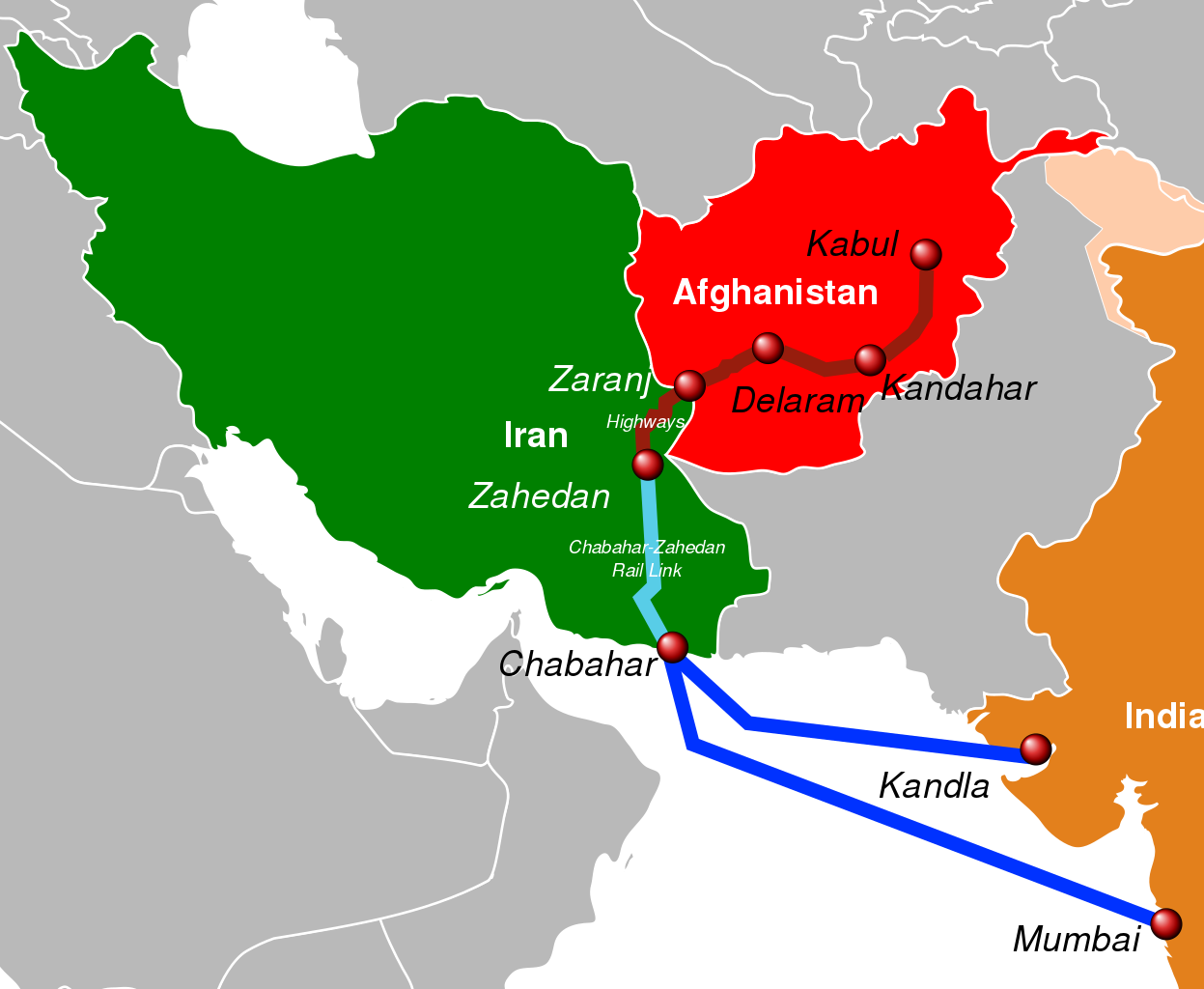

India also saw this as a great opportunity to contribute to Afghanistan’s development, which also aligned with its long-standing plan to bypass Pakistan and secure safe transit access into the region.
With PM @narendramodi & President @ashrafghani celebrating Trilateral Transport & #Chabahar Transit Agreement. pic.twitter.com/mCoifIxgPA
— Hassan Rouhani (@HassanRouhani) May 23, 2016
With the re-emergence of the Taliban after the peace deal with Washington and their ever-strengthening relationship with Iran, the future of the India-Afghanistan-Iran Trilateral Agreement looks in jeopardy.
The Chabahar Agreement was intended to be an economic boon for all three countries. For landlocked Afghanistan, the deal offered passage to the global shipping trade. For Iran, it secured up to $500 million in investment and economic reintegration, and for India, it offered a way to avoid being surrounded by China and counter Pakistan.
SU-35 vs MIG-35: Two Russian Jets Compete Against Each Other For Lucrative MMRCA Contract
The Chabahar project was also meant to be a game-changer for all three nations. It offered India access to a port just 56 miles from Gwadar, the lynchpin of China’s investment in Pakistan under CPEC (China-Pakistan Economic Corridor). However, Indian interest in Chabahar wavered after international sanctions were imposed on Iran over its nuclear program.
Later, under US pressure, New Delhi sharply decreased its oil imports from Iran. India’s reliance on Iran’s export of crude oil was being seen as a major factor in the US approach to sanctions against Iran.
New Delhi was helpless and had no option but to comply with Washington’s decision to reduce Iran’s crude oil exports to zero; therefore, the US ended the waivers in May 2019 that had allowed the top buyers of Iranian oil to continue their imports for six months. India had to stop importing oil from Iran after the US refused to extend the sanctions exemption.
For a resurgent Iran (after the US-Taliban peace deal), the Chabahar project and New Delhi cutting oil imports (both under US pressure) represent broken promises from New Delhi that Tehran is unlikely to forget easily.