US aerospace giant Lockheed Martin continues to make strides in developing cutting-edge unmanned aerial vehicles (UAVs) for the US and its allies. The pace of this development has now accelerated amid a rise in drone warfare and emphasis on Collaborative Combat Aircraft (CCA Drones).
The Pentagon did not choose Lockheed for the primary development and prototyping of the initial CCA drones (meant to fly alongside manned fighters) under Increment 1 of the program. However, that did not stop the manufacturer and its affiliated companies from innovating and developing new UAVs equipped with state-of-the-art technologies.
In September 2025, for instance, Lockheed Martin’s Skunk Works unveiled a stealthy autonomous drone it calls “Vectis,” which is expected to fly by 2027.
The Vectis can conduct air-to-air, air-to-ground, and intelligence, surveillance, and reconnaissance (ISR) missions, and has an open systems architecture that would allow it to interface with platforms and mission systems built by other manufacturers.
“Vectis provides best-in-class survivability at the CCA [Collaborative Combat Aircraft] price point,” said OJ Sanchez, Skunk Works’s vice president and general manager. “Prototype parts are ordered, the team is at work, and we intend to fly in the next two years.”
Cracks “Wide Open” in NATO? Is Trump Planning To Exit Trans-Atlantic Alliance or Scaring Europeans?
Similarly, in October 2025, Lockheed Martin’s Sikorsky unveiled the “Nomad” family of vertical takeoff and landing (VTOL) drones—all featuring a common tail-sitting design and twin propellers.
“Nomad represents new breakthroughs for Sikorsky and the next generation of autonomous, long-endurance drones,” said Dan Shidler, director of Advanced Programs. “We are acting on feedback from the Pentagon, adopting a rapid approach and creating a family of drones that can take off and land virtually anywhere and execute the mission — all autonomously and in the hands of soldiers, marines, sailors, and airmen.”
Lockheed recently recalled an innovative and spectacular drone—the D-21—which has now been forgotten.
“The D-21 flew in the 1960s — uncrewed, high-speed stealth with Skunk Works® technology. Today, we continue to develop and fly cutting-edge uncrewed systems. Most are classified — maybe we’ll share a few photos in the next 60 years…,” Lockheed wrote on X.
What Do We Know About D-21?
The National Museum of the US Air Force states, “The Lockheed D-21 was a highly advanced, remotely piloted aircraft (RPA) designed to carry out high-speed, high-altitude strategic reconnaissance missions over hostile territory.”
It further states, “The D-21 used technology from the A-12/YF-12/SR-71 ‘Blackbird’ family of high-speed manned aircraft. Unlike the turbojet engines in the Blackbird, however, the D-21 was powered by a ramjet.”
The origin of D-21 is linked to the U-2 spy plane crash.
During the Cold War, President Dwight Eisenhower banned all manned flights over the Soviet Union after the infamous shootdown of the U-2 spy plane on May 1, 1960, by the Soviet Air Defence Forces in Sverdlovsk.
The US had been flying the U-2 over expansive Soviet territory since the 1950s. The aircraft’s capability to cruise at an altitude of 70,000 feet, which for years remained outside the reach of the Soviet air defence systems and fighter jets, enabled the Americans to fly into the Soviet airspace with impunity.
The U-2 was therefore the primary and most important surveillance asset in the American arsenal.
While the manned flights were permanently suspended, the Pentagon and the Central Intelligence Agency (CIA) still required intelligence that only a manned spy plane could undertake.
Incidentally, this was a time when the US was rapidly developing reconnaissance satellites, but that technology remained years away from deployment, and the US intel community needed a stopgap solution for ISR missions until the satellites could be used.
With no other recourse, the Pentagon and CIA turned to Lockheed’s Clarence ‘Kelly’ Johnson for a drone study, paving the way for the development of unmanned systems.
Lockheed’s Skunk Works developed the D-21, an unmanned aircraft, specifically for CIA and Air Force surveillance missions over particularly hostile territories.

At the time, the D-21 appeared to be a concept straight out of science fiction.
The drone was capable of flying at Mach 3.3, reaching altitudes of 95,000 feet, and traversing 3,000 nautical miles on its outward and return journeys.
As is widely known, the D-21 was part of a secret CIA project under which the US military aimed to send super-fast drones to spy on China’s nuclear program.
However, the D-21 needed a mothership to launch because its ramjet engine had to be air-launched at a specific speed to activate. Johnson suggested using the M-21, the CIA’s version of the iconic SR-71 spy warplane.
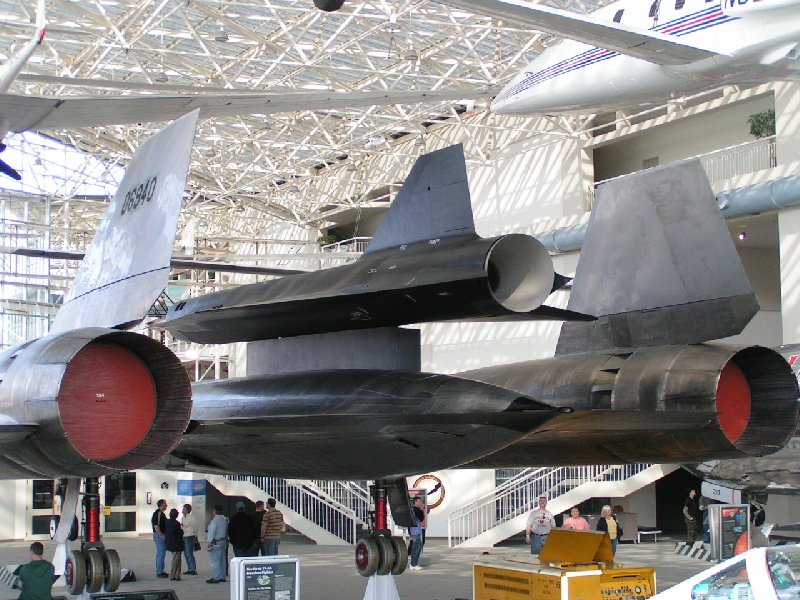
The idea was simple: the M-21 would carry the drone, launch it toward enemy territory, and fly it at Mach 3+ speeds through international airspace.
Notably, the D-21 was designed specifically for collecting photo evidence of China’s nuclear sites. It contained a recoverable payload “hatch” weighing 880 pounds that carried the camera for collecting photo evidence, a navigation system control, and other necessary electronics, including a parachute recovery system to eject the film roll.
The first three flights went fine, but on the fourth flight in July 1966, the D-21 experienced an “asymmetric unstart” as it passed via the bow wake of the M-21.
This caused the mothership M-21 to collide with the D-21 at incredibly high speeds of Mach 3.25. While both crew members, Bill Park and Ray Torick, ejected, Torick’s flight suit got ripped in the process and was filled with water when he plunged into the ocean, where he succumbed.
This tragic accident led to the cancellation of the M-21 launch program.
However, Kelly Johnson, President of Skunk Works, refused to give up and suggested using the B-52 bomber as the launch platform. A couple of B-52s were modified for the program that came to be known as “Senior Bowl” to take photographs of Chinese nuclear facilities, mainly the Lop Nor nuclear test site.
The engineers modified the D-21B drone with a radio to stay in touch with the launch plane and track its activities, as well as to follow a predetermined flight path.

It was reportedly designed to release the film roll and self-destruct after taking pictures of the hostile area and the nuclear power plants the Chinese were allegedly constructing at the time.
The exposed film, fixed to a parachute, was to be caught mid-air by a transport plane like the C-130 and/or the Navy if it fell into the ocean.
The D-21Bs were used on four flights over communist China as part of the Senior Bowl effort, starting in 1969. But none of the missions succeeded.
The first drone was launched successfully and reached Lop Nor, but could not take photographs. In fact, it continued straight in an uncontrolled flight and crashed somewhere in Siberia, which was part of the Soviet Union at the time.
Meanwhile, the second drone launched successfully and took photographs of the facility, but the photos could not be obtained due to parachute failure experienced after hatch ejection.
The third drone similarly launched successfully and completed the task, but the mid-air recovery attempted by the JC-130 failed, and the film canister fell into the ocean.
The fourth flight was a complete failure as the drone crashed in China’s Yunnan province.
The program was eventually cancelled in 1971, and reconnaissance tasks were transferred to satellites, which were an emerging spy tool during that time. The remaining D-21s were put into storage before the D-21B on display came to the museum in 1993.
Intriguingly, between the program’s scrapping and the drone’s appearance at the museum, there was a small but significant plot twist that warrants mention.
In the mid-1980s, a CIA operative reportedly gave a metal panel to Lockheed engineer Ben Rich, who had previously worked on the D-21. The plate was actually a fragment of the D-21 that crashed in Siberia. The spy drone was recovered by Russia and eventually returned to the CIA by the KGB, Russia’s espionage service.
China also allegedly recovered the wreck of the fourth D-21, which was later put on display in Beijing. As previously reported by the EurAsian Times, some analysts believe that the Chinese WZ-8 UAV bears an uncanny resemblance to the D-21.
Some other reports suggested that Russia, too, developed a reverse-engineered D-21.
“This proved to be of great interest to the Soviet aircraft industry, as it was a fairly compact machine equipped with up-to-date reconnaissance equipment and designed for prolonged reconnaissance flights at high supersonic speeds under conditions of strong kinetic heating,” Russian aviation historians Yefim Gordon and Vladimir Rigamant wrote, as noted in a detailed report by The National Interest.
“Fearing” U.S. Invasion, Canada Develops War Models to Repel Attack, Eyes Massive 400K Reserve Force
“Many leading enterprises and organisations of the aircraft, electronic and defence industries were commissioned to study the design of the D-21 together with the materials used in its construction, production technology and equipment,” the report added.
- Contact the author at sakshi.tiwari13 (at) outlook.com
- Follow EurAsian Times on Google News