The Shanghai Cooperation Organization (SCO) meeting was recently held in Bishkek, Kyrgyzstan, and included three major powers: China, Russia, and India, among others.
India sits inside the SCO alongside its two principal military adversaries, China and Pakistan, while maintaining deep security ties with the United States, France, and Israel. India is also part of the Quad with the United States, Japan, and Australia.
India’s own foreign policy dispels the easy objection to Turkish alignment across competing systems. A state can sit in several strategic rooms. The institutional boundary is crossed when an external collective defense commitment attaches to a rivalry already internal to the organization
Every new member makes the SCO look bigger. The group gains weight faster than it gains the ability to act. India and Pakistan’s entry enlarged the club and limited what it can ever agree to do.
NATO began with a common external threat and institutionalized collective defense against it. The SCO evolved differently.
India and China diverge over their border and Asian order.
India and Pakistan diverge over terrorism, state responsibility, and Kashmir.
Russia, Iran, and the Central Asian states bring different threat maps.
The organization coordinates states that refuse to delegate the definition of their enemies; divergence is the condition of their coexistence.
India joined because absence would have given China and Pakistan greater latitude in shaping Eurasia. Membership gives New Delhi presence without strategic submission.
Strategic autonomy preserves sovereign choice across multiple options; alliance arbitrage accumulates obligations and externalizes collision costs.
After Bishkek, Turkish President Recep Tayyip Erdogan placed full SCO membership on Ankara’s agenda, insisting it need not alter Turkey’s ties with NATO or the West. Alignment across several systems remains legitimate until an external obligation enters a rivalry already internal to the organization.
The Makkah (Mecca) Joint Defense Agreement between Turkey, Pakistan and Saudi Arabia created a collective defense framework alongside Ankara’s NATO obligations. An armed attack on one would now be regarded as an attack on all.
On 31 August, the parties consolidated the pact through a permanent secretariat, deeper military coordination, defense industry cooperation, and joint development and production intended to strengthen collective deterrence and defense.
Pakistan is therefore protected by a Turkish defense commitment.
Makkah’s ambiguity is politically functional. It leaves activation, attribution, and the hierarchy of competing obligations unresolved, giving Pakistan political shelter while preserving Turkish and Saudi discretion in crisis.
Whether Ankara or Riyadh would fight India is secondary. A guarantee changes political behavior before it changes a battlefield.
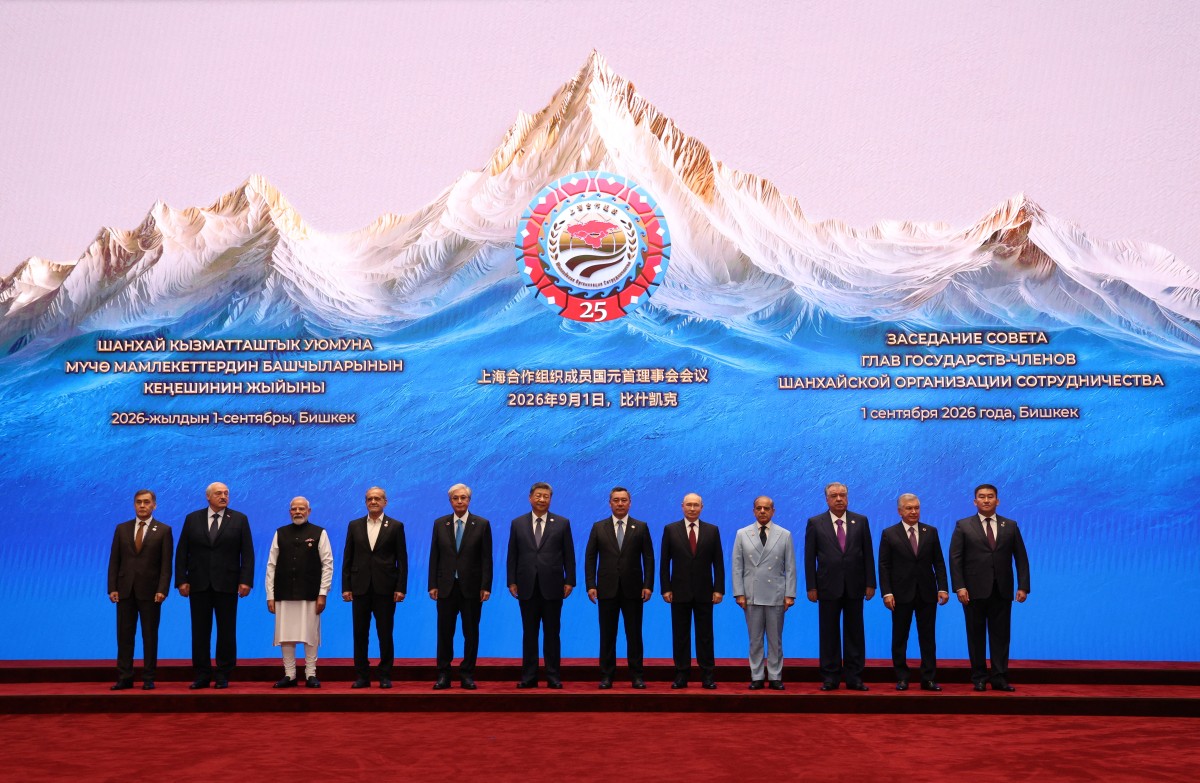
Full Turkish membership would place Pakistan’s defense partner inside the consensus machinery through which India deals with terrorism, Afghanistan, connectivity, regional security and Pakistan itself. Turkey would acquire equal standing across the organization and consensus leverage.
The SCO already contains the rivalry between India and Pakistan. Turkish accession would add an external guarantee favoring one side. A future crisis would no longer involve only two adversaries sharing an organization; one would also have a treaty partner inside its institutional machinery.
SCO accession rules already require compatibility between an applicant’s external security commitments and the organisation’s legal framework. Admission also requires the consent of existing members. NATO membership and Makkah therefore impose a compatibility burden on Ankara.
The standard applies equally to India. External alignments, including defense relationships, are permissible; imported leverage is not.
For Turkey, that requires three assurances. Ankara’s commitment to Pakistan cannot give Islamabad derivative influence over Turkish positions inside the SCO. Access obtained through membership cannot serve an external defense obligation against another member. A crisis between India and Pakistan cannot turn Turkish consensus leverage into an indirect extension of Makkah.
Ankara controls its commitments; New Delhi controls its consent.
A third-party guarantee gives Pakistan neither strategic sanctuary nor institutional leverage through Turkey.
Erdogan’s formula, SCO membership without departure from NATO or the West, defines the benefits Ankara wants from several systems. It does not rank their obligations. Makkah leaves the same hierarchy unresolved from another direction.
Granting the seat before that hierarchy is settled would subsidize the ambiguity.
Withholding consent spends political capital, and China and Pakistan can reciprocate across other SCO files. New Delhi should spend that capital on a rule rather than an exception aimed at Turkey: no external collective defense obligation involving another member’s adversary may become leverage inside the SCO.
The SCO does not require its members to form a bloc or share an enemy. That principle cannot permit outside alliance obligations to become internal leverage.
Riyadh signed the same Makkah commitment to Pakistan. Makkah therefore creates two Indian pricing decisions: dependence with Saudi Arabia, consent with Turkey. Riyadh’s role in energy, investment and the India Middle East Europe Economic Corridor now carries a Pakistani security premium; Ankara’s SCO bid carries the same premium into institutional access.
With Saudi Arabia, India should not depend on one pipeline, one supplier or one cheque. If Riyadh now also covers Pakistan, New Delhi needs other routes, other money and other partners so that gap cannot be used against it.
With Turkey, the sovereign asset is institutional consent.
A partner that imports risk does not automatically lose the relationship; the terms of access change with the risk.
The SCO has expanded because it can contain strategic divergence without resolving it. India and China can confront one another along their border and remain members. India and Pakistan can remain military adversaries while sharing institutions. Their coexistence depends on a boundary: neither may use an outside alliance to acquire leverage over the other from within.
Turkey can chase NATO, the Makkah pact and the SCO at the same time. That does not mean every club has to accept the baggage Turkey picked up in the others. The SCO works because members do not have to share an enemy.
That stops working if one member uses an outside defense deal to lean on another member from inside the room.
Indian consent is a sovereign asset. Its price is clarity.
- Shay Gal is Founder and Principal of Line of State, a strategic practice working with governments, institutions, and decision-makers on strategy, risk, access, and security in high-stakes environments.
- You can meet him on X at @ShayGal84