

A military aviation powerhouse, France is one of the few countries to have designed, developed, and produced cutting-edge fighter jets without external assistance. However, its reluctance to share technology with its biggest clients and partners appears to be costing it dearly.
The Rafale, for one, is the cornerstone of French military aviation and one of the most sought-after 4.5-gen fighter jets in the world. As of late 2025, there were firm orders for 533 Rafales, including export orders from India, Egypt, Qatar, Greece, Croatia, the UAE, Serbia, and Indonesia, with the possibility of further deals.
Notably, France has had a reputation for developing combat jets on its own, as previously explained by the EurAsian Times. However, it is currently co-developing its sixth-generation fighter with its European partners, Germany and Spain. The program, named Future Combat Air System (FCAS), is led by industry representatives Dassault and Airbus.
In the past few years, France has solidified its position as the world’s second-largest arms exporter, trailing only the United States, with a 9.8% share of global arms exports in 2021–2025, according to SIPRI. Sales of Rafale jets, submarines, and cutting-edge air defense systems mainly drive the jump in exports.
However, its refusal to share technology has already jeopardized its alliances with the UAE and Germany, and many experts in India are also unhappy with the French reluctance.
UAE Opts Out Of Rafale F5 Production
The United Arab Emirates (UAE) ordered 80 Rafale F4 fighter jets and 12 military helicopters in an arms contract worth $19.20 billion in 2021, marking the largest-ever Rafale export order.
The UAE will become the first country after France to operate the F4 variant, which was officially unveiled in January 2025. The deliveries are slated to begin at the end of 2026.
In addition to acquiring the F4, the kingdom was also discussing funding of the Rafale F5 variant, which is anticipated to include new sensors, armaments, and a faster, more secure means of communication. The cash-rich Emirati kingdom was reportedly planning to contribute about EUR 3.5 billion of the EUR 5 billion project.
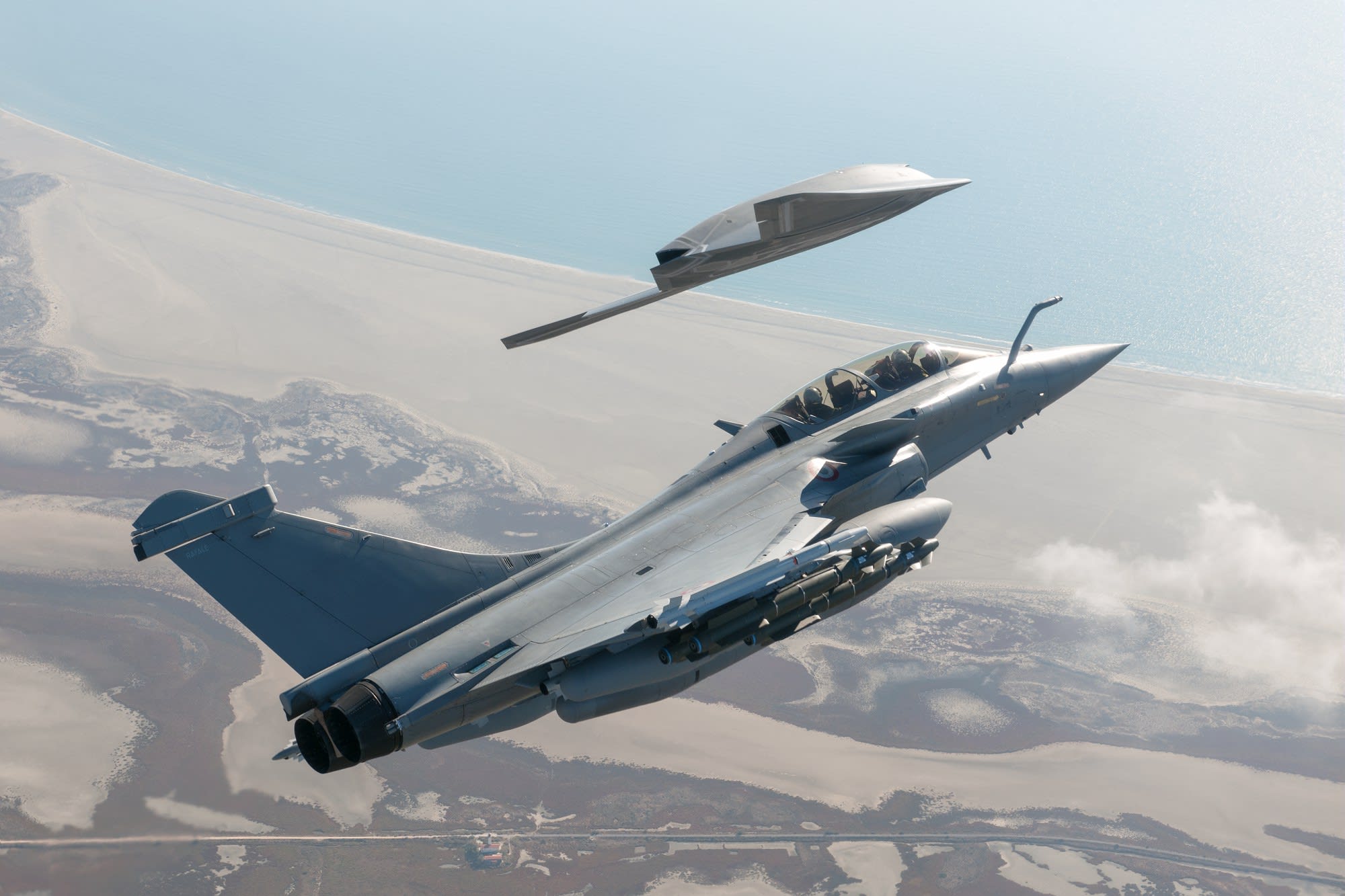
However, the French newspaper La Tribune reported that the UAE has abandoned the French Rafale F5 project, leaving Paris to develop the new variant of the Dassault jet on its own.
According to the report, the UAE opted out of the agreement following a disastrous meeting between French President Emmanuel Macron and UAE President Mohamed bin Zayed Al Nahyan earlier this year. The Emiratis were reportedly disappointed with the French for their reluctance to share technologies, particularly those involving optronics, i.e., technologies that detect and control light.
By securing Emirati funding, the Macron administration would have been able to narrow the scope of its budget and advance its other planned initiatives.
It must be noted that these reports cannot be independently verified, and the UAE and French governments have not officially disclosed the breakdown of talks.
However, if true, the breakdown of this potential partnership will have a big impact on France’s defense budget at a time when public funding is in disarray due to the inability to pass budgets.
IAF Concerned About Rafale Source Code
The Indian-French defense relationship dates back decades, to the 1950s, when the IAF acquired its first French fighter jet, the Toofani (Dassault Ouragan). Over the years, India signed several big-ticket deals with France, ranging from the Mystère IVA to the Mirage-2000 and on to the Rafale jets for the Indian Air Force (IAF), and the Rafale-Ms for the Indian Navy.
Earlier this year, the Indian Defense Acquisition Council (DAC) granted “acceptance of necessity” (AoN) for the acquisition of 114 more Rafale fighter jets, the largest single defense purchase in India’s history. For the acquisition process to commence and a contract to be signed, final approval from the Cabinet Committee on Security (CCS) is required.
Dassault has tied up with India’s Tata Group to produce Rafale fuselages in India at a rate of 25 per year, with plans to increase the indigenous content in the Made-in-India Rafale fighter jets in stages. Dassault has set up a Maintenance, Repair, and Overhaul facility in India, with the M-88 engines planned for overhaul in Hyderabad.
Meanwhile, the French authorities have stated that India will not be granted access to the Rafale’s basic source code, according to the French business publication L’Essentiel de l’Éco.
In particular, India will not receive the source code for the Rafale’s Thales RBE2 AESA radar, the Modular Data Processing Unit (MDPU), which is frequently referred to as the aircraft’s operational “brain,” and the SPECTRA electronic warfare suite, which together define the fighter’s sensor fusion, survivability, and electronic combat architecture.
This software architecture, developed over many years, is said to be extremely sensitive and closely guarded by French authorities.
“Approximately 30–40% of the total cost of a modern fighter like the Rafale is typically attributed to software development/integration. What that means is—if the OEM (Original equipment manufacturer) doesn’t supply the source code along with the fighter, you get only 60% of the aircraft despite paying for 100%. As technology advances, the percentage of cost represented by software will likely increase well past 50%,” explained IAF veteran and commentator Squadron Leader Vijainder K. Thakur (retd.) in a recent article.

Source code control would determine whether India can independently modify the aircraft without having to repeat approval cycles with Dassault Aviation and related French defense firms. Therefore, the French reluctance to part with the source code could potentially cause discontent among Indian authorities.
If the report’s claims are found to be true, blocking the source code would limit India’s ability to independently modify algorithms, update threat libraries, or integrate certain indigenous weapons or systems without French support or approval. It aligns with France’s broader stance on software sovereignty.
FCAS In Trouble Over Work Sharing Differences
The FCAS program, jointly pursued by France, Germany, and Spain, is currently hanging by a thread. Conceived as a ‘system of systems’ program that includes a next-generation fighter (NGF), adjunct aircraft, and a combat cloud, the FCAS has been delayed by several years due to deadlock between Airbus (representing Germany and Spain) and Dassault (representing France) over work sharing, control over the design, and supplier selection.
The French manufacturer is reluctant to share the NGF workload with its counterparts, much to the chagrin of its counterparts. Dassault believes that a partnership centered on sharing work between the two industry players would result in a less-than-ideal technological solution.
Dassault CEO has emphasized that the company has decades of experience and technology, even suggesting it could “go solo.”
Meanwhile, Airbus has refused to allow Dassault to secure the larger share, which would benefit the French contractor and leave the German and Spanish industries with very little.

The impasse has stalled key phases, including negotiations for the demonstrator and the advancement of the critical technology demonstrator Phase 2, with experts describing the program as in a “fatal tailspin.” The program is running behind schedule.
Last week, Dassault CEO Eric Trappier said he was giving his firm two to three weeks to see whether a deal could be reached to salvage the program. “We are giving ourselves two to three weeks to try and find an agreement,” he said at the War & Peace security conference in Paris.
The statement was made days after the French President said,” They just can’t seem to agree. Our job is to ensure they reach an agreement, so we have jointly decided to launch an initiative to bring Airbus and Dassault closer together in the coming weeks,” President Emmanuel Macron stated. ”This must be done in a calm and respectful manner, precisely to identify areas of common ground.”
Notably, Airbus earlier hinted that France and Germany could pursue separate fighter designs under a shared FCAS architecture to avoid the entire program collapsing, whereas Germany has allegedly shown interest in the GCAP (Global Combat Air Program), a rival sixth-generation fighter program led by the UK, Japan, and Italy.
Interestingly, India, which is not receiving the source code from France for Rafale jets, has shown interest in European 6th-gen fighter programs — FCAS and GCAP. Senior IAF experts argue that, given the Indian-French collaboration, FCAS will always be the top contender.
- Contact the author at sakshi.tiwari13 (at) outlook.com
- Follow EurAsian Times on Google News


