

A high-stakes training mission turned catastrophic when an F-16C Fighting Falcon from the U.S. Air Force’s Thunderbirds aerial demonstration squadron crashed in the Mojave Desert.
The F-16 pilot ejected safely just seconds before the crash, parachuting to the ground amid a plume of thick black smoke and sustaining only minor injuries, military officials confirmed.
The incident unfolded around 10:45 a.m. local time over controlled military airspace near Trona, a remote unincorporated community in San Bernardino County, approximately 180 miles northeast of Los Angeles.
Aviation enthusiasts speculated that the jet was Thunderbird No. 5, typically assigned to high-risk solo maneuvers such as the “opposing knife-edge pass” or “delta loop,” in which pilots push the aircraft to its limits at speeds exceeding 700 mph and altitudes as low as 500 feet.
According to US media reports, a US Air Force F-16C fighter jet crashed in California on Wednesday local time. Footage from the scene showed the aftermath of the crash and the pilot parachuting to the ground. The incident remains under investigation, the US Air Force said in a… pic.twitter.com/7T9FE9XfSW
— Global Times (@globaltimesnews) December 4, 2025
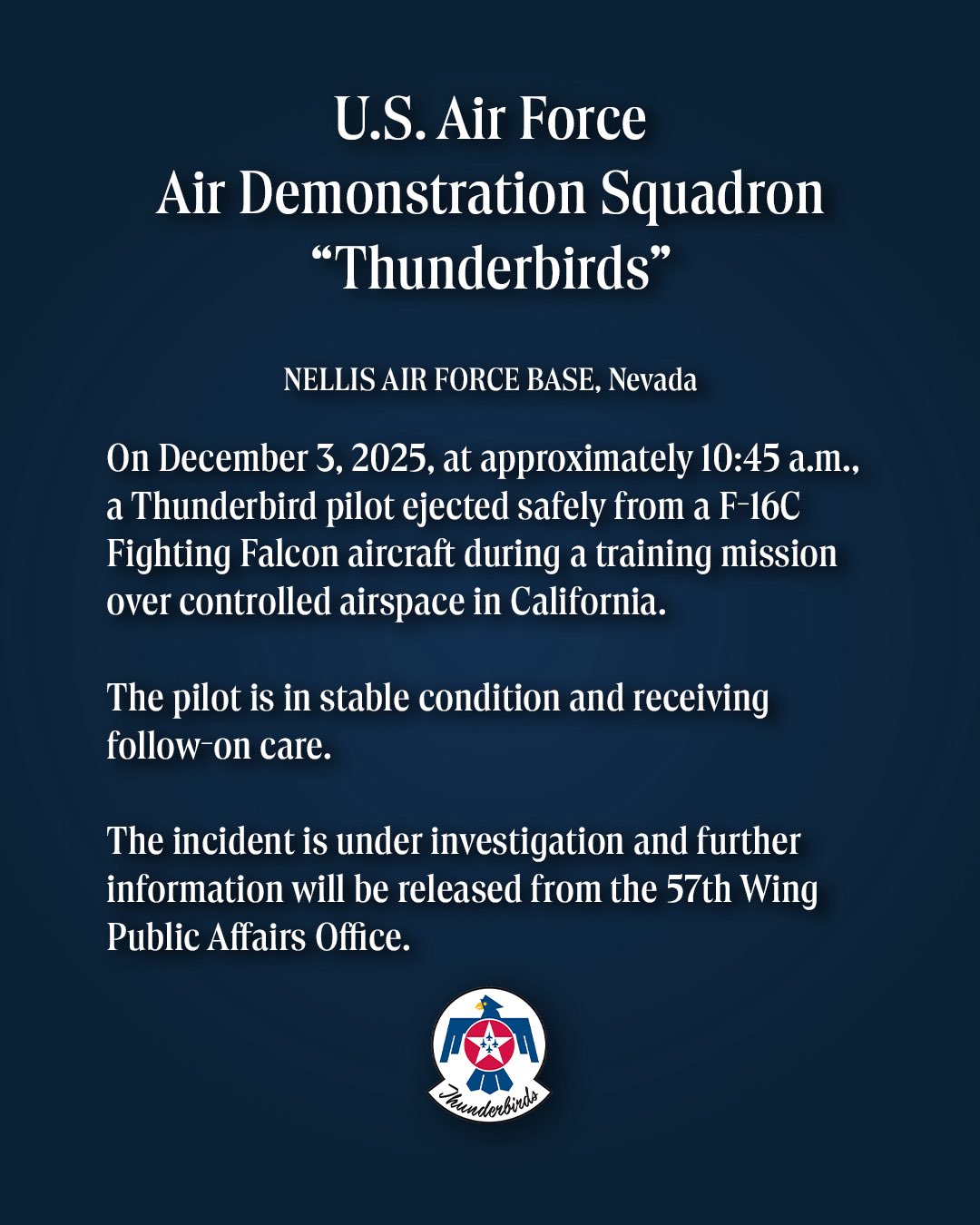
The U.S. Air Force’s official Thunderbirds X account confirmed the details in a terse statement shortly after: “On December 3, 2025, at approximately 10:45 a.m., a Thunderbird pilot ejected safely from an F-16C Fighting Falcon aircraft during a training mission over controlled airspace in California. The pilot is in stable condition and receiving follow-on care.”
The pilot, whose identity and specific role within the squadron have not been disclosed, was swiftly transported to a nearby medical facility for evaluation. Officials described the injuries as non-life-threatening.
Edwards Air Force Base dispatched an environmental response team to mitigate potential hazards from the crash, including toxic hydrazine fuel used in the jet’s emergency power unit. This volatile substance, which powers critical systems during engine failure, requires specialized decontamination to prevent harmful fumes from spreading.
While the exact cause remains under investigation by the Air Force’s 57th Wing Public Affairs Office and safety boards, preliminary reports point to a possible loss of control during a routine high-performance drill in the vast training corridors around the China Lake Naval Air Weapons Station.
The Federal Aviation Administration deferred all inquiries to the military, noting the flight occurred entirely within restricted airspace.
No other aircraft or personnel were involved, and the site—already a hotspot for military aviation mishaps—poses minimal risk to civilians in the sparsely populated area.
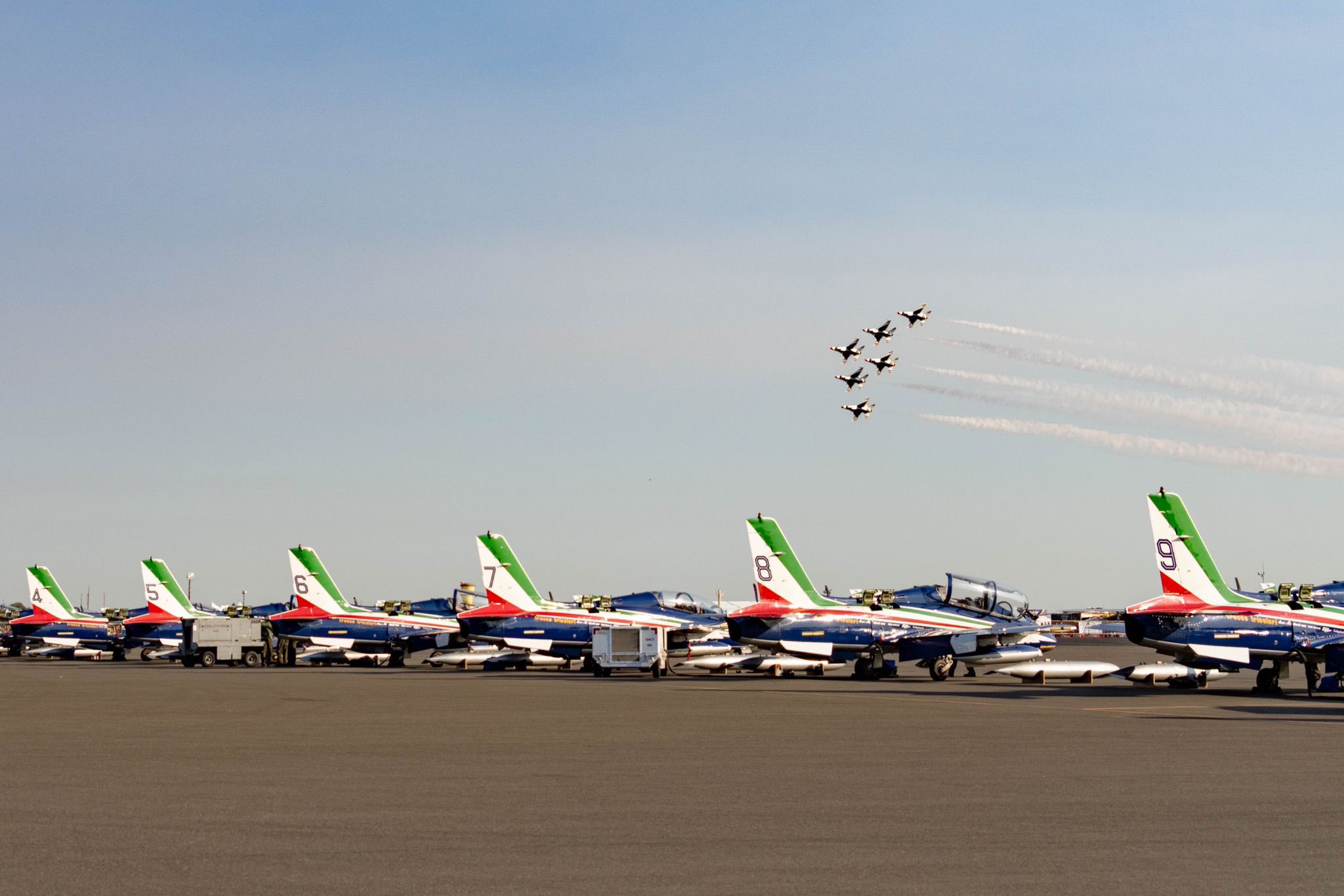
Established in 1953 as the Air Force’s answer to the Navy’s Blue Angels, the Thunderbirds have captivated audiences worldwide with their stunning routines, performing for over 400 million spectators across more than 4,000 shows.
The Thunderbirds’ history is punctuated by tragedy, including the 2018 loss of Maj. Stephen Del Bagno during a Nevada training flight, where he succumbed to G-induced loss of consciousness (G-LOC) mid-maneuver.
Over seven decades, the team has endured dozens of incidents. Wednesday’s event echoes a 2022 tragedy in the same vicinity, where a Navy F/A-18E Super Hornet from Naval Air Station Lemoore crashed near Trona, claiming the life of its pilot, Lt. Cmdr. Theodore D. Park.
No immediate disruptions to the Thunderbirds’ 2026 show schedule have been announced, though such incidents often prompt temporary stand-downs for fleet-wide inspections.
F-16 Pilot Earns Rare Silver Star
In a ceremony at the Pentagon on November 26, 2025, Lt. Col. William “Skate” Parks, a seasoned F-16 Fighting Falcon pilot and former commander of the 480th Expeditionary Fighter Squadron, received the Silver Star—the U.S. military’s third-highest award for combat valor.
Air Force Chief of Staff Gen. Ken Wilsbach presented the medal, marking only the 97th Silver Star awarded to Air Force personnel since the service’s inception in 1947.
Parks earned the honor for his extraordinary leadership and skill during a high-stakes Suppression of Enemy Air Defenses (SEAD) mission on March 27, 2025, over Yemen.
As mission commander for a 21-aircraft strike package targeting Houthi ballistic missile production facilities, Parks deliberately positioned his four-ship F-16 formation inside one of the most densely protected air-defense zones in the region—near the Houthi-controlled capital, Sana’a.
His audacious decision drew intense enemy fire, allowing the main strike force to cripple critical Iranian-backed Houthi infrastructure. However, it triggered a relentless 15-minute barrage of surface-to-air missiles and anti-aircraft artillery fire.

Enemy warheads detonated mere feet from the jets as Parks led his flight through a gauntlet of threats while critically low on fuel deep inside enemy territory.
At the heart of Parks’ survival was a sustained series of high-G maneuvers, one of the most physically and mentally punishing aspects of air combat.
The F-16 is engineered to withstand up to 9G (nine times the force of gravity), but sustaining even 7-8G for extended periods is excruciating. Blood drains from the brain toward the lower body, risking G-induced Loss of Consciousness (G-LOC), where a pilot can black out for seconds—often fatally in a dogfight or SAM evasion scenario.
Vision tunnels, grays out, or goes completely black; muscles strain to the breaking point; and the simple act of breathing requires a specialized technique called the “Hook” or “Hick” maneuver (grunting forcefully to force blood back to the brain).
Pilots wear G-suits, inflatable bladders around the legs and abdomen that squeeze the body to counteract blood pooling, but they are far from foolproof.
During Parks’ 15-minute ordeal, he executed a relentless series of tight turns, dives, climbs, and breaks—sharp, energy-bleeding maneuvers designed to “beam” incoming missiles (position the jet so the missile’s seeker loses lock) or force them to overshoot.
With decoys (chaff and flares), Park successfully dodged enemy fire. Missiles exploded so close that fragments likely peppered the aircraft, yet Parks maintained situational awareness, issued clear commands to his formation, and defied the odds.
By ET Online Desk


