Gp Capt MR Anand, VM (G)
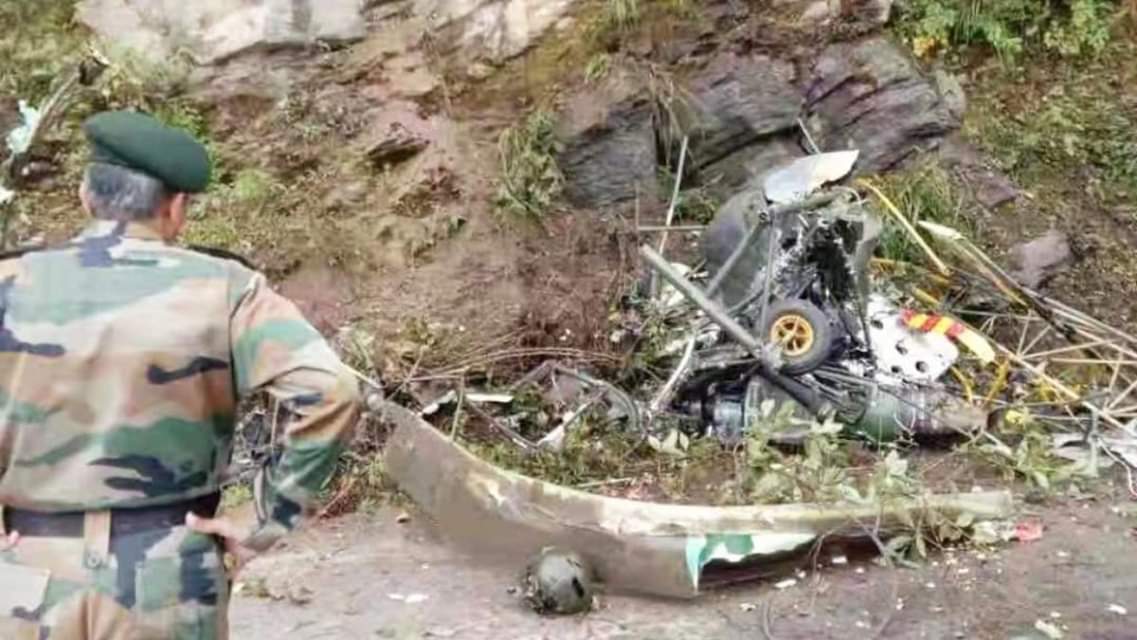
In recent years, there has been a spate of helicopter accidents attributed to human error under varying environmental conditions. This does not augur well for the fleet of 250 helicopters in India’s commercial and civil domain.
Though a few have survived with total damage to the helicopter, most have been fatal.
This has led to a lack of trust amongst passengers, who are skeptical about boarding a helicopter for sightseeing or pilgrimage tours.
These helicopter accidents paint a poor picture of our safety record, especially over the last year. It is time that the Industry, operators, and regulators get their act together and find effective ways to mitigate and reduce these accidents.
RWSI’s Helicopter Accident Analysis in Civil Domain
To help find a way, the Rotary Wing Society of India (RWSI) conducted a study of 26 helicopter accidents from 2014 to 2025.
The world’s leading safety analysis cites human error, misjudgement, poor planning, loss of control, and fatigue as the primary causes. Maintenance lapses, organisational failures, and technical issues from poor upkeep or design also contribute.
Environmental risks such as bad weather, night flying, and challenging terrain further impact safety. The detailed study of 26 accidents during the period was analysed using open-source data, DGCA data, and other sources.
The analysis of the accidents had thus been classified as pilot error, maintenance error, technical/mechanical failure, and environmental factors.
A caveat here is that many of the other factors listed above have often culminated in pilot error. Most often, the pilot error involved VFR (Visual Flight Rules) pilots entering IMC (Instrument Conditions) and flying into terrain or obstacles due to poor situational awareness.
This is termed Controlled Flight into Terrain (CFIT), where there are no controllability issues in the helicopter when it impacts the terrain. RWSI analysis of these accidents led to mitigation strategies for CFIT accidents.
A similar analysis of military helicopters could not be undertaken, as data on this is not available in the open source. Nonetheless, military operators would benefit immensely from this study, and RWSI would be keen to undertake a similar study for military helicopters in India.
National Seminar on Safety in Helicopter Operations
Any study or analysis is not complete until it is discussed with all stakeholders and the outcome reaches the entire helicopter industry. Taking this forward, RWSI organised a day-long National Seminar at Bengaluru, the headquarters of its Southern Chapter, on the 20th of November 2025 at Old HAL Management Academy Auditorium.
Various operators, professionals—pilots and technicians, industry leaders such as HAL, Bell Textron Helicopter, USA, Boeing’s vertical lift division, Moog whose subsidiary Genesys Systems glass cockpits will be introduced into indigenous civil Dhruv Next Gen helicopters, Hindustan Aeronautics Limited’s Flight Operations (Rotary Wing), and Safran Helicopter engines were asked to study the CFIT analysis of RWSI and present their views during the Seminar.
To provide more teeth to the interaction, DGCA’s Director General of the Aircraft Accident Investigation Bureau (AAIB), the CFOI Helicopters (Chief Flight Operations Inspector), and a Human Factors Analysis expert from Aviation Medicine were invited to present their views and mitigating strategies.
This analysis was distributed to all the major players in the helicopter industry and operators to study and discuss strategies to improve the safety of helicopter operations in the Indian subcontinent.
Given that military helicopters’ strength in India far outweighs that of their civil counterparts by 1:4, the Defence Forces were also invited to share their views on improving operational safety and addressing evolving challenges from their perspective.
The India Air Force and the Indian Army provided their views, taking into consideration their operational challenges. HATSOFF flight Simulator helicopter Training was also called on to provide views based on their training of pilots in the last decade.
CMD of HAL was also invited as the Chief Guest to deliver his keynote address. The National Seminar was also live-streamed on the RWSI YouTube channel to facilitate operators who were unable to attend due to operational exigencies.
A total of 125 helicopter professionals and industry representatives attended the seminar, and 600-plus professionals viewed the streaming online.
Key Takeaways & Strategies Evolved
Sensor Fusion and Fail-Safe Features in Engines.
The industry discussions and views outlined mitigating strategies that included intuitive cockpit displays, improvements to the man-machine interface, and architectural design changes to reduce pilots’ workload and improve situational awareness.
Improving cockpit display systems integrated with advanced sensors such as LIDAR-based Obstacle Avoidance Systems (OAS), navigation systems with alerts during degradation, synthetic terrain overlay, and warnings, both visual and aural, for terrain proximity warning seem to be key safety features that will dominate present and future helicopter cockpits.
It was heartening that India’s indigenous Dhruv Civil and military ALH were incorporating these measures to improve safety. Safran Helicopter Engines, which powers all the Dhruv and Allouette engines, discussed the fail-safe features and training simulations being incorporated to allow pilots to fully concentrate on flying without worrying about the engine, enabling carefree handling.
Quick Resolution of Accident Investigation Reports & Regulators’ Efforts
The DG of AAIB articulated the innovation and steps taken to provide a robust mechanism for prompt accident reporting and the quick resolution of investigations, empowering operators with vital information to implement quick remedial measures to reduce future accidents.
CFOI Helicopters elaborated on the efforts by regulators at DGCA to improve safety in flight Operations, such as more weather reporting stations in the Himalayan hills, mandated ground support equipment, safety precautions to be adhered to by operators, and mandatory crew qualification/training.
Point in Space (PINS) Navigation & Military’s Approach to Safe Practices
ACAS Ops (T&H) IAF brought out that a major fillip would be provided to safe flying of helicopters if PINS (Point in Space) operations that use a satellite-based navigation system to make instrument approaches to helipads, even in remote areas.
These helipads do not have the benefit of ground-based navigation aids available at major airfields. The unique nature of helicopter operations in different terrains, such as high altitude, hills, offshore, desert, and unmarked landing areas, provides unique challenges.
The Indian Army Aviation provided a peek into the challenges that lay ahead in an operational area, including environmental threats and threats from the enemy.
The interaction between military and civilian helicopter professionals also provided an opportunity to understand differences in processes, procedures, and training.
This will pave the way for the evolution of best practices for safe helicopter operations in both domains. A major takeaway was that the training, preparation, and planning for the flight mission, as well as the handling of ground support and safety services, are more streamlined, and procedures are more systematic in military operations.
Synthetic Flight Training Devices
Full-motion flight simulators used for pilot training provide essential training, preparing pilots to avoid and recover from bad weather/ reduced visibility. Simulation of emergencies in flight simulators is extremely beneficial for pilots in learning to handle critical situations during actual flight.
The age-old adage that practice makes a man perfect could not be truer than in this case, where safety is paramount.
HFAC’s Approach to Improving Safety
HFACS (Human Factor Analysis and Classification System) expert for IAF also compared two accidents, one in Hawaii and the other in Uttarakhand, and brought out similarities and lapses in procedures leading to a final human error.
It was evident that blaming the pilot for human error will not improve safety, as other procedural and organisational oversights will be overlooked.
Step in the Right Direction to Improve Safety
RWSI will conduct a comprehensive analysis of the Seminar presentations, analysis, views, and discussion over the next two months, and the results will be available to all stakeholders across India.
With regulators, industry, and both military and civil operators under one roof for the first time, a significant step has been taken toward improving the safety of helicopter operations in India.
It is expected that all stakeholders will benefit immensely from this, and it will lead to safer and efficient helicopter operations in the future, not only in India but also will help the world at large.
- Gp Capt MR Anand, VM (G), is a veteran IAF Flying Instructor with 26 years of operational experience in India and abroad. He is also a former Chief Test Pilot (Rotary Wing) at HAL and has been a DGCA examiner for the Dhruv-ALH Helicopter.
- Views Personal of the Author