

Taiwan has lost one of its most advanced fighter jets, the F-16 Viper, triggering an immediate grounding of the entire US-supplied fleet.
On January 6, 2026, a Taiwanese Air Force F-16V crashed into the sea off the eastern coast during a routine nighttime training mission. As per reports, the recording from the F-16’s flight computer shows that the aircraft sounded the ejection alarm. However, the RoCAF cannot confirm whether the pilot, Hsin Po-yi, actually ejected.
A massive search and rescue operation was launched after the incident, but rough weather and choppy waters made the effort tricky. In the meantime, the Taiwan Air Force has ordered an indefinite grounding of the entire F-16V fleet and suspended training missions.
However, they also stated that there were no previously reported errors with the F-16’s multi-mission control system. Additionally, the F-16 in question has undergone regular maintenance checks and has had no major problems since delivery.
Taiwanese officials said there may have been a malfunction in the F-16’s main onboard computer since the aircraft’s flight route was no longer visible.
WATCH: Search and rescue operations continue to find the pilot of a Taiwanese F-16 that crash on 1/6.
Weather conditions are still not ideal, as rough seas are complicating the search. @TaiwanMonitor pic.twitter.com/EkjULQMhDv
— Jaime Ocon 歐海美 (@JaimeOcon1) January 7, 2026
This anomaly likely caused critical system failures, such as loss of displays or flight controls, leading to the jet crashing into the sea. Some sources suggest this may have resulted in pilot spatial disorientation, while others have floated the possibility of engine explosion, as noted by Taiwan’s journalists.
The EurAsian Times understands that these are mere theories and conjectures and cannot be independently verified until an investigation is officially completed.
Some reports highlighted the lack of an autonomous ground collision avoidance system, or the Auto-GCAS, a crucial component that automatically takes control of the aircraft to avoid collisions, particularly in scenarios like spatial disorientation, controlled flight into terrain (CFIT), or pilot incapacitation.
The system is being added to the F-16Vs, with the original completion target set for 2028. However, following the accident, reports in local Taiwanese media stated that the Taiwanese Air Force is likely to urge the US to accelerate work and, if possible, complete the installation process by the end of 2026.
“We will push the U.S. military to complete work on the systems as soon as possible,” RoCAF Inspector General Chiang Yi-cheng said. “We hope the work will proceed as planned, if not ahead of schedule, so that we can receive Auto-GCAS and related equipment by the end of the year.”
The need for Auto-GCAS was first identified in 2018 when an F-16V crashed into Wufen Mountain in Keelung County during the Han Kuang military exercises, killing the pilot. Following the accident, the RoCAF declared that all F-16s would be fitted with Auto-GCAS.
Another F-16V crash happened in January 2022 when the jet crashed into the sea off the southwestern coast near Chiayi Air Base during a routine ground-attack training mission, killing the pilot. The crash was attributed to spatial disorientation and also prompted a fleet-wide grounding.
Notably, grounding the entire fleet is a common practice when the cause of the accident is unclear. For instance, the US Navy’s fleet of CMV-22B Ospreys was grounded in 2024 following a string of accidents, and the Indian Armed Forces grounded their Dhruv choppers after a series of fatal crashes.
In light of the recent accident, some reports have also pointed out over-exhaustion of Taiwanese pilots. Chinese military aircraft frequently fly into Taiwan’s air defence identification zone, making it difficult for the country’s Air Force to keep track of them. They emphasised that higher operational tempos have stressed maintainers and worn out pilots, aircraft, and resources in Taipei’s smaller air force.
However, Taiwanese officials had clarified at a presser after the accident that the pilot was on a regular training schedule when his plane ran into trouble, and was not suddenly pulled in for training or a mission. The officials said he had been resting for a few days after the New Year and only returned on 5th January, 2026.
Nonetheless, the incident has cast doubt over Taiwan’s combat readiness at a time when China is openly intimidating the island state.
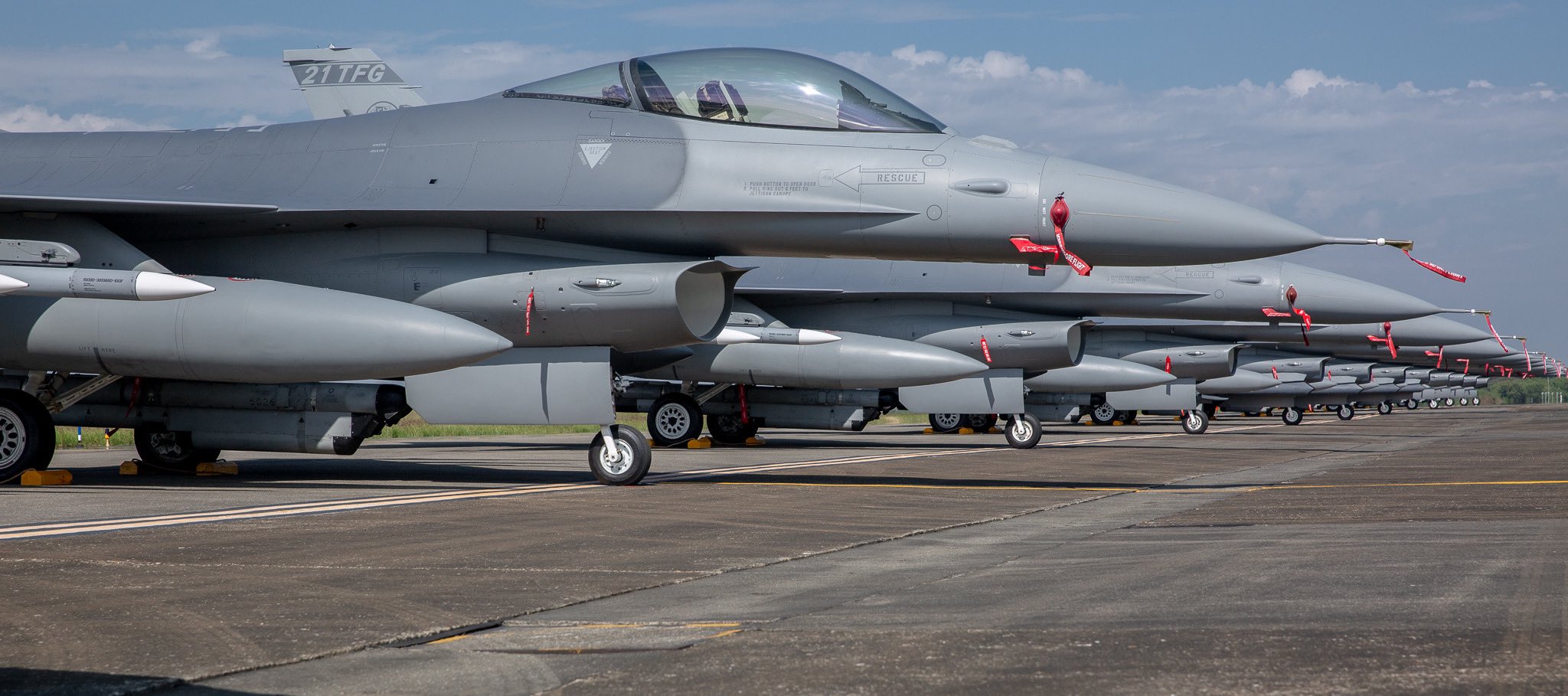
Taiwan currently has a fleet of 140 F-16s, the older A/B Block 20 models that were upgraded to the latest Viper standard under the Peace Phoenix Rising upgrade program. Additionally, it is acquiring 66 new-build F-16V Block 70 jets from Lockheed Martin, with the first batch delayed and expected to arrive this year.
Taiwan’s Defence Minister Wellington Koo said on January 8 that Lockheed Martin is currently working on 46 single-seat and 10 twin-seat F-16V Block 70 jets for Taiwan.
He was responding to questions asked in the Legislative Yuan following the incident. According to Koo, testing for the first of the new aircraft took longer, but if the trials were successful, the procedure might be accelerated for subsequent models.
F-16V Is Taiwan’s Best Bet Against The PLAAF
The F-16V is the mainstay of the Republic of China Air Force (RoCAF).
Typically, losing one jet from a large fleet is not catastrophic, and crashes are not uncommon. Even the American F/A-18E/F carrier-based jets and the F-35 stealth aircraft have been involved in multiple crashes in the past year, as reported by the EurAsian Times.
Nonetheless, the timing of the Taiwanese F-16V crash underscores vulnerabilities in Taiwan’s air defences at a moment when maintaining constant vigilance against China is non-negotiable. In late December 2025, China launched its most extensive two-day war games around Taiwan, in what appeared to be a preparation for an impending invasion.
Codenamed “Justice Mission 2025,” the drills involved coordinated operations by the People’s Liberation Army (PLA), Navy, Air Force, and Rocket Force under the Eastern Theatre Command. Beijing described the coordinated military exercise as a “stern warning” against “Taiwan independence” and “external interference.”
There is an ongoing discussion about how even the most advanced Taiwanese aircraft, such as the F-16V, would stack up against the technologically superior PLAAF fighter jets—including the fifth-generation J-20 and the J-35, as well as the incoming sixth-generation fighter, such as the J-36.
China also fields the H-6 class bombers, which are capable of carrying a heavy payload, and is in the process of developing its next-generation H-20 stealth bomber—a capability that remains elusive to the small Taiwanese Air Force.
It is widely believed that the stealth capabilities of the J-20 and J-35 could make it difficult for the Taiwanese F-16V to detect and engage PLAAF jets, potentially giving the Chinese fighters an upper hand in aerial combat.
A J-20 allegedly flew undetected miles away from Taiwan during the recent military drills, further compounding those fears.

Despite these obvious shortcomings, the F-16V fleet is critical for intercepting Chinese threats, as demonstrated in the latest Chinese drills where the Taiwanese F-16 monitored Chinese J-16 aircraft via the AN/AAQ-33 “Sniper Advanced Calibration Pod” and obscured and cropped key parameter information, demonstrating the ROCAF’s ability to monitor enemy movements, as previously reported by the EurAsian Times.
Taiwan does operate other fighter jets, such as the Mirage 2000-5s, but their viability has frequently been questioned due to the aircraft’s age, high operating costs, and technical issues. Additionally, the RoCAF operates the indigenous F-CK-1 Ching-Kuo (IDF) light multirole fighters, but they are generally less advanced than the F-16V in radar, payload, range, and integration with US systems.
In terms of avionics, radar, and endurance, the F-16V is a 4.5-generation powerhouse that greatly outperforms Taiwan’s outdated F-16A/B fleet and other fighter jets.
At the heart of the upgraded F-16V is the Northrop Grumman AN/APG-83 SABR active electronically scanned array (AESA) radar, which offers longer beyond-visual-range (BVR) engagement envelopes, improved detection of low-observable targets such as cruise missiles, and greater resilience against electronic countermeasures.
Pilots also benefit from an updated centre pedestal display that combines SABR data with other sensors for improved situational awareness, as well as a helmet-mounted cueing system, Link 16 datalink, precise GPS, an Ethernet-based high-speed network, and a modular mission computer for smooth upgrades.
Other structural enhancements include reinforced wings, fuselage, and landing gear, enabling higher takeoff/landing weights and a service life of 12,000 hours—50% longer than legacy F-16s—while reducing maintenance demands for sustained operations.
To counter stealth threats, the US approved a $500 million sale of Legion Pod infrared search and track (IRST) systems in August 2023, now under a $345 million contract signed in June 2024; these heat-signature detectors bypass radar limitations, allowing F-16Vs to spot jets like J-20s at 100+ km via engine exhaust and airframe friction.
- Contact the author at sakshi.tiwari13 (at) outlook.com
- Follow EurAsian Times on Google News


