Nearly 50 years after their introduction and through many upgrades, the F-15 Eagle and F-16 Fighting Falcon continue to compete for sales.
Latest variants of both have been vying for the Indian Air Force’s (IAF) MRFA (Multi-Role Fighter Aircraft). Both have served the home country’s US Air Force (USAF) very creditably and have been in the inventories of foreign air forces.
The McDonnell Douglas (now part of Boeing) F-15 Eagle is a twin-engine, all-weather fighter aircraft designed as a dedicated air superiority fighter. The Eagle took its maiden flight in July 1972 and entered service in 1976.
The Eagle has also been operated by Israel, Japan, and Saudi Arabia. It is among the most successful modern fighters, with 104 victories and no losses in aerial combat, with the majority of the kills by the Israeli Air Force.
Although the F-15 was originally envisioned as a pure air superiority fighter, its design included a secondary ground-attack capability that was largely unused.
The strike derivative, the F-15E Strike Eagle, entered service in 1989. Several additional Eagle and Strike Eagle sub-variants have been produced for foreign customers, with production of enhanced variants ongoing. Nearly 1,200 have been built.
The General Dynamics (now Lockheed Martin) F-16 Fighting Falcon is an American single-engine supersonic multirole fourth-generation fighter aircraft. It made its First flight in January 1974 and entered service in August 1978.
Originally designed as an air-superiority fighter, it evolved into a successful all-weather multirole aircraft, with over 4,600 built since 1973.
Although no longer purchased by the USAF, improved versions are being built for export. The aircraft was also built by SABCA (Belgium), Fokker (Germany), KAI (South Korea), and TUSAŞ (Turkey). As of 2025, it is the world’s most common fixed-wing aircraft in military service, with 2,084 F-16s in operational service. In addition to the USAF, there are nearly 25 other operators.
The F-15 Features and Operations
The F-15 introduced a “look-down/shoot-down” radar that could distinguish low-flying moving targets from ground clutter. It would use computer technology with new controls and displays to lower pilot workload and require only one pilot to save weight.
Unlike the F-14 or F-4, the F-15 has only a single canopy frame, with clear forward vision. The USAF introduced the F-15 as “the first dedicated air-superiority fighter.” At a max take-off weight of 30,844 kg, it was considered large and heavy then.
The F-14 Tomcat and F-15 Eagle were two iconic Cold War-era US aircraft with different specialties. The F-14 was a carrier-based interceptor (fleet defence) with long-range Phoenix missiles, while the F-15 was a faster, more agile, land-based air superiority fighter. The F-15 generally wins on manoeuvrability and speed.
Criticism from the fighter mafia that the F-15 was too large to be a dedicated dogfighter and too expensive to procure in large numbers led to the Lightweight Fighter (LWF) program, which led to the USAF General Dynamics F-16 Fighting Falcon and the middle-weight Navy McDonnell Douglas F/A-18 Hornet.
The F-15 was the principal air superiority fighter of the USAF and a few U.S. allies during the late Cold War. The Eagle was first used in combat by the Israeli Air Force in 1979 and saw extensive action in the 1982 Lebanon War.
In USAF service, the aircraft saw combat action in the 1991 Gulf War and the conflict over Yugoslavia. The USAF began replacing its air superiority F-15 fighters with the F-22 Raptor in the 2000s.
However, reduced F-22 procurement numbers pushed the retirement of the remaining F-15C/D, mostly in the Air National Guard, to 2026 and forced the service to supplement the F-22 with an advanced Eagle variant, the F-15EX, to maintain enough air superiority fighters. The F-15 also remains in service with the air forces of Japan, Israel, and Saudi Arabia.
Boeing F-15EX Eagle II
The Boeing F-15EX Eagle II is the latest variant that evolved from the F-15E Strike Eagle. Designed as a “4.5-generation” multirole fighter for the USAF, it combines the legacy of air dominance with 21st-century technology, acting as a high-payload “missile truck” that complements stealthier, 5th-generation aircraft like the F-35 and F-22.
As of February 2026, the F-15EX program has accelerated, with initial operational capabilities in place. The key capabilities and features include a maximum take-off weight of 36,741 kg (Su-30 MKI: 38,800 kg) and 13,300 kg (Su-30 MKI: 8,100 kg) of weapons across 23 hard points (Su-30 MKI: 14).
It can accommodate up to 12 air-to-air missiles (AMRAAMs) and can even carry hypersonic weapons. Advanced features include a digital fly-by-wire flight control system, an all-glass cockpit with a large-area display (LAD), and advanced mission computers.
While not a stealth aircraft, it utilizes the AN/ALQ-250 EPAWSS (Eagle Passive/Active Warning Survivability System) for advanced electronic warfare, threat detection, and jamming capabilities.
The AN/APG-82(V)1 Active Electronically Scanned Array (AESA) radar offers superior, long-range detection. In September 2025, Raytheon announced a new variant, the APG-82(V)X, which incorporates Gallium Nitride (GaN) technology to enhance range, power, and efficiency, providing a “first-look, first-shoot” advantage against modern threats.
Powered by two General Electric F110-GE-129 engines, it can reach speeds of Mach 2.5. The combat range is around 1,272 km. The airframe is designed for a 20,000-flight-hour lifespan, more than double that of earlier F-15 models.
The first operational F-15EXs were delivered to Eglin Air Force Base in 2021 for testing. Operational units began receiving them in 2024, with initial operational capability (IOC) declared in July 2024. The FY2026 budget proposal increased the planned fleet size to 129 aircraft, up from earlier, lower estimates.
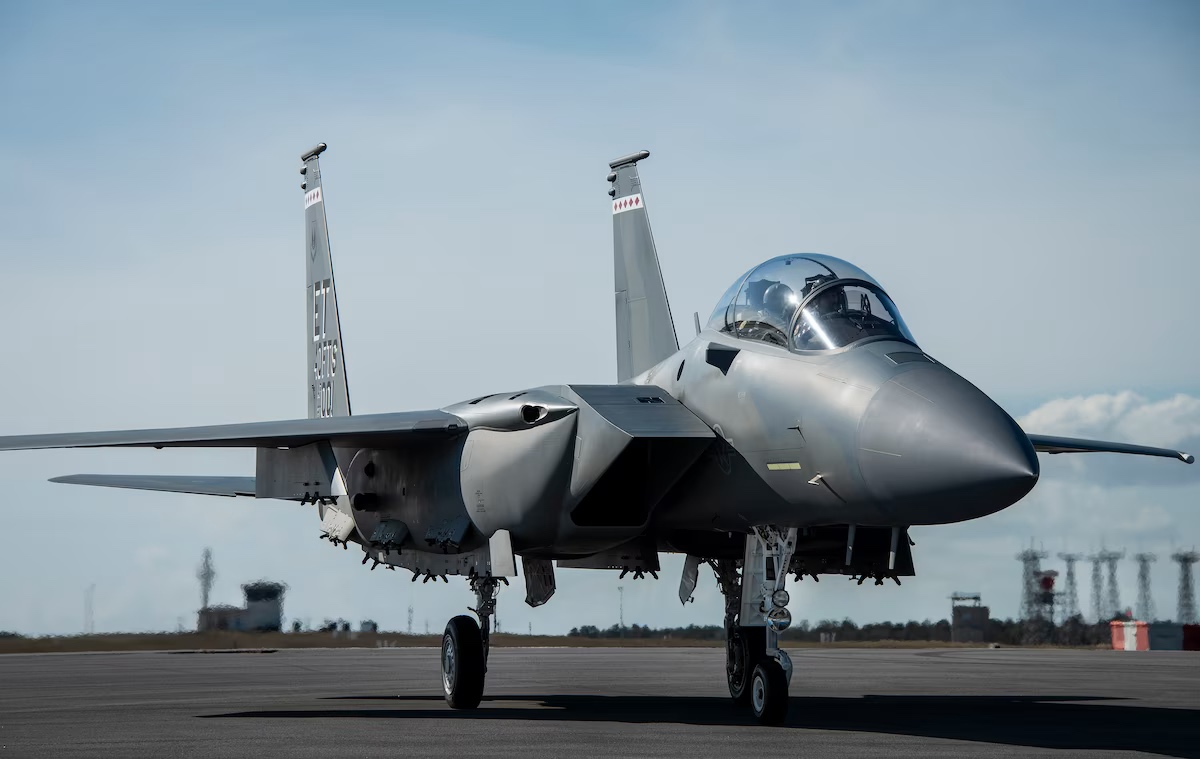
Israel has ordered 25 F-15IA (Israel Advanced) fighters based on the EX, with options for 25 more. Indonesia previously agreed to a 24-aircraft purchase, though recent reports (Jan 2026) suggest that the specific procurement program is no longer active.
The F-15EX carries a standoff weapons system designed to operate in highly contested environments behind or alongside stealth platforms. It provides the USAF with a rapid-fielding, high-sortie-rate alternative to 5th-gen fighters, ensuring high-capacity firepower without the higher procurement and maintenance costs of stealth platforms.
The F-15EX Eagle II has an estimated unit flyaway cost of approximately $90 million to $97 million as of 2025-2026. While designed as a more cost-effective, high-payload alternative to the F-35, the total cost for a fully combat-ready aircraft can reach up to $117 million when including advanced systems like the EPAWSS electronic warfare suite
F-16 Features & Operations
The aircraft introduced many new features, including a frameless bubble canopy for enhanced cockpit visibility, a side-stick to ease control while manoeuvring, an ejection seat reclined 30 degrees from vertical to reduce the effect of g-forces on the pilot, and the first use of a relaxed static stability/fly-by-wire flight control system that helps to make it an agile aircraft.
The fighter has a single turbofan engine, an internal M61 Vulcan cannon, and 11 hard points. The maximum take-off weight is 19,187 kg for C/D variants. Although officially named “Fighting Falcon”, the aircraft is commonly known by the nickname “Viper” among its crew and pilots.
Since its introduction in 1978, the F-16 has become a mainstay of the USAF tactical airpower. It primarily performed strike and suppression of enemy air defences (SEAD) “Wild Weasel” missions.
It was also chosen as the USAF Thunderbirds aerial demonstration team and as an adversary/aggressor aircraft by the United States Navy. F-16s from various US-led coalition partners flew combat missions in the Gulf War, Bosnia, Yugoslavia, Afghanistan, Libya, Iraq, and Syria.
F-16s have also seen extensive combat use by Israel, Pakistan, and Ukraine. Since 1982, it has been a Dual Capable Aircraft platform for US nuclear weapons in Europe. Numerous countries have begun replacing the aircraft with the F-35 Lightning II, although the F-16 remains in production and service with many operators.
F-16 Upgrades and Latest Variants
The latest and most advanced variant of the F-16 Fighting Falcon is the F-16V Viper (Block 70/72). It features the APG-83 AESA radar, advanced cockpit displays, and modern avionics to bridge 4th- and 5th-generation capabilities. These new-build fighters have a 50 percent longer structural life, with deliveries ongoing for international customers.
Upgraded cockpit with new high-resolution centre display, advanced flight control computer, and enhanced situational awareness. It features an Automatic Ground Collision Avoidance System (Auto GCAS) to prevent crashes.
It has enhanced weapons interoperability, capability for conformal fuel tanks, and a 12,000-hour structural life. Powered by either General Electric F110-GE-129 (Block 70) or Pratt & Whitney F100-PW-229 (Block 72) engines, the F-16V serves as both a new-build production standard (Block 70/72) and a retrofit for existing, older F-16 models.
The F-16V Viper typically costs between $40 million and $70 million per aircraft for the base unit, though total package costs including training, weapons, and support often exceed $100 million per unit.
Recent deals indicate high variability, with, for example, a 2025 proposal citing significantly higher costs for specific, smaller, or potentially inclusive contracts.
Total package cost of approximately $5.58 billion for 20 aircraft for the Philippines, equating to roughly $279 million per unit, including support, training, and equipment. Bulgaria paid ~$ 1.3 billion for 8 jets ($162M each) in a second batch order. While earlier deals (like Slovakia in 2019) averaged around $128M per jet.
PAF F-16s
As of late 2025/early 2026, the Pakistan Air Force (PAF) operates a fleet of 70-80 active F-16 Fighting Falcons (Block 15 MLU and Block 52+), which are currently undergoing a major $686 million US-backed modernization deal.
This upgrade, approved in 2022, enhances avionics, communication (Link-16), and extends service life through 2040. Upgraded, they are armed with Advanced Medium-Range Air-to-Air Missiles (AMRAAM) and equipped with modern electronic systems for enhanced air operations.
The U.S. continues to provide support and technical upgrades to sustain the fleet, with Lockheed Martin managing the program. The F-16s are officially intended for counterterrorism operations. Use of these aircraft is subject to strict U.S.
End-Use Monitoring (EUM) agreements limit their deployment in certain regional conflicts. The ground reality has been different, and the aircraft has been used repeatedly against India. The F-16 remains a cornerstone of the PAF alongside Chinese-supplied J-10CE and JF-17.
F-21 Viper
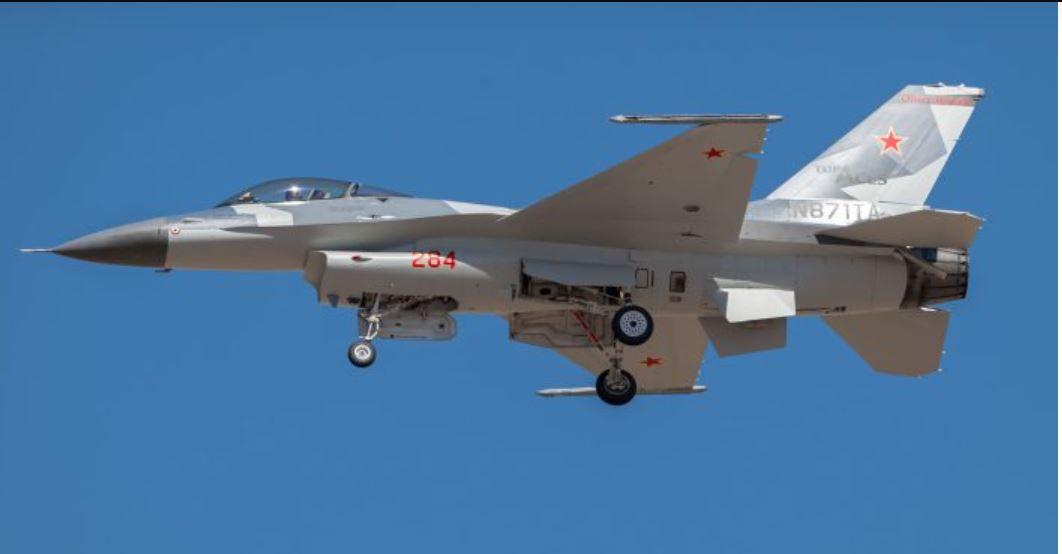
The F-21 Viper is an advanced variant specifically designed for the Indian Air Force (IAF) and unveiled in 2019. Based on the F-16 Block 70/72, it offers enhanced technologies, including F-22 and F-35 avionics, a 12,000-hour service life, and tailored “Make in India” production, aiming to bridge the gap between the light combat aircraft (LCA) and heavier, twin-engine fighters. It features the AN/APG-83 AESA radar, offering capabilities similar to 5th-generation fighters.
The features include a larger cockpit display, a unique long-range infrared search-and-track (IRST) system, a specialized triple-missile launcher adapter, conformal fuel tanks for increased range, and a retractable flight-refuelling probe (boom and drogues).
Designed for air-to-air and air-to-ground roles with 40 percent greater firepower capacity compared to older variants. The “Make in India” production partner is Tata Advanced Systems, intended to integrate India into the global F-16 ecosystem.
The F-21 was a contender for India’s 114 Medium Role Fighter Aircraft (MRFA) requirement, which seems to be leaning toward the Rafale.
To Summarise
The Lockheed C-130 Hercules holds the record for the longest continuous military aircraft production run, spanning more than 70 years since 1954.
In terms of total numbers, the Mikoyan-Gurevich MiG-21 is the most-produced jet fighter with over 11,000 units built, while the F-16 Fighting Falcon holds the record for the most-produced Western jet fighter, exceeding 4,000 units.
The F-15 was the first fighter capable of attacking multiple targets simultaneously from long range, using advanced radar and missiles. The F-15 Eagle holds an undefeated 104-0 air-to-air combat record, with zero losses to enemy aircraft over 50 years of service.
It dominated in the 1982 Lebanon War, Operation Desert Storm (1991), Operation Southern Watch (1992-2003), and Operation Enduring Freedom (2001-2014).
The Israeli Air Force was the first to use the F-15 in combat, recording numerous victories during the 1982 Lebanon War. During Operation Desert Storm in 1991, the F-15 played a critical role, securing many of the 104 victories. The F-15’s superior design, including high-altitude speed and advanced avionics, has cemented its reputation as one of the most successful fighter aircraft in history.
Despite no air-to-air losses, approximately 125 have been lost in non-combat accidents related to pilot error, technical reasons, or ground incidents.
F-15 EX is a large aircraft, expensive to acquire and maintain. Despite large numbers being built, they were used only by the air forces of the countries that could afford higher costs.
The F-16 also boasts an exceptional combat record with over 70 air-to-air kills (mostly Israeli F-16s) and two combat losses.
Since 1981, it has executed over 200,000+ combat sorties in major conflicts, including Operation Desert Storm, the Balkans, Afghanistan, and Iraq. One Turkish F-16 was lost in 2006 to a Greek Mirage 2000 during an aerial dispute; however, this is frequently debated as a training/interception accident rather than a “dogfight” kill.
One Pakistani F-16 was reportedly shot by an Indian MiG-21 (disputed by some). The F-16 is considered one of the most versatile and successful fighters. delivered to 25+ countries.
Macron to Extend France’s Nuclear Umbrella Over Europe Amid U.S. Doubts, Russian Threats
F-15 EX and F-16s are not competitors in a conventional sense, and are meant to complement each other.
They are of different weights and payload classes. F-15 is a twin-engine air-superiority fighter. F-16 is a lightweight, single-engine fighter designed for high agility.
Both types have been built in large numbers. F-16 numbers are much higher because it became a NATO standard platform. The F-16 Fighting Falcon was primarily built by a consortium of 5 nations (the USA, Belgium, Denmark, the Netherlands, and Norway). In addition, Turkey, South Korea, and Germany have produced or assembled F-16s domestically to support their large fleets.
The F-15 EX will have to be retained to complement the F-35s, which are replacing the F-16s. Both have had a good combat record. But also, the reality is that they have operated mostly in an uncontested (or less-contested) environment.
While the airframe changes have nearly reached finality, the Americans continue to install new avionics technologies and weapons to improve long-range BVR capabilities and the ability to survive in a heavily electronic environment. Both fleets are set to continue beyond 2040.
- Air Marshal Anil Chopra (Retired) is an Indian Air Force veteran, fighter test pilot, and ex-director-general of the Center for Air Power Studies. He has been decorated with gallantry and distinguished service medals during his 40-year tenure in the IAF.
- THIS IS AN OPINION ARTICLE. VIEWS PERSONAL OF THE AUTHOR
- He tweets @Chopsyturvey
- Follow EurAsian Times on Google News