

The US military carried out a series of deadly airstrikes on Christmas Day 2025 against Islamic State (ISIS) targets in Nigeria’s northwest Sokoto State, with President Donald Trump announcing the action directly from his Mar-a-Lago estate.
This was not the first Christmas bombing that the US military had conducted.
Trump described the strikes as a direct response to what he called the “slaughtering of Christians” by militants.
Posting on Truth Social, Trump said: “I have previously warned these Terrorists that if they did not stop the slaughtering of Christians, there would be hell to pay, and tonight, there was. MERRY CHRISTMAS to all, including the dead Terrorists, of which there will be many more if their slaughter of Christians continues.
“The strikes, confirmed by both the US Africa Command (AFRICOM) and Nigeria’s foreign ministry, targeted ISIS camps and killed multiple militants, according to initial assessments.
They were conducted at Nigeria’s request, using precision munitions, likely including cruise missiles launched from a US warship in the Gulf of Guinea, as shown in Pentagon-released video footage.
Defense Secretary Pete Hegseth posted on X: “Grateful for Nigerian government support & cooperation… More to come. Merry Christmas!”
The Nigerian side described the operation as “precision hits on terrorist targets” and part of ongoing security cooperation to combat terrorism and violent extremism.
This marks the first direct US combat action in Nigeria under Trump’s second term, coming after months of heated rhetoric.
In October and November 2025, Trump repeatedly warned that Christians in Africa’s most populous nation faced an “existential threat” amounting to “genocide,” threatened to cut all aid if killings continued, and ordered the Pentagon to prepare for military options.
The US has redesignated Nigeria a “country of particular concern” for religious freedom violations and imposed visa restrictions on certain officials.
While some Nigerian Christians and US evangelical groups welcomed the attention, others, including government officials and independent analysts, reject framing the violence purely as anti-Christian persecution, pointing out that armed groups like Boko Haram, ISWAP (Islamic State West Africa Province), and bandits kill Muslims and civilians indiscriminately across the north and Middle Belt.
China To Surpass U.S. Navy In Submarine Strength, Match Aircraft Carriers By 2035, Pentagon Says
Just hours before the US strikes, on Christmas Eve (December 24), a suspected Boko Haram suicide bomber detonated explosives inside a crowded mosque in Maiduguri, Borno State’s capital, killing at least five worshippers and wounding more than 30 during evening prayers.
No group immediately claimed responsibility, but the attack fits a long pattern of jihadist violence in the northeast, where Boko Haram and ISWAP have killed tens of thousands since 2009.
Earlier in December, coordinated attacks in Benue and Plateau states left at least 20 Christians dead in the days leading up to Christmas, heightening fears among communities already bracing for holiday violence.
Reports from groups like International Christian Concern described widespread anxiety, with missionaries warning of targeted assaults on churches and villages.
Christmas Bombings Of 1972
This latest incident reminds us of a historical parallel: the “Christmas Bombings” of December 1972 during the Vietnam War.

Nearly 53 years ago, the US Air Force unleashed its heaviest aerial bombardment ever during the Vietnam War.
From December 18 to 29, 1972, more than 200 B-52 Stratofortress bombers, supported by tactical fighters, dropped over 20,000 tons of bombs on North Vietnam, mainly targeting Hanoi and Haiphong.
Known as Operation Linebacker II, or simply the “Christmas Bombings” in the West, it was planned to batter the North into accepting peace terms and force a quick end to America’s long, unpopular involvement in the conflict.
The operation came at a critical moment. Richard Nixon had just won re-election in November 1972 by promising “peace with honor” after years of grinding war that started in 1965.
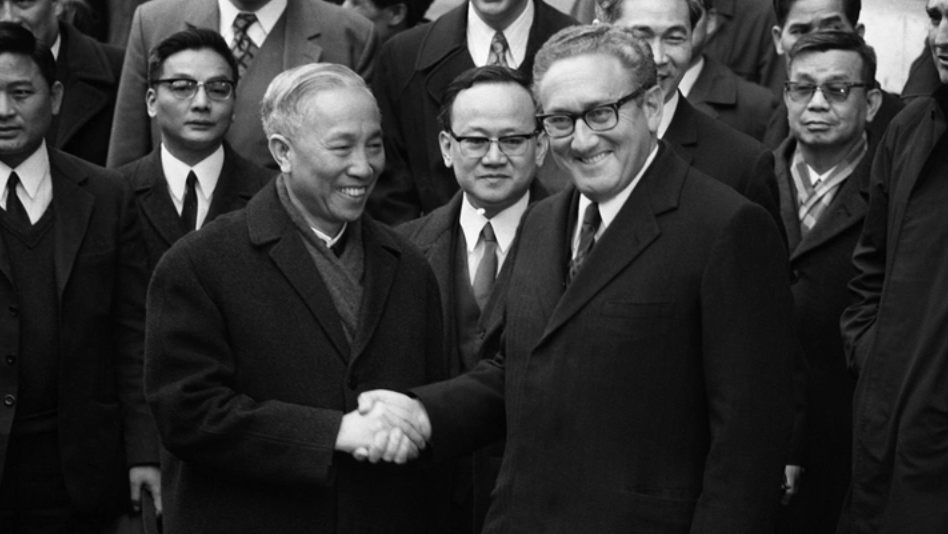
The US had been fighting in Vietnam since 1965. Since 1968, alongside the hostilities, the then US National Security Advisor Henry Kissinger and North Vietnamese politburo member Lê Đức Thọ were engaged in secret talks in Paris, seeking a negotiated peace.
In the spring of 1972, the DRV launched its largest offensive, the ‘Nguyen Hue’ Offensive (known in the West as the Easter Offensive), in which the North Vietnamese forces almost overran South Vietnam. In response, the US conducted ‘Operation Linebacker,’ an aerial bombing campaign over Hanoi and Haiphong Harbor.
Ultimately, the DRV stopped the offensive.
Months later, in October, both sides offered crucial concessions, thereby removing the stumbling blocks that had caused years of stalemate in the peace negotiations.
The US dropped its demand that North Vietnamese forces withdraw from the south, a position that had been implied but not entirely explicit in previous US proposals. At the same time, the DRV abandoned its insistence that the South Vietnamese government, headed by President Nguyen Van Thieu, must be removed before any peace agreement could be reached.
By October 18, both sides had approved a final draft of an agreement, whose basic terms were a cease-fire in place; the return of POWs; total American withdrawal from South Vietnam; and a National Council of Concord and Reconciliation in South Vietnam to arrange elections, its membership to be one-third neutral, one-third from the existing government in Saigon headed by President Thieu, one-third South Vietnamese communists.
President Nixon was satisfied with the agreement, as it met the conditions for “peace with honor” that he had promised the American citizens during his reelection bid. He sent a cable to North Vietnam’s Prime Minister Pham Van Dong declaring that the agreement “could now be considered complete” and that the United States “could be counted on” to sign it at a formal ceremony on October 31.
However, the US went back on its word after its ally, President Thieu, whose government had been completely left out of the negotiations, rejected the agreement.
In President Thieu’s view, the agreement amounted to a surrender, as it gave the Communists a legitimate role in the political life of his nation, allowed the Viet Cong to hold on to the territory it controlled in South Vietnam, and permitted the North Vietnamese Army (NVA) to continue its occupation of the two northern provinces and retain more than 150,000 troops in his country.
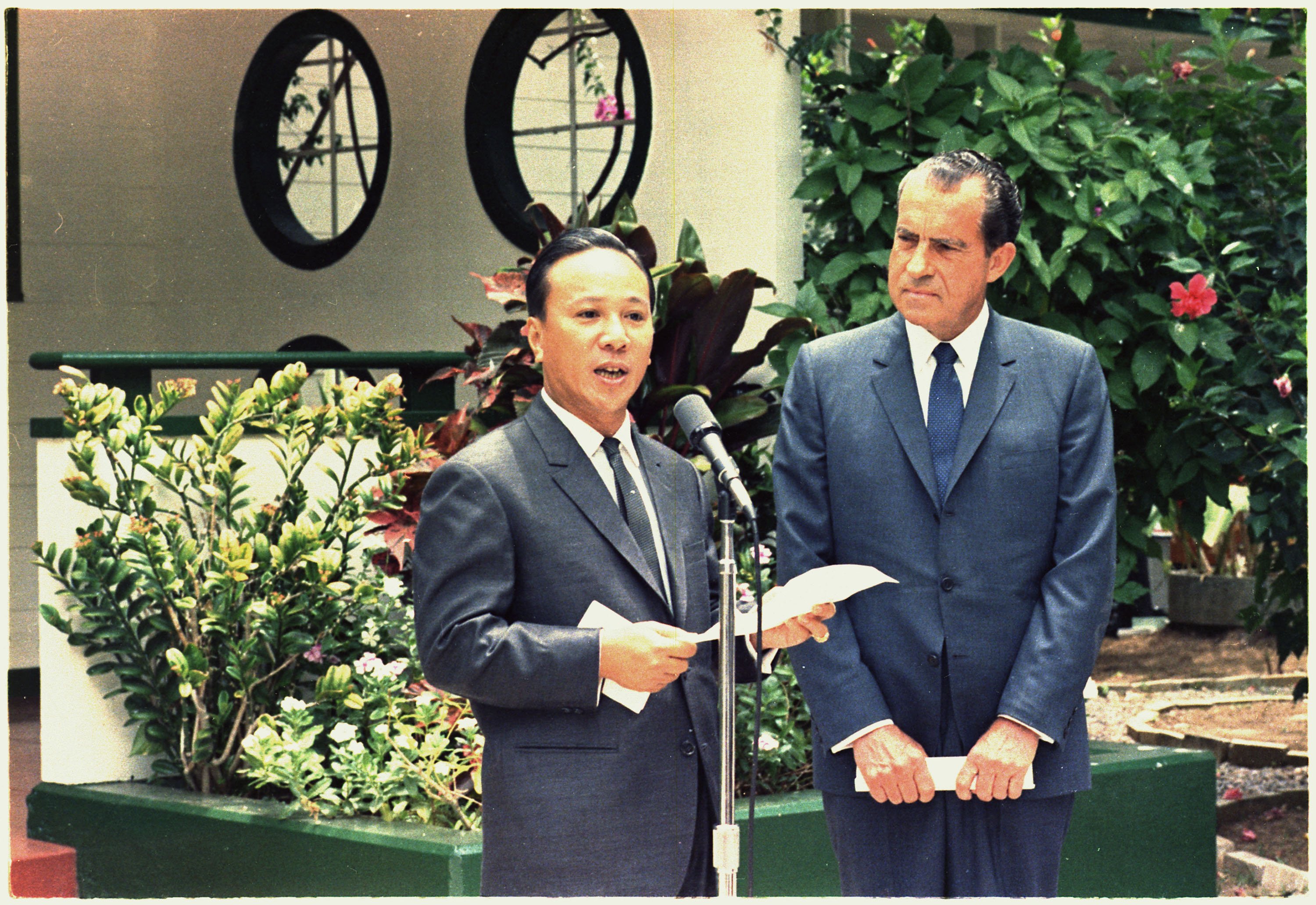
So, in early December, Kissinger went to Paris to persuade Le Duc Thọ to withdraw NVA troops from South Vietnam, which the latter refused to do, insisting on going through with the agreement finalized in October, and thus the peace negotiations collapsed.
On December 13, Kissinger flew back to Washington to meet President Nixon to discuss the options. One of the proposals by doves in the administration was that the US make a separate deal with Hanoi to release the POWs in return for a total American withdrawal, leaving President Thieu to his fate.
President Nixon did not go for it, as abandoning South Vietnam at that stage, after having shed so much blood, pouring vast sums of money, and so much public outcry that had overwhelmed the American political scene, would be wrong. It would have meant cowardice and betrayal.
Also, abandoning President Thieu would have meant the total defeat of the fundamental objective of the US involvement in the Vietnam War, which was to keep an anti-Communist government in power in Saigon.
Instead, Nixon warned the government in Hanoi of dangerous consequences if it did not return to the negotiating table and called upon the US Air Force (USAF) to save the situation, which it did so by conducting an 11-day strategic bombing campaign called Operation Linebacker II, which later also came to be known by several names such as ‘The December Raids’ and ‘The Christmas Bombings.’
Blow To B-52 Stratofortress
Before December 1972, the US air campaigns in Vietnam were limited to preventing the overland routes by which North Vietnam was resupplying its forces and Viet Cong forces operating in South Vietnam.
However, Linebacker II was different, as it intended to destroy high-value targets such as vital military installations, railway lines, energy plants, factories, etc., to shake the Vietnamese “to their core,” in the words of the then US National Security Adviser Henry Kissinger.
The USAF employed its legendary B-52 Stratofortress for Linebacker II, which has been a bastion of the USAF’s bomber fleet since its introduction in the 1950s, during the height of the Cold War. Seventy-six B-52Hs are still in service, with another 12 in reserve storage.
The bomber can carry 32,000 kilograms of nuclear or conventional weapons and fly at high subsonic speeds at altitudes of up to 50,000 feet (15,166.6 meters), beyond the range of naked eyesight, making its attacks both physically and psychologically catastrophic.

“(Nixon) wanted maximum psychological impact on the North Vietnamese, and the B-52 was airpower’s best tool for the job,” TW Beagle wrote in his thesis, dated June 2000, submitted to the faculty of The School of Advanced Airpower Studies, Air University.
However, it was not going to be easy for these B-52s, as what awaited them were the formidable Soviet-made S-75 Dvina (NATO reporting name SA-2 Guideline) high-altitude air defense systems that could fire a 195-kilogram warhead up to altitudes of 30,000 meters at more than Mach 3 speed – 3 times the speed of sound.
North Vietnam had fielded around 26 S-75 surface-to-air missiles (SAM), of which 21 were employed in the Hanoi/Haiphong area, with a heavy concentration of anti-aircraft artillery and a complex, overlapping radar network.
Also, the radar network had been secretly upgraded with a new fire-control radar (FCR) that is said to have improved the accuracy of the S-75 weapons.

Moreover, the tactics employed by the B-52s had not changed much since World War II, which also proved fatal.
“They’re going to be so god damned surprised,” US President Richard Nixon said to Kissinger on December 17, and the next day, 129 B-52s took off from Guam and Thailand to obliterate the Hanoi and Haiphong areas in North Vietnam, marking the onset of Operation Linebacker II.
The operation continued for the next 11 days, with a respite on Christmas Day to allow USAF planners to review events and give the bomber crews some rest.
The North Vietnamese missile gunners downed a total of fifteen B-52s, with six bombers shot down in one night. This was a massive blow to the legendary B-52 Stratofortress and the US Air Force.

Death And Devastation On Both Sides
A total of 33 USAF airmen lost their lives. Since the bombings were conducted at night, and the Bombers that made it back to base would land in darkness, the crew would not realize until the following day who among their colleagues had failed to return.
“You’d see the trailer next to yours with doors open on both ends and airmen loading (the occupant’s) personal belongings into a trunk to be shipped back to their families, so you knew that crew didn’t make it,” Wayne Wallingford, an electronic warfare officer based in U Tapao who flew on seven of the 11 raids B-52s undertook over Hanoi, recalled in an interview with CNN.
“It was pretty sobering to see that,” he said.
Over 12 days, that unpleasant ritual was performed 33 times.
The losses suffered by the USAF were unprecedented, and so was the devastation in Vietnam caused by the B-52s.

According to Vietnam War historian Pierre Asselin’s book, ‘Vietnam’s American War: A History,’ “1600 military installations, miles of railway lines, hundreds of trucks and railway cars, eighty percent of electrical power plants, and countless factories and other structures were taken out of commission.”
At the time, the communist authorities said about 1,600 Vietnamese were killed; however, many believe that the actual figure is much higher.
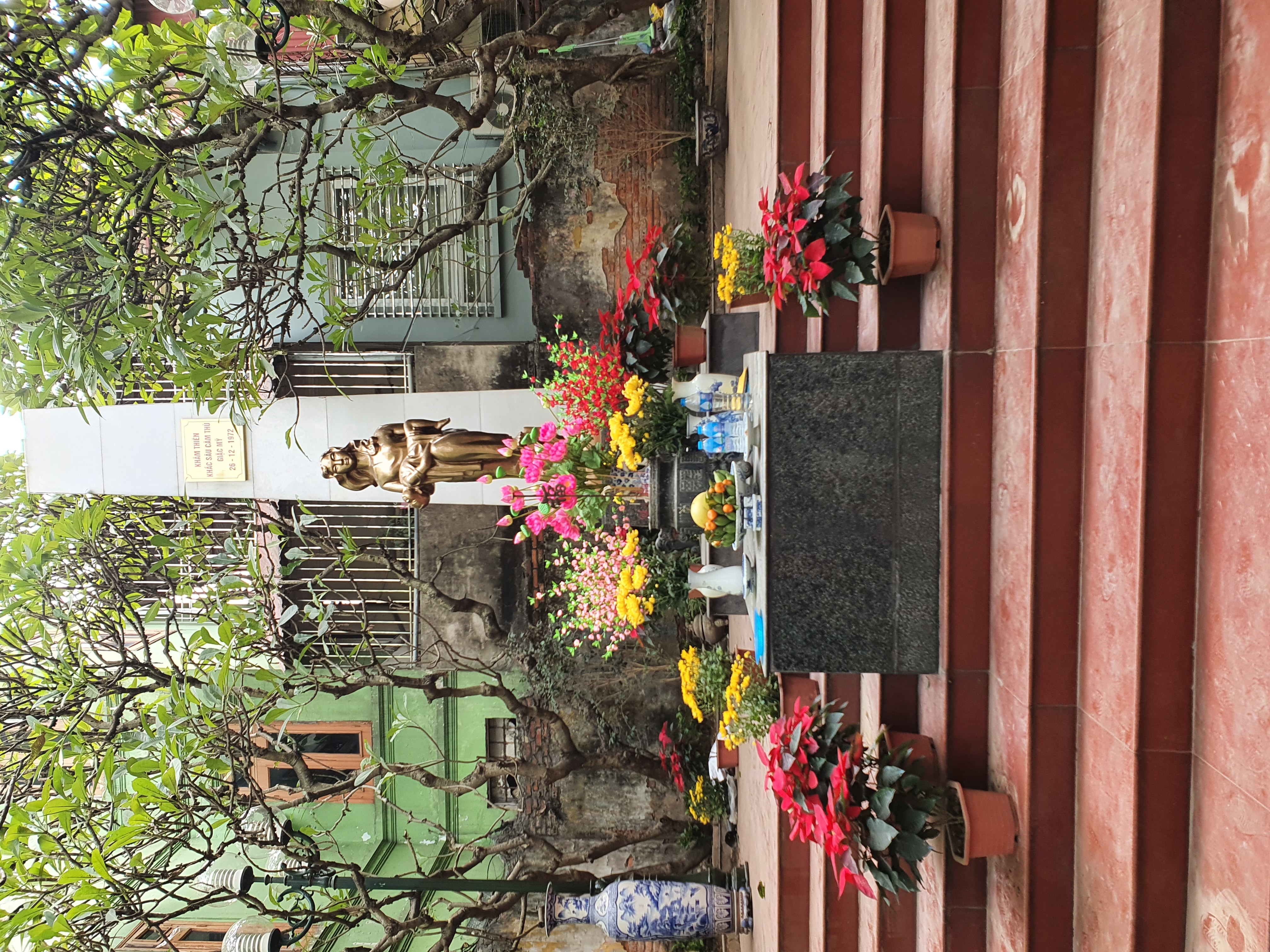
According to the Vietnamese newspaper VN Express, the bombings resulted in 2,380 civilian deaths, of which 287 people were killed in one night alone in Kham Thien, an area in Hanoi, the majority of whom were women, children, and the elderly, who did not manage to escape in time.
A bronze statue depicting a young mother carrying her dead child is placed on Kham Thien Street in Hanoi as a memorial to all the victims of America’s ‘Christmas Bombings.’ Both died from suffocation under the rubble of a house at 47 Kham Thien, where the statue now stands.
North Vietnamese Did Not Budge!
Ten days following the end of Operation Linebacker II, which was on January 8, 1973, the peace negotiations resumed.
The Americans thought the bombing campaign had forced North Vietnam into submission, but Vietnamese media reports maintain that North Vietnamese negotiators led by Le Duc Tho did not budge even after the devastation brought by 20,000 tons of bombs.
In Hanoi, “the story of the events of late December 1972 was a tale, not of massive loss and destruction, but of heroic resistance by Northerners,” wrote the historian Asselin.
As a result, on January 27, 1973, both sides signed the Paris Peace Accords on terms reached earlier in October 1972.
The terms of the final agreement are largely the same as those of the draft agreement finalized in October 1972, which was released by the DRV’s official news agency on October 26, 1972, following President Nixon’s commitment to sign the agreement on October 31, as stated earlier.
This means that Hanoi did not change its position after all!

The accords marked the beginning of the end of the US involvement in the war. Eventually, as it turned out, all Operation Linebacker II achieved was allowing the US a face-saving exit from the Vietnam War.
Three years down the line, with the majority of US forces out of Vietnam and the Communist forces largely replenished, Hanoi launched a large-scale invasion of South Vietnam, which led to the fall of Saigon on April 30, 1975.
- By ET Online Desk with AFP Inputs
- Follow EurAsian Times on Google News


