About 64 years ago, Cold War rivals—the United States and the Soviet Union—arrived at a settlement and exchanged their spies, Francis Gary Powers and Rudolf Abel, at the infamous Glienicke Bridge in Berlin, Germany, which came to be known as the “Bridge of Spies.”
At the height of the Cold War, the US Central Intelligence Agency (CIA), based on inaccurate predictions that Soviet radars could not detect the U-2 spy plane at 70,000 feet, began sending U-2s on sorties over Soviet territory in 1956, as detailed in a previous EurAsian Times report.
In response, the Soviet air force scrambled its MiG-15s and MiG-17s to intercept the spy plane but was largely unsuccessful. However, it was established that the Soviet radars were not blinded to U-2 flights as the CIA had previously thought.
So, on May 1, 1960, the Soviet S-75 ‘Dvina’ surface-to-air missile (SAM) system managed to shoot down the U-2 spy plane, in what was seen as a major embarrassment to the US.
The aircraft was piloted by Francis Gary Powers, a former US Air Force (USAF) pilot who later worked for the CIA. Powers was captured by the Soviets.

Interestingly, the USAF was unaware that the Soviet air defence forces had downed the aircraft. When they realised the plane had not returned to the base in Norway, they assumed it had crashed and claimed that a NASA weather plane had gone missing over Turkey due to a possible pilot blackout or navigation error.
The Soviets, who had taken Powers alive, however, kept quiet and tricked the Americans into supporting their cover narrative. It wasn’t until May 7 that the Soviets disclosed that Powers was alive and had admitted to spying on the Soviet Union.
Powers was charged with espionage and other crimes against the Soviet state, convicted under Article 2 of the Law on Criminal Responsibility for State Crimes, and sentenced to 10 years of imprisonment.
Powers’ father relentlessly worked to bring his son back home through a prisoner swap between the two sides. He reached out to the attorney of a popular Soviet spy called Rudolf Abel, who had been imprisoned in the US. And, it worked.
“On February 10, 1962, one year, nine months, and ten days after his capture, Powers was freed. He was exchanged for Colonel Rudolf Abel, a Soviet spy convicted in the US of espionage. They were traded at the Glienicke Bridge in Berlin — known as the Bridge of Spies,” as noted in the CIA archives.
Who Was Rudolf Abel?
Rudolf Abel is frequently referred to as the “most famous Soviet spy” of all time.
Abel was a high-ranking Soviet intelligence officer. Before joining a forerunner to the KGB, he had served as a translator for the Foreign Intelligence Service and then as a radio operator during World War II.
In October 1948, Abel was dispatched to the United States by Soviet foreign intelligence as an “illegal” deep-cover operative. He travelled with a false US passport and allegedly entered the US as Andrew Yurgesovich Kayotis, who was a deceased Lithuanian-American.
Once in New York, he adopted the alias Emil Robert Goldfus, posing as an artist and photographer.
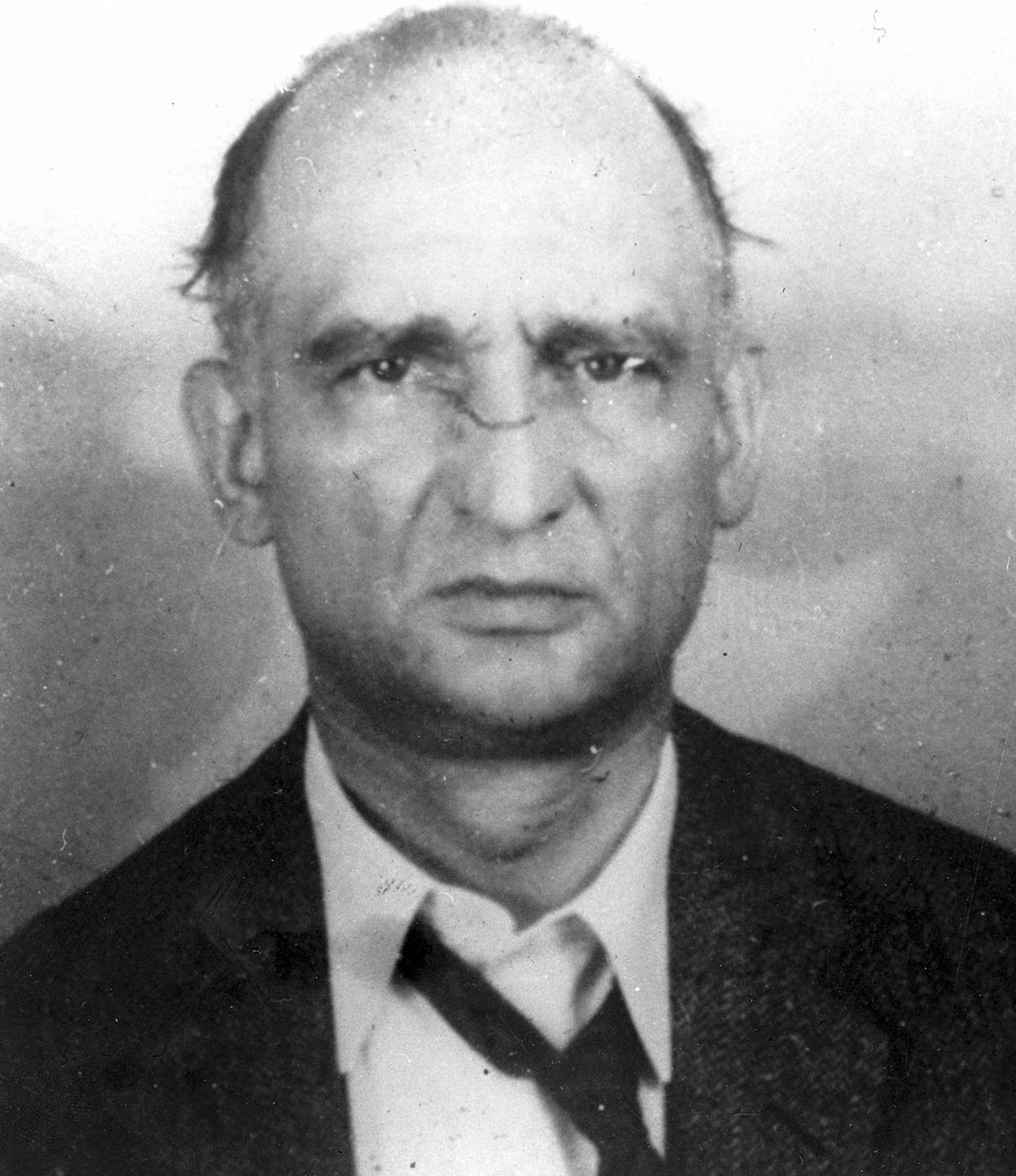
Rudolf Abel was assigned the responsibility of obtaining top-secret intelligence from US military stations and the United Nations, as well as finding the American atomic secrets, and sending it back to the Soviet Union.
The information he gathered was constantly relayed to either Soviet agents or directly to the USSR. In addition, Abel was ordered to team up with another Soviet spy to facilitate the recruitment of additional agents in the United States.
Although Abel left no trace of his spying, his partner (his subordinate) became hostile when summoned back to the USSR for subpar performance. Fearing punishment, Reino Häyhänen defected in Paris en route to Moscow, turned on his Soviet colleagues, and disclosed his identity to the United States.
It must be noted that even before Abel’s subordinate turned himself in and sent alarm bells ringing across the country, the FBI had spent years trying to find the source of a hollow nickel that a local newsboy had discovered, suspecting it to be linked to espionage.
“The newsboy rested this coin, a nickel, on the middle finger of his hand. It felt lighter than an ordinary nickel. He dropped this coin to the floor. It fell apart! Inside was a tiny photograph—apparently a picture of a series of numbers,” writes the FBI.
“Two days later, on June 24, 1953, during a discussion of another investigation, a detective of the New York City Police Department told an FBI agent about the strange hollow nickel which, he had heard, was discovered by a Brooklyn youth,” it added.
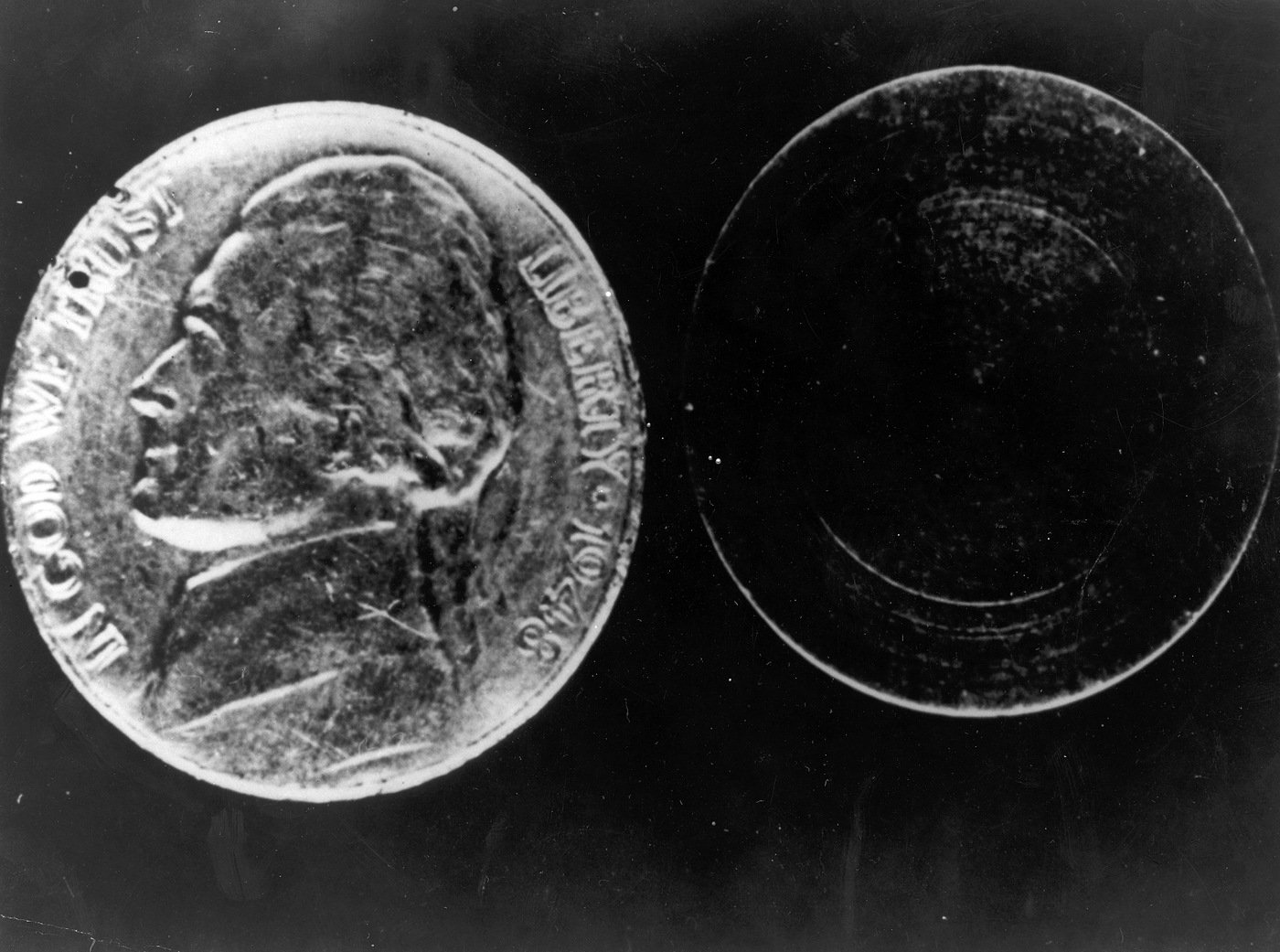
The newsboy subsequently handed over the nickel and the photograph he had found inside to the investigators, who later passed them on to the FBI.
“In examining the nickel, agents of the FBI’s New York Office noted that the microphotograph appeared to portray nothing more than ten columns of typewritten numbers. There were five digits in each number and 21 numbers in most columns. The agents immediately suspected that they had found a coded espionage message. They carefully wrapped the nickel and microphotograph for shipment to the FBI Laboratory,” as per the FBI’s own account.
Interestingly, after Abel’s partner turned himself in, he also helped the FBI decode the message and helped in the capture of Abel.
Rudolf Abel was finally arrested on June 21, 1957.
“He identified himself as Rudolf Ivonovich Abel, his signal to the Soviet Union of his capture, and the name he would be commonly known. When his apartment in Brooklyn was searched, investigators found shortwave radios, cipher pads, cameras, and film for producing microdots, a hollow shaving brush, cuff links, and other espionage equipment,” as per the FBI’s archives.
However, Rudolf Abel was merely his alias. The Soviet intelligence officer was, in reality, named Vilyam Genrikhovich Fisher.
Fisher appeared before the US Federal Courts in New York, in what would become known as the Hollow Nickel Case. He was found guilty on three counts of conspiracy and spying for the Soviet Union, but was spared a death sentence as a result of the exceptional work done by his counsel, James B. Donovan.
Fisher, or Rudolf Abel as he liked to be called in the US, received a sentence of 30 years in jail and a fine of $3,000.
Needless to say, Fisher’s arrest and trial became emblematic of US-Soviet tension. In fact, internationally renowned filmmaker Steven Spielberg also directed the blockbuster spy film “Bridge of Spies.”
After he was convicted, little did Fisher know that his life would change upon the capture of a U-2 pilot, Francis Gary Powers.
After Powers’ arrest, his father initiated a prisoner exchange.
“One month after his son was captured, he reached out to Abel at the federal penitentiary and suggested a swap. Abel’s attorney, New York lawyer and OSS counsel James B. Donovan, had fought against the death sentence for this exact purpose, hoping that one day the US might have use for Abel in an exchange for an American.”
“Milan Miskovsky, an Agency lawyer, worked together with Donovan to negotiate the trade with the Soviets.”
On February 10, 1962, after serving over four years, Fisher was exchanged for the U-2 pilot, following which he reunited with his family in Moscow.
While Powers received the Intelligence Star, a rare award given by the CIA to officers in 1965, Fisher went back to work in the KGB’s Illegals Directorate and lectured trainees. He died in 1971, but continues to live on as the world’s most popular spy.
- Contact the author at sakshi.tiwari13 (at) outlook.com
- Follow EurAsian Times on Google News