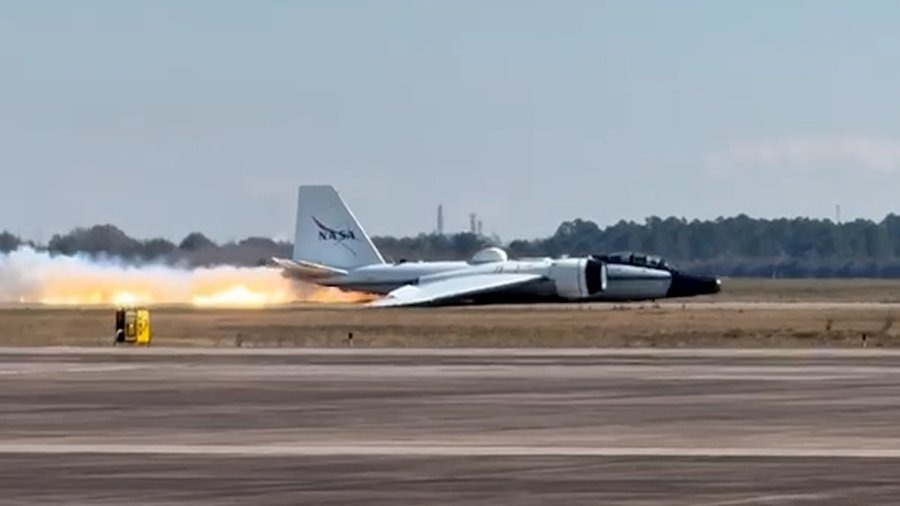
One of NASA’s last three high-altitude reconnaissance aircraft, the WB-57F, made a fiery belly-landing at the Ellington Airport in Houston, Texas.
The incident occurred on January 27, local media reported.
Footage circulating on social media shows the two-seater plane skidding down the runway and landing belly-first.
The aircraft pilot was able to exit the damaged plane with the help of first responders on the air strip.
A landing-gear failure caused the incident.
“Today, a mechanical issue with one of NASA’s WB-57s resulted in a gear-up landing at Ellington Field. Response to the incident is ongoing, and all crew are safe at this time,” NASA’s official account informed on X.
“As with any incident, a thorough investigation will be conducted by NASA into the cause. NASA will transparently update the public as we gather more information,” it added.
BREAKING | Video shows a NASA plane making a belly landing at Ellington Airport. Here’s what we know right now. https://t.co/aqC7z1IMTu
— KHOU 11 News Houston (@KHOU) January 27, 2026
Only 21 WB-57F were ever built, and NASA currently has a fleet of just three, used for a wide array of scientific and defense-related missions.
All three of NASA’s WB-57Fs are based at the Johnson Space Center, also located in Houston.
Incidentally, the high-flying aircraft has an interesting Cold War history, during which it was often used for atmospheric and nuclear fallout sampling, reconnaissance, and other defense-related missions, including spying.
The aircraft also participated in the 1965 India-Pakistan War and was even shot down by Indian surface-to-air missiles.
Another WB-57F aircraft was possibly shot down by a Soviet SAM over the Black Sea; however, the USAF attributed the incident to a technical failure.
The WB-57F: A Cold War Relic Used For Nuclear Spying
The Martin/General Dynamics RB-57F Canberra is a specialized strategic reconnaissance aircraft developed in the 1960s for the United States Air Force by General Dynamics from the Martin B-57 Canberra tactical bomber, which itself was a license-built version of the English Electric Canberra.
The first RB-57F prototype flew on June 23, 1963, and the type entered operational service with the U.S. Air Force’s Air Weather Service in 1964.
The aircraft was primarily used for high-altitude atmospheric sampling and radiation detection in support of nuclear test monitoring.
The aircraft was renamed WB-57F in 1968 to reflect its weather reconnaissance role; however, this was often used as a cover to conceal its role in collecting radiation samples and monitoring nuclear tests by the adversaries of the US.
The USAF role ended largely by the early 1970s, when most of the remaining WB-57F aircraft (three of the 21 were already lost) were retired.
The remaining four were transferred to NASA for scientific research missions.
NASA still has three of these four WB-57F aircraft in its inventory.
It is not known if the latest incident has left the aircraft inoperational. If that is the case, then NASA will be left with just two WB-57F aircraft.
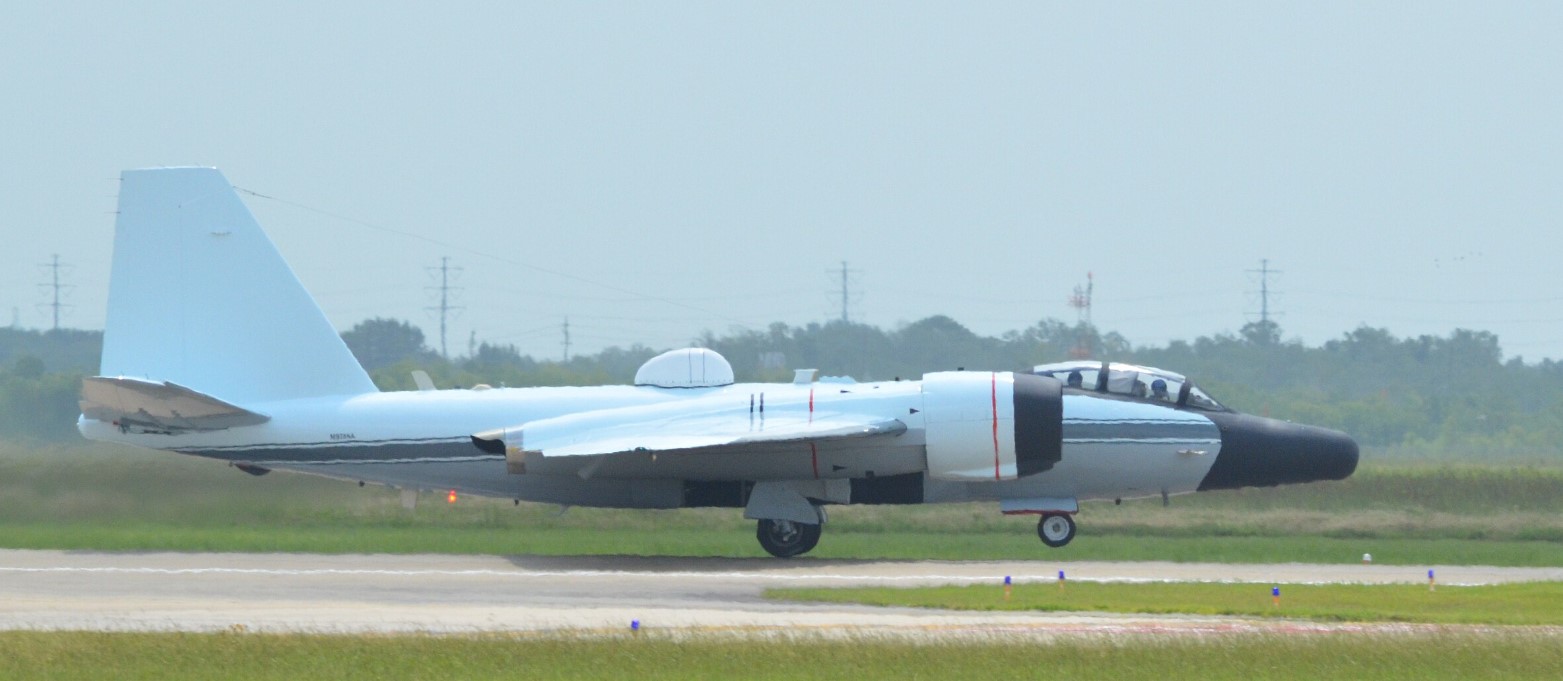
According to NASA, “The WB-57 is a mid-wing, long-range aircraft capable of operation for extended periods of time from sea level to altitudes in excess of 63,000 feet. Two crew members are positioned at separate tandem stations in the forward section of the fuselage.
“The pilot station contains all the essential equipment for flying the aircraft, while the sensor equipment operator (SEO) station contains both navigational equipment and controls for the operation of the payloads that are located throughout the aircraft. The WB-57 can fly for approximately 6.5 hours, has a range of approximately 2500 miles, and can carry up to 8,800 lbs of payload.”
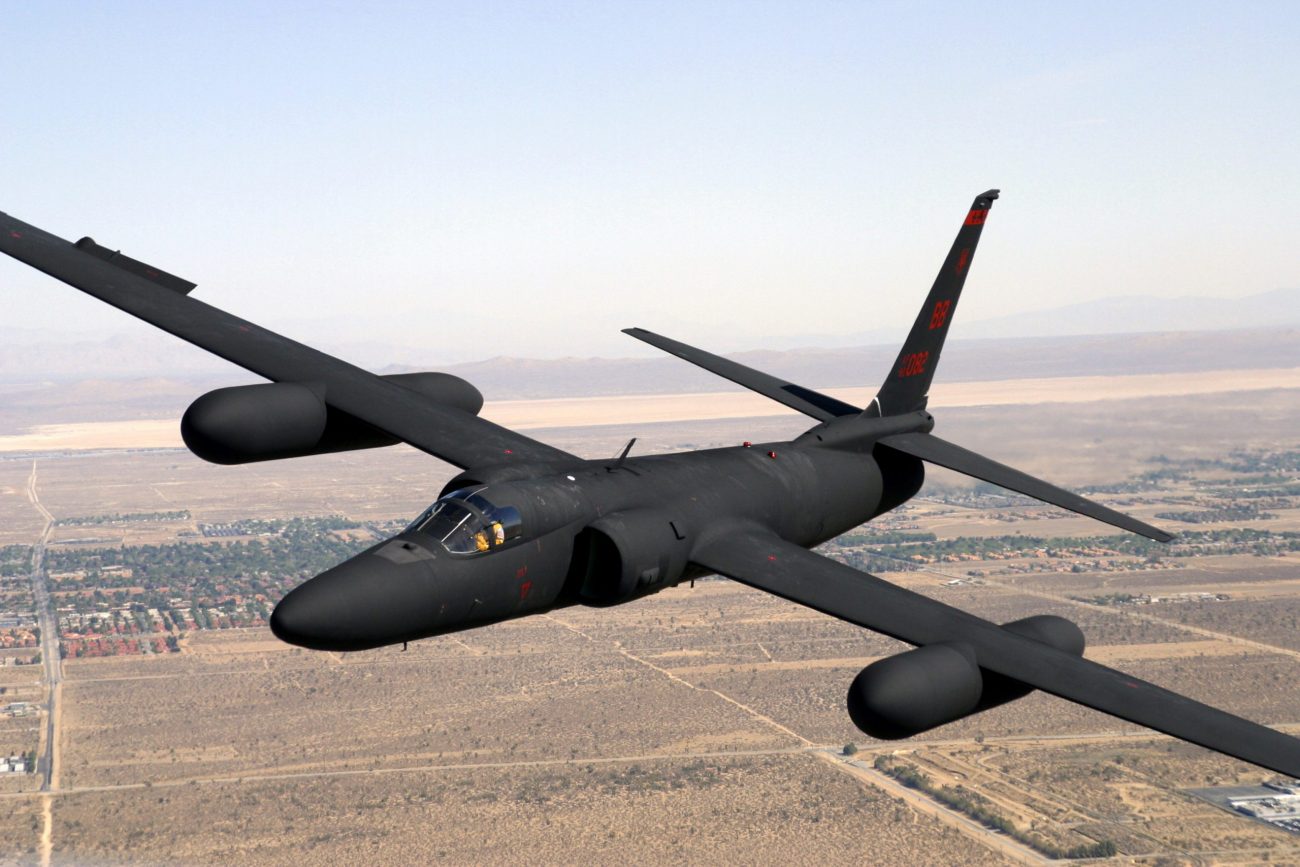
During the Cold War, the plane was often compared to and confused with another high-altitude spy plane, the much better-known U-2; however, there are several differences between the two.
The WB-57F is a twin-engine aircraft, whereas the U-2, developed by Lockheed, is a single-engine aircraft.
At 70,000+ feet, the U-2 had a slightly higher service ceiling compared to the WB-57F, which has a service ceiling of 63,000 feet.
However, the WB-57F has a much higher payload capacity. It can carry 8,800 lbs of payload in its belly, nose, wing pods, and tail. Therefore, while the WB-57F specializes in heavy-payload science missions, such as atmospheric sampling, the U-2 prioritized stealth and higher-altitude flights with a smaller radar cross section, enabling it to operate deep inside enemy territory.
The most famous incident associated with the U-2 was its shootdown in 1960 over the Soviet Union.
The U-2 spy plane had taken off from Peshawar in Pakistan, which revealed that Islamabad had allowed American spy planes to operate from its air bases and conduct surveillance missions inside the Soviet Union.
However, the US has also deployed its RB-57F (later renamed WB-57F) to Pakistan for collecting telemetry from Soviet missile test ranges, particularly Kapustin Yar.
These RB-57Fs were, however, also used by the Pakistan Air Force for conducting reconnaissance missions over forward-deployed Indian radar stations during the 1965 India-Pakistan War.
On September 11, 1965, a US Air Force RB-57F, operated by Pakistan Air Force 24th Squadron, was damaged by an SA-2 Guideline missile fired by India while it was beginning its descent towards Peshawar from Ambala.
The missile exploded near the RB-57F, causing extensive structural damage, but the aircraft was able to make a successful forced landing at Peshawar. The aircraft was repaired by Pakistan and later returned to the USA.
However, some reports suggest that the aircraft was damaged by Pakistan’s own anti-aircraft guns, which mistook it for an Indian Canberra. Some reports even suggested that it was damaged during an Indian Air Force raid on Peshawar airbase during the 1965 war.
In another incident, strikingly similar to the U-2 incident, an RB-57F aircraft that took off from Turkey was lost over the Black Sea.
The aircraft was on a reconnaissance mission to collect telemetry from Soviet ICBM tests. It vanished during its third pass near the Soviet telemetry range, with speculation that it was shot down by a Soviet S-75 Dvina surface-to-air missile (SAM) over international waters.
The two crew members, pilot Lester L. Lackey and observer Robert Yates, were declared dead after six months, with no evidence of capture.
During the 1960s, the RB-57F played a crucial role in monitoring nuclear tests by adversaries like the Soviet Union and China through high-altitude atmospheric sampling.
In the 1970s, while most of the fleet was retired, four WB-57Fs were transferred to NASA for scientific research missions.
According to NASA, “The aircraft have been flying research missions since the early 1970’s, and continue to be an asset to the scientific community with professional, reliable, customer-oriented service designed to meet all scientific objectives.”
These aircraft are now over six decades old. The latest incident will raise further questions about their continued operations.