In Miami, where thousands of Cuban exiles have been living for decades, people have often warned that the road to regime change in Havana runs through Caracas (Venezuela).
Now that former Venezuelan President Nicolas Maduro is in US captivity, and a new compliant government is in charge in Caracas, the mood in Miami is jubilant.
The expectation of swift action in Cuba is kept alive by a steady stream of statements by the Trump administration.
On January 3, within hours of the successful execution of Operation Midnight Hammer, Secretary of State Marco Rubio, himself a son of Cuban immigrants who came to the US pursuing the American dream, said, “If I lived in Havana and I was in the government, I’d be concerned at least a little bit.”
Just one day after, Rubio reiterated the warning to Cuba, saying, “they’re in a lot of trouble.”
“I’m not going to talk to you about what our future steps are going to be and our policies are going to be right now in this regard,” Rubio said. “But I don’t think it’s any mystery that we are not big fans of the Cuban regime, who, by the way, are the ones that were propping up Maduro.”
Rubio also highlighted how Maduro’s personal bodyguards were Cubans.
“He was not guarded by Venezuelan bodyguards. He had Cuban bodyguards.”
Incidentally, Rubio has long been a Cuba hawk and has for years pursued regime change in Havana.
It seems his dream is now closer to reality than ever.
Meanwhile, Trump realises that his dream of remaking the Western Hemisphere as the US’s backwater and its exclusive influence zone, his modern version of the 19th-century Monroe Doctrine, recast as Don-Roe by Trump, can not be fulfilled with a Communist Cuba next door, providing space to Washington’s adversaries, such as China and Russia.
According to the Wall Street Journal, the Trump administration is seeking regime change in Havana by the end of the year.
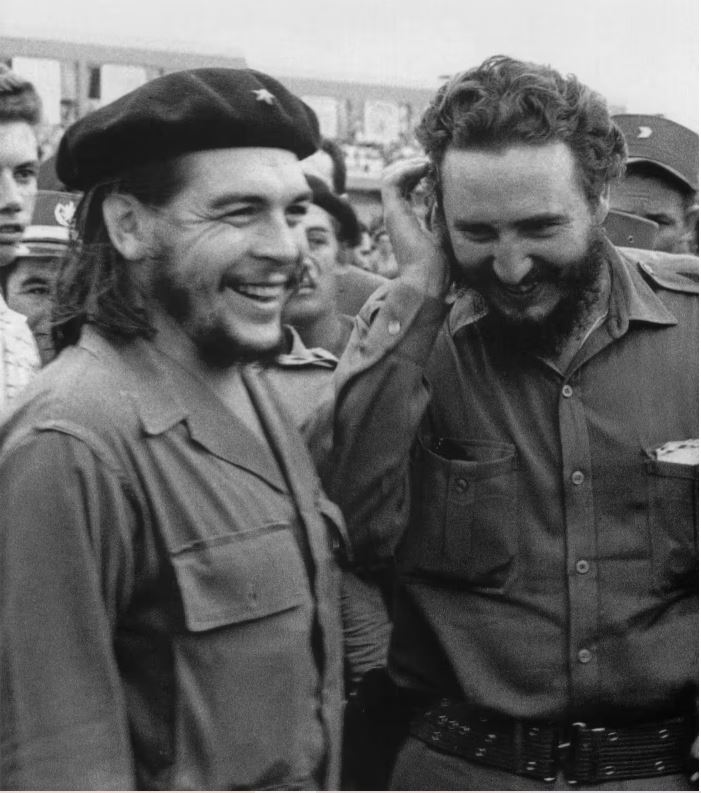
While the US has pursued regime change in Cuba for over seven decades, ever since the Castro brothers captured power in Havana with their bearded guerrillas, including the famed Che Guevara, this is a golden opportunity for such an endeavour in Havana for several reasons.
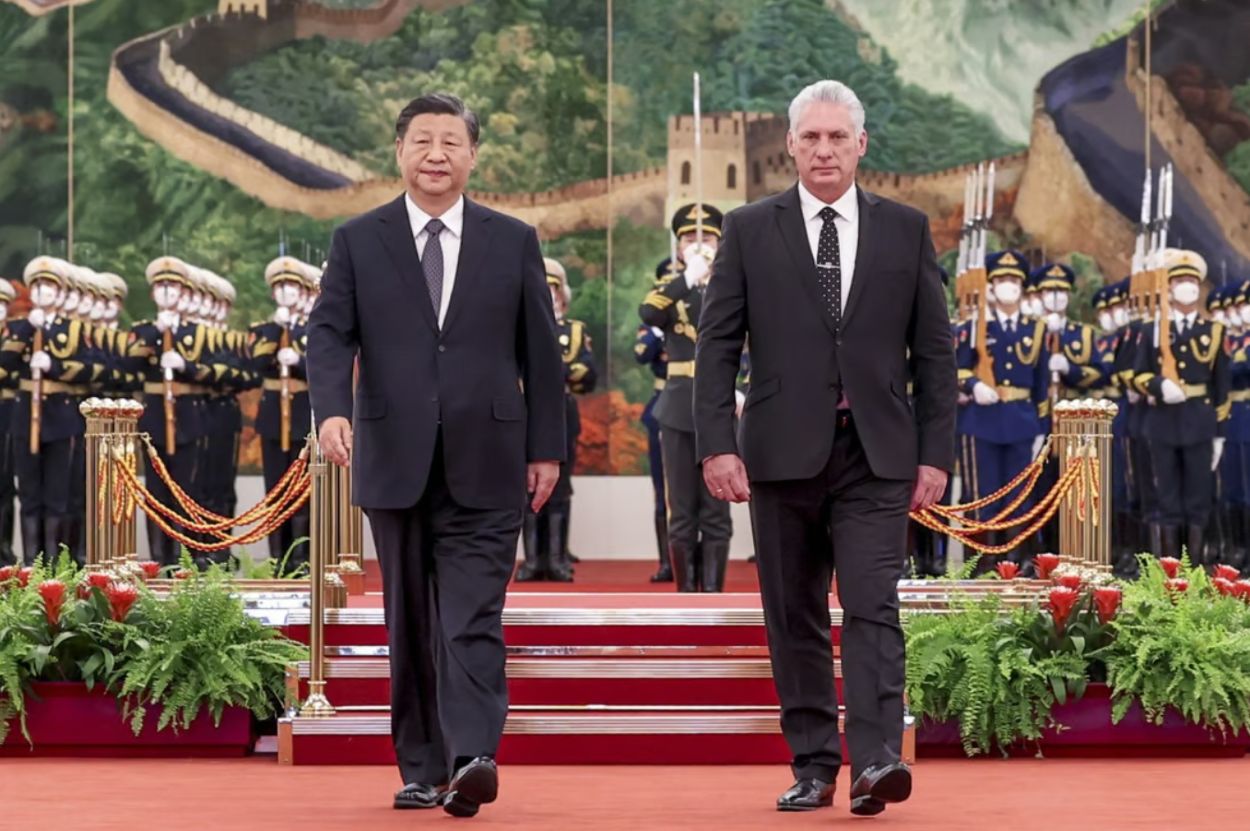
Golden Opportunity For Regime Change in Cuba?
In 2026, Cuba has fewer friends than ever. With Maduro captured, and Russia occupied with the Ukraine War, China is the only country that can come to Havana’s rescue.
Russia and China have both pledged support. Beijing has committed US$80 million in aid, while Russia’s Interior Minister, Vladimir Kolokoltsev, visited Havana earlier this week to meet with the President and the military.
However, after the Venezuela operation, it is doubtful if either Beijing or Moscow would try to challenge the US power in the Western Hemisphere.
Especially the loss of Venezuela will hurt Cuba dearly, as it was getting subsidised oil from Caracas for the last 26 years.
After taking office in 1999, Hugo Chavez has been providing subsidised oil to Cuba. This oil is key to running Cuba’s power industry.
After Maduro’s capture, Trump has warned that no more oil will reach Cuba.
“THERE WILL BE NO MORE OIL OR MONEY GOING TO CUBA – ZERO! I strongly suggest they make a deal, BEFORE IT IS TOO LATE,” Trump wrote on his Truth Social platform on January 11.
“Cuba lived, for many years, on large amounts of OIL and MONEY from Venezuela,” Trump added.
According to the WSJ report, the Trump administration is currently focusing on identifying someone inside the Cuban government willing to cut a deal with the US.
US intelligence assessments have painted a grim picture of the island’s economy, plagued by chronic shortages of basic goods, medicines, and frequent blackouts.
According to intelligence officials, Cuba could run out of oil within weeks, bringing the economy to a grinding halt.
Furthermore, Cuba being an island, the US could enforce an economic blockade of the country easily.
Washington already has a significant naval deployment in the Caribbean around the Cuban island, so it does not need to deploy forces from elsewhere.
The US is also targeting Havana’s overseas medical missions, its topmost source of hard currency. The US could respond by imposing visa bans and targeted sanctions against people who facilitate these overseas medical missions from Cuba.
A regime change in Cuba will not only fulfill the long-standing US dream from the Cold War era, but it will also ensure Trump’s name goes down in history as the President who finally ended the hostile Communist regime on the US’s doorstep.
However, the Trump administration also realizes that it must proceed with caution, as history shows that Cuba will be a tough nut to crack.
Cuba is NO Venezuela
Castro brothers seized power in Havana in 1959, at the height of the Cold War.
The US, which was fighting Communism in Europe, Asia, and Korea, suddenly found that it had to tackle Communism right at its doorstep.
Since then, the US and the CIA have led multiple attempts for regime change in Havana.
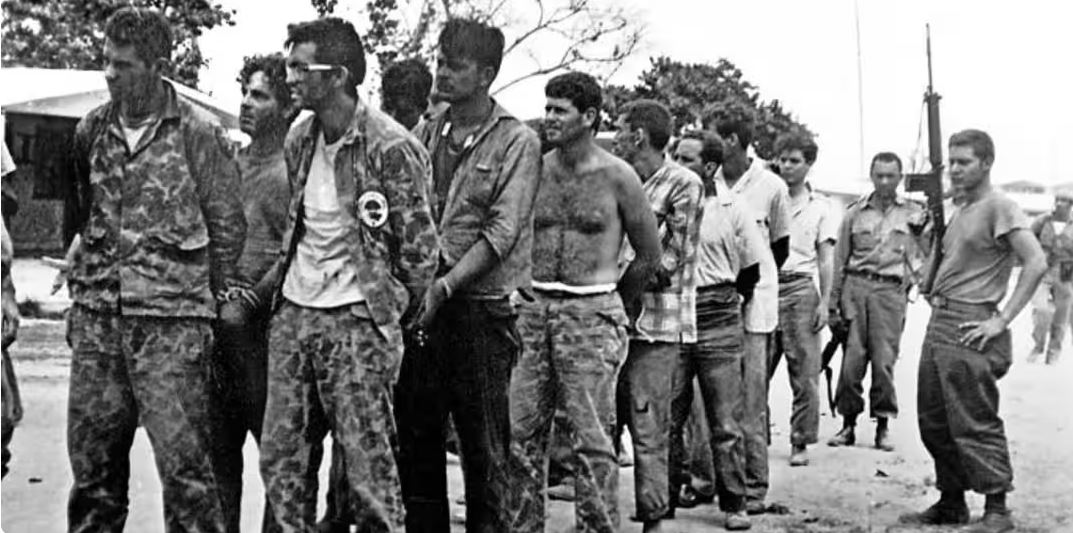
In 1961, the CIA-trained Cuban exiles attempted an amphibious landing to spark an uprising (the Bay of Pigs Invasion). However, poor planning, lack of air support, and a swift Cuban response led to the rapid defeat and capture of most invaders.
During the next two years, the CIA ran a large-scale program involving sabotage, guerrilla raids, economic disruption, and propaganda. It aimed to destabilize the regime but achieved little beyond minor damage and heightened Cuban defenses.
These two CIA-sponsored regime change attempts fueled the Cuban Missile Crisis of 1962, which almost pushed the world to a nuclear catastrophe.
Between 1960 and the 1970s, according to Cuban claims, it foiled nearly 600 CIA-sponsored assassination attempts of Fidel Castro, including poisoned cigars, exploding seashells, contaminated diving suits, and mafia collaborations.
The regime has survived decades of economic sanctions.
The Trump administration realizes that a Venezuela-style operation, just executing a leadership change at the top, will not suffice in Cuba.
Cuba demands a thorough regime change, and this is precisely the long-drawn-out campaigns that Trump wants to avoid.
Furthermore, Cuba is just 100 miles from Florida, and an intense military operation could lead to a massive humanitarian crisis, fueling large-scale immigration to the US, another scenario Trump wants to avoid at any cost.
There are additional complications. Venezuela had a robust opposition and a strong democracy movement.
On the other hand, Cuba had been a single-party state for the last seven decades. There is no democracy movement or civil society in Cuba that the US could collaborate with.
There have been only two large-scale protests against the Cuban regime in the last few decades, in 1994 in Havana, and in 2021 when tens of thousands of Cubans took to the streets across the island.
The best scenario would be that the regime collapses under the pressure of renewed economic blockade, and by turning off the tap on subsidised Venezuelan oil.
However, if that does not work, the Trump administration is preparing to take the next step, as the Cuban regime is friendless, at its weakest in many decades, and is central to the success of the Don-Roe Doctrine.
- Sumit Ahlawat has over a decade of experience in news media. He has worked with Press Trust of India, Times Now, Zee News, Economic Times, and Microsoft News. He holds a Master’s Degree in International Media and Modern History from the University of Sheffield, UK.
- VIEWS PERSONAL OF THE AUTHOR
- He can be reached at ahlawat.sumit85 (at) gmail.com