Nearly two weeks after the Trump administration released the new US National Security Strategy (NSS), the U.S. Congress has passed the 2026 National Defense Authorization Act (NDAA) with overwhelming support.
While the NSS, which presidents typically release once each term, offers a window into the US’s global priorities under the second Trump presidency, the FY2026 NDAA is a legislative authorization bill that funds defense priorities but imposes congressional constraints, mandates continued commitments, and specifies operational details that limit executive flexibility.
The U.S. Senate passed the NDAA, authorizing a record US $901 billion in annual military spending for the Pentagon.
However, the two documents diverge considerably on key points, underscoring the different priorities of President Trump and the US Congress, as well as their different visions of the US role in the world.
In short, Trump’s 2025 NSS outlines a broad “America First” strategic vision emphasizing flexibility, burden-shifting to allies, non-interventionism, avoiding direct military conflict with China and Russia, deal-making for peace, and a strategic focus on the Western Hemisphere and on core U.S. interests, such as ending mass migration and rebalancing trade.
However, the Congress’s NDAA includes several provisions that reemphasize the US commitment to Europe, South Korea, Ukraine, and the Arctic, thereby reassuring its allies worldwide.
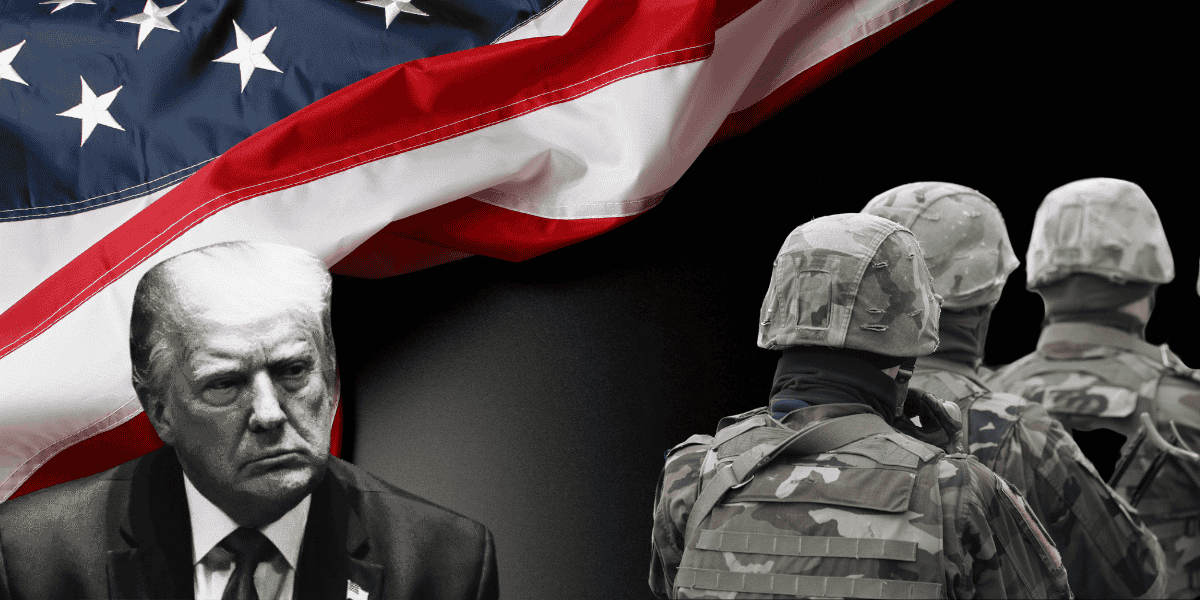
The NDAA underlines that the US will remain committed to certain alliances and aid programs, despite Trump’s NSS treating them as secondary or negotiable.
In other words, the U.S. Congress is reasserting its role in formulating the US defense and foreign policy.
U.S. Military Presence & Force Posture In Europe
Perhaps the most significant point of divergence is what role the US should play in European security, and Washington’s commitment to Ukraine in its war against Russia.
The NSS emphasized burden-sharing with European Allies, suggesting that European countries should take a more proactive role in their own security and aim for greater self-reliance.
It exhorted European countries to spend more on defense and criticised past free-riding on American spending.
“From military alliances to trade relations and beyond, the United States will insist on being treated fairly by other countries. We will no longer tolerate, and can no longer afford, free-riding, trade imbalances, predatory economic practices, and other impositions on our nation’s historic goodwill that disadvantage our interests,” the NSS said.
“As we want our allies to be rich and capable, so must our allies see that it is in their interest that the United States also remain rich and capable. In particular, we expect our allies to spend far more of their national Gross Domestic Product (GDP) on their own defense, to start to make up for the enormous imbalances accrued over decades of
much greater spending by the United States.”
The NSS further stressed that European countries should spend at least 5% of their GDP on defense.
“President Trump has set a new global standard with the Hague Commitment, which pledges NATO countries to spend 5 percent of GDP on defense and which our NATO allies have endorsed and must now meet,” it said.
At the same time, the NSS hinted that the US would like to withdraw some of its resources from Europe to deploy them in the Western hemisphere.
Notably, the same sentiment was expressed by Defense Secretary Pete Hegseth in his speech at the Reagan Defense Forum earlier this month, where he outlined the US’s defense priorities for the foreseeable future.
Hegseth said that many who have shaped U.S. foreign policy have “lost the plot” by treating our allies as if they are incapable of helping themselves.
“That is, of course, patently ridiculous — not to mention insulting to our allies,” Hegseth said, adding that it’s important for America’s allies and partners to step up to do their part for our collective defense.
“Allies are not children,” he said. “We can and should expect them to do their part.”
However, the NDAA flips the script. It stands in stark contrast to the recently released NSS, which pumps the brakes on efforts in Washington to shift resources away from the Euro-Atlantic theater.
It prevents the United States from reducing troop levels in Europe below 76,000, near the current level, without consulting NATO partners.
Furthermore, the bill establishes guardrails by prohibiting the removal of major US equipment from Europe or the relinquishment of the role of the American Supreme Allied Commander Europe (SACEUR)—unless the Pentagon can provide a detailed impact report certifying that such decisions were made in consultation with allies and are consistent with US national security interests.
Additionally, the bill authorizes US$175 million for the Baltic Security Initiative, just three months after the Pentagon proposed cutting the program. This will deepen cooperation with Estonia, Latvia, and Lithuania by supporting their procurement of key US defense systems.
The NDAA also includes US$400 million in assistance for Ukraine for each of the next two fiscal years. This is despite the Trump administration requesting no new funding for the program.
The NDAA also mandates new reporting requirements designed to dissuade the administration from ending intelligence support for Kyiv.
Notably, the Trump administration has in the past often used intelligence support as leverage over Ukraine in negotiations with Moscow.
The act also directs the US administration to resume efforts to locate, return, and rehabilitate Ukrainian children abducted by Russia.
Furthermore, “unlike the NSS, which seeks to restore ‘strategic stability’ with Russia, the NDAA clearly defines Moscow as an adversary, requiring the Pentagon to submit annual assessments on Russian strategic objectives and NATO’s ability to maintain a comparative military advantage,” the Atlantic Council said in its assessment of the NDAA.
This is contrary to the NSS’s suggestion.
“It is a core interest of the United States to negotiate an expeditious cessation of hostilities in Ukraine, in order to stabilize European economies, prevent unintended escalation or expansion of the war, and reestablish strategic stability with Russia, as well as to enable the post-hostilities reconstruction of Ukraine to enable its survival as a viable state,” the NSS said.
In contrast, the NDAA reemphasizes the US’s commitment to Ukraine’s defense.
It is the policy of the United States, the NDAA says –
(A) “to assist Ukraine in maintaining a credible defense and deterrence capability;
(B) to bolster defense and security cooperation with Ukraine as a means of building a future force of Ukraine that is capable of defending Ukraine today and deterring future aggression.”
A similar divergence can be seen in US policy toward the Korean Peninsula. While the NSS focuses on ally burden-sharing and avoids rigid troop commitments, the NDAA prohibits reductions in U.S. Forces in Korea below 28,500 troops without extensive reporting and certifications.
“Amounts authorized to be appropriated by this Act may not be obligated or expended to reduce the total number of members of the Armed Forces permanently stationed in or deployed to the Republic of Korea below 28,500,” the NDAA said.
These differences highlight tensions and differing priorities of the Trump administration and the US Congress.
While Trump favours strategic flexibility and realism, highlighting that the US is no longer in a position to maintain its primacy in the whole world, and thus, should focus on its core interests and maintaining its dominance in the Western hemisphere, the US Congress seems to value sustained commitments toward US allies and a degree of predictability in US foreign policy.
- Sumit Ahlawat has over a decade of experience in news media. He has worked with Press Trust of India, Times Now, Zee News, Economic Times, and Microsoft News. He holds a Master’s Degree in International Media and Modern History from the University of Sheffield, UK.
- VIEWS PERSONAL OF THE AUTHOR.
- He can be reached at ahlawat.sumit85 (at) gmail.com