The Meteor — Europe’s most advanced air-to-air missile (AAMs) — sat silent during the May 2025 India-Pakistan clash while Chinese PL-15 and Russian S-400 & BrahMos missiles dominated headlines. Now the Pentagon has quietly begun loading the Meteor AAMs onto F-35A stealth fighters.
The F-35 Joint Program Office (JPO) recently completed a series of critical ground-based integration tests with the Meteor missile and F-35A, bringing the pair closer to operational readiness, the F-35 JPO announced in a statement.
The effort to integrate Meteor AAM with the F-35A fighter jets is spearheaded in cooperation with MBDA and Lockheed Martin, the manufacturers of the weapon and the jet, respectively.
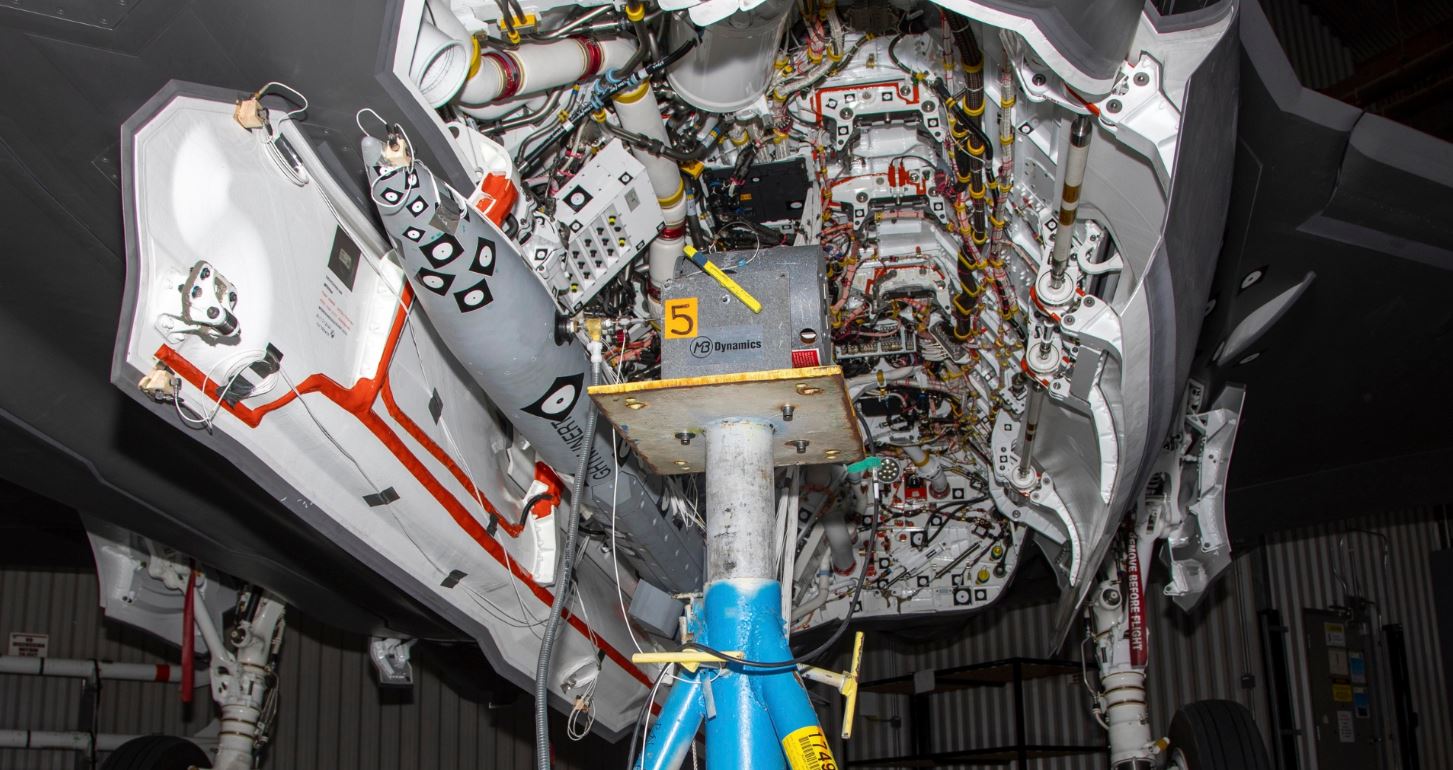
The ground-based integration tests included ground vibration testing and fit checks, which validated key hardware responses between the 5th Generation fighter aircraft and the missile, a pivotal step before airborne tests begin.
The tests were conducted at the Edwards Air Force Base, California.
The F-35 JPO also released two images showing the Meteor AAM loaded into the F-35A fighter jet’s internal weapons bay. The photos released showed that testing was conducted with both a single- and a two-missile payload.
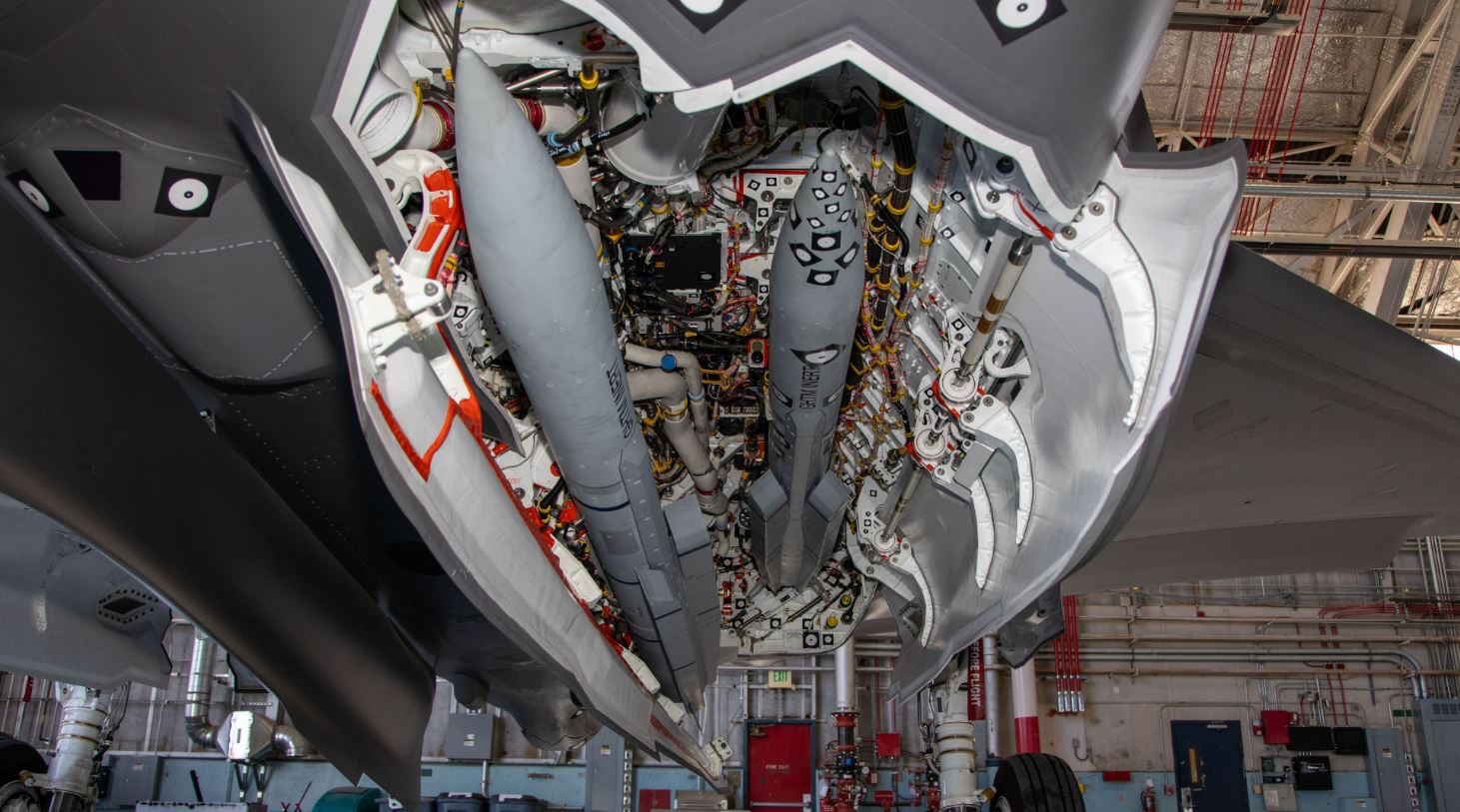
The F-35 JPO statement added that engineers meticulously evaluated the data collected from the trials to confirm that the missile can be safely stowed and deployed from the F-35A’s internal weapons bay, preserving the aircraft’s valuable stealth profile.
The statement further added that one more ground test remains before clearance to start flight testing of Meteor with the F-35A fighter jet. However, no further details were provided about the remaining ground test.
The Meteor AAM is integrated with the F-35 fighter jets as part of the Block 4 updates, with full deployment expected by the early 2030s, according to the UK’s Ministry of Defense.
Why U.S. Defeat In Vietnam Was Inevitable Despite Massive Military Superiority, A Boardgame Explains
Notably, earlier this year, the Royal Air Force (RAF) announced the successful Meteor flight tests on an F-35B, for which the UK is leading the integration campaign.
“A US Marine Corps F-35B has conducted the first test flights of a Meteor missile. The inert missile is used to gather environmental data as part of the campaign to integrate UK weapons onto F-35,” the F-35 JPO said in a statement in March this year.
Notably, Meteor is the UK’s primary air-to-air missile and is carried on operations by Typhoon fighter jets as well.
At present, the UK only has F-35Bs in its inventory. However, the UK has also placed orders for F-35A fighter jets, and the US-led efforts to integrate the Meteor with F-35A jets will also benefit the UK.
Italy is sponsoring Meteor’s integration with the F-35A.
The complete integration of Meteor AAM with the F-35B and F-35A will help the UK and Italy use the same weapons across their F-35 fleets, which are already in use on the Eurofighter Typhoon fleet.
Interestingly, the F-35 JPO’s statement about integrating the Meteor missile with the F-35A fighter jets comes just days after a Gripen-E combat aircraft belonging to the Brazilian Air Force (Força Aérea Brasileira or FAB) fired the Meteor air-to-air missile for the first time, validating the integration of the missile on the most advanced variant of the Gripen aircraft.
An FAB Gripen-E, officially designated as the F-39E, announced the live firing test of the Meteor BVRAAM (beyond visual range air-to-air missile) on November 28 against a target drone.
“BVR-X Technical Exercise (EXTEC) test campaign, believed to have taken place earlier this month in the Natal region, involved four Gripen Es, which conducted two live-firings against Leonardo’s maneuverable Mirach 100/5 aerial targets,” the FAB said in a press release.
These back-to-back tests of Meteor on Gripen E and F-35A fighter jets demonstrate the continued global appeal of the BVR AAM developed by MBDA. The missile is also used by Rafale and Eurofighter Typhoon fighter jets.
However, the missile was missing in action during the India-Pakistan War in May this year, where Russian and Chinese missiles stole the show.
Meteor During The India-Pakistan War
While there are still very few operational details available publicly about the recent India-Pakistan War, as both Islamabad and New Delhi are only selectively releasing information, we know as a matter of fact that Rafale fighter jets were used in the conflict.
Furthermore, according to the media reports, India used BrahMos, SCALP (Storm Shadow), Crystal Maze, and Rampage missiles, and HAMMER smart bombs during the conflict. India also used the S-400 surface-to-air missile during the four-day-long conflict.
However, so far, no reports have documented the use of Meteor Air-to-Air missiles by India during the conflict, while Pakistan used the Chinese PL-15 BVR AAM from its Chinese-origin J-10 and JF-17 fighter jets and even claimed big success.
Again, while both sides have made claims about shooting down multiple fighter jets of the other country, Pakistan claimed to score air-to-air kills from the Chinese-origin PL-15 missiles. In contrast, India claimed scoring long-range surface-to-air kills from the Russian-origin S-400 missile, besides multiple air-to-surface kills from BrahMos missiles fired from the Su-30MKI fighter jets.
This raises the question of why India did not use the Meteor, arguably one of the best air-to-air missiles, during the high-stakes conflict. Alternatively, if India did use the Meteor, why did it fail to score an air-to-air kill?
In the absence of full operational details, it is difficult to make any definitive conclusions. However, according to some defense experts, part of the reason could be that on the night of May 6/7, when India launched its attack on Pakistan-based terror camps, India was only focused on air-to-surface attacks.
The mandate given to the Indian Air Force (IAF) was only to attack the terror infrastructure in Pakistan, and to avoid direct confrontation with the Pakistan military and air force, so that the attack would not be construed as an attack on Pakistan.
On the other hand, the mandate given to the Pakistan Air Force (PAF) was to pounce on IAF fighter jets the moment they launch a missile.
Speaking on a podcast, Michael Dahm, a senior fellow at AFA’s Mitchell Institute for Aerospace Studies and an expert on Chinese military affairs, said that a popular theory suggests that the two Air Forces had different rules of engagement.
According to this theory, the Rafale was conducting an air-to-ground bombing mission without the escort it should have had. It may also have lacked situational awareness, as it was focused on its air-to-ground mission.
“As it turned out, it was jumped upon by Pakistani aircraft, firing missiles at range.”
According to this theory, while the Rafale was cleared for only an air-to-ground bombing mission, Pakistani aircraft were cleared to engage Indian aircraft if they conduct any hostile act.
However, it must be noted that, regardless of whether India used the Meteor during the conflict, New Delhi has doubled down on both the S-400 air defense systems and the Meteor BVR AAM.
According to media reports, India wants to buy five more S-400 battalions, after placing an order for five S-400 units in 2018. So far, India has received only three of the initial five units ordered.
Additionally, India is reportedly considering placing an order for a large number of Meteor AAMs in a deal that could cost Rs 1,500 crore (USD 180 million).
Meteor is counted among the best air-to-air long-range missiles in the world. It can engage a broad spectrum of targets at unrivalled ranges, from fighter planes to small drones and cruise missiles, at about 200 kilometres.
The missile uses a ramjet engine, which enables it to sustain high speeds throughout its flight, including during the terminal phase of engaging a target aircraft. This gives the missile a very large no-escape zone.
Its data link has two-way capability, so the pilot can re-target the missile while it is already in flight. Additionally, the pilot can view the missile’s fuel and tracking status in real time.
Meteor’s integration with the F-35, one of the most advanced fifth-generation stealth aircraft, is further set to boost its credibility and global appeal.
The BVR AAM might have ‘missed the action’ during the India-Pakistan War, but that could be due to operational restrictions imposed on the IAF rather than any capability gap.
- Sumit Ahlawat has over a decade of experience in news media. He has worked with Press Trust of India, Times Now, Zee News, Economic Times, and Microsoft News. He holds a Master’s Degree in International Media and Modern History from the University of Sheffield, UK.
- VIEWS PERSONAL OF THE AUTHOR.
- He can be reached at ahlawat.sumit85 (at) gmail.com